From Store Data to Market Intelligence: How Startups Turn Shopify Insights into Growth Power
In the early days of a startup, decisions are often made with limited clarity. Founders rely on instincts, trends, and sometimes pure experimentation. While this approach can spark innovation, it also carries risk.
But something interesting is already happening inside every Shopify store.
Every click, every scroll, every purchase—it’s all silently recording what your market truly wants.
The difference between struggling startups and fast-growing ones often comes down to this:
Some collect data.
Others understand it.
Data Is Not Just Information—It’s Market Behavior in Action
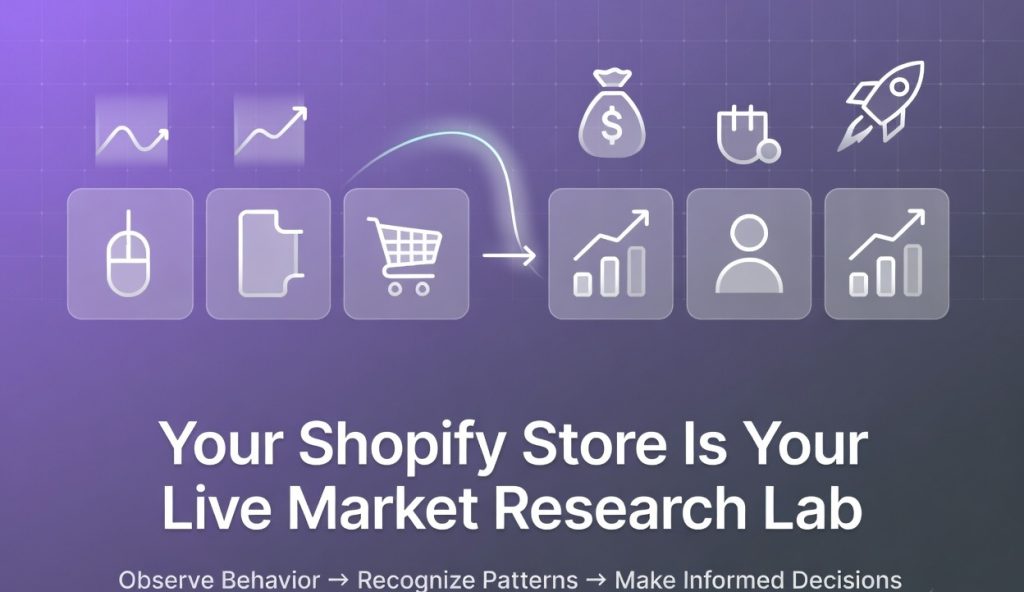
Market research used to mean surveys, reports, and external studies. Today, your Shopify store is your most accurate research lab.
Why?
Because it doesn’t show what people say.
It shows what people do.
And behavior is always more honest than opinion.
When a customer:
- Clicks on a product but doesn’t buy
- Adds items to cart and leaves
- Returns again and finally purchases
That journey tells a story. A real one.
Startups that learn to read this story gain a powerful advantage.
Your Store Is Already Answering Business Questions
Without running a single survey, your data is already revealing:
- What products attract attention
- What people ignore
- What actually converts
- What customers come back for
This is not theoretical research—it’s live market validation.
Instead of asking “Will this product work?”
You start seeing “This is already working.”
Spotting Demand Without Guesswork
One of the biggest startup mistakes is launching products based on assumptions.
But Shopify data quietly eliminates guesswork.
Patterns begin to appear:
- Some products consistently sell without effort
- Others get views but no conversions
- A few suddenly spike in demand
These are not random events—they are signals.
Signals of demand.
Signals of opportunity.
Signals of direction.
Startups that follow these signals don’t chase trends—they align with them.
Understanding Customers Without Talking to Them
Traditional market research often involves asking customers what they want.
But customers don’t always know how to explain their behavior.
Your data, however, already captures it.
It shows:
- What they prefer
- How often they buy
- What price points they accept
- When they decide to leave
This creates a behavioral profile that is far more accurate than opinions.
You’re no longer guessing your audience.
You’re observing them.
When Numbers Start Telling Stories
At first, data looks like numbers—rows, columns, metrics.
But once patterns are recognized, it becomes something else entirely.
A story.
- A drop in sales becomes a warning
- A spike in orders becomes a trend
- Repeated purchases become loyalty
This shift—from numbers to narrative—is where real market research begins.
Because now, you’re not just reading data.
You’re understanding why things are happening.
Product Decisions Become Clearer
Choosing the right product is one of the hardest parts of building a startup.
But with data, decisions become less emotional and more logical.
Instead of thinking:
“Maybe this will sell”
You begin to see:
“This already has demand”
You start refining instead of guessing:
- Improving high-performing products
- Removing low-performing ones
- Expanding what customers already like
This is how small stores evolve into strong brands.
Pricing Becomes a Strategy, Not a Gamble
Pricing is often treated like a guessing game.
Too high—and customers hesitate.
Too low—and profits shrink.
But Shopify data changes this completely.
You begin to notice:
- How customers react to different prices
- Where conversions increase or drop
- Which products justify premium pricing
Pricing becomes data-backed, not assumption-based.
Marketing Stops Being Blind Spending
Startups often invest in marketing without clear direction.
But data reveals:
- Which campaigns actually convert
- Which channels bring real customers
- Where money is being wasted
Instead of spreading efforts everywhere, focus becomes sharper.
Marketing evolves from:
Trying everything → Doing what works
Real-Time Awareness Changes Everything
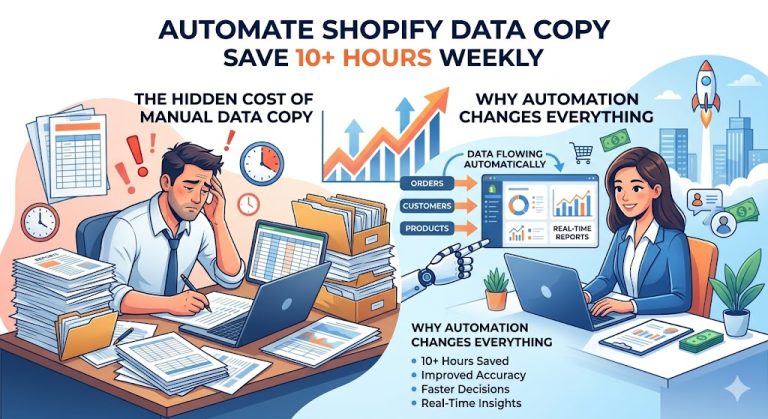
Traditional research is slow.
By the time reports are created, the market may have already changed.
Shopify data works differently.
It moves in real time.
You see:
- Trends as they emerge
- Demand as it builds
- Changes as they happen
This speed gives startups something incredibly valuable:
The ability to react instantly.
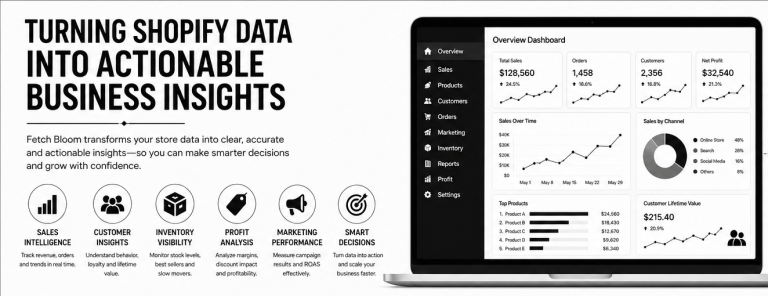
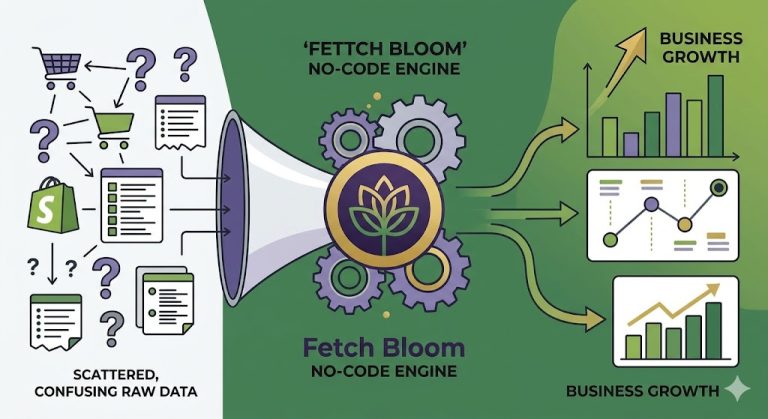
From Chaos to Clarity
At scale, data can feel overwhelming.
Orders, customers, products—all in different places.
But once structured and observed consistently, chaos turns into clarity.
Instead of scattered information, you begin to see:
- Patterns
- Relationships
- Opportunities
And once clarity is achieved, decision-making becomes faster and more confident.
Reducing Risk Without Slowing Growth
Every startup faces risk.
But not all risks are necessary.
Data allows you to:
- Test ideas before scaling
- Validate demand early
- Adjust quickly when something fails
This doesn’t remove risk entirely—but it makes it smarter.
Calculated. Controlled. Intentional.
Scaling with Insight, Not Pressure
Growth often brings complexity.
More products. More customers. More decisions.
Without data, this becomes overwhelming.
With data, it becomes manageable.
Because growth is guided by:
- Proven patterns
- Clear performance indicators
- Measurable outcomes
Startups no longer grow blindly.
They grow strategically.
A Shift in Mindset
The biggest transformation is not technical—it’s mental.
Startups move from:
Guessing → Knowing
Reacting → Anticipating
Collecting data → Using data
Data stops being a background element.
It becomes part of daily thinking.
Market Research Becomes Continuous
In traditional models, market research is done occasionally.
With Shopify data, it never stops.
Every day:
- New behavior is recorded
- New trends appear
- New insights emerge
This creates a continuous feedback loop.
Learn → Adjust → Improve → Repeat
This loop is what drives long-term growth.
The Hidden Advantage of Startups
Large companies often rely on complex systems and slow processes.
Startups have an advantage:
They can move faster.
When combined with real-time data, this speed becomes powerful.
Startups can:
- Adapt quickly
- Experiment freely
- Act on insights immediately
This agility often beats scale.
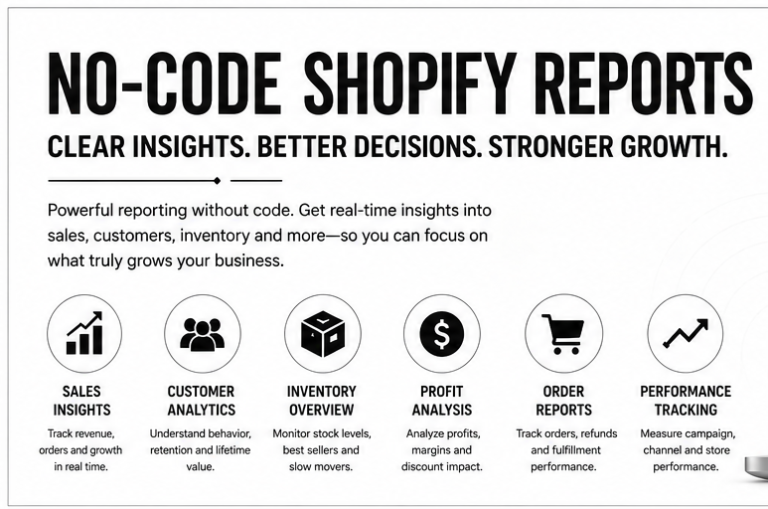
Turning Data into a Growth Engine
At its core, Shopify data is not just for analysis.
It is a growth engine.
It helps:
- Identify opportunities
- Improve decisions
- Reduce waste
- Increase efficiency
But only if it is actively used.
Passive data does nothing.
Active data drives results.
Final Perspective
Startups don’t need more information.
They need better understanding.
Everything required for market research is already present within the store itself. The real transformation happens when data is no longer ignored or delayed, but observed and applied consistently.
The journey is simple:
Observe behavior
Recognize patterns
Make informed decisions
Repeat the process
In Essence
Your Shopify store is not just a sales platform.
It is a live, evolving market research system.
Those who learn to read it gain clarity.
Those who act on it gain growth. 🚀