Automate Shopify Data Copy and Save 10+ Hours Weekly
In today’s fast-paced eCommerce environment, time is one of the most valuable resources a business has. Shopify store owners deal with a constant flow of data—orders, customers, products, inventory updates, and sales reports. While this data is essential for growth, the way it is handled often determines how efficiently a business operates.
Many businesses still rely on manual data copy processes. Exporting files, copying information, updating spreadsheets, and organizing records may seem manageable at first, but over time, these repetitive tasks consume hours every week. More importantly, they shift focus away from strategic activities like marketing, customer experience, and business growth.
Automating Shopify data copy is not just about saving time—it is about transforming how a business operates. By removing manual effort, businesses can unlock efficiency, improve accuracy, and make faster, smarter decisions.
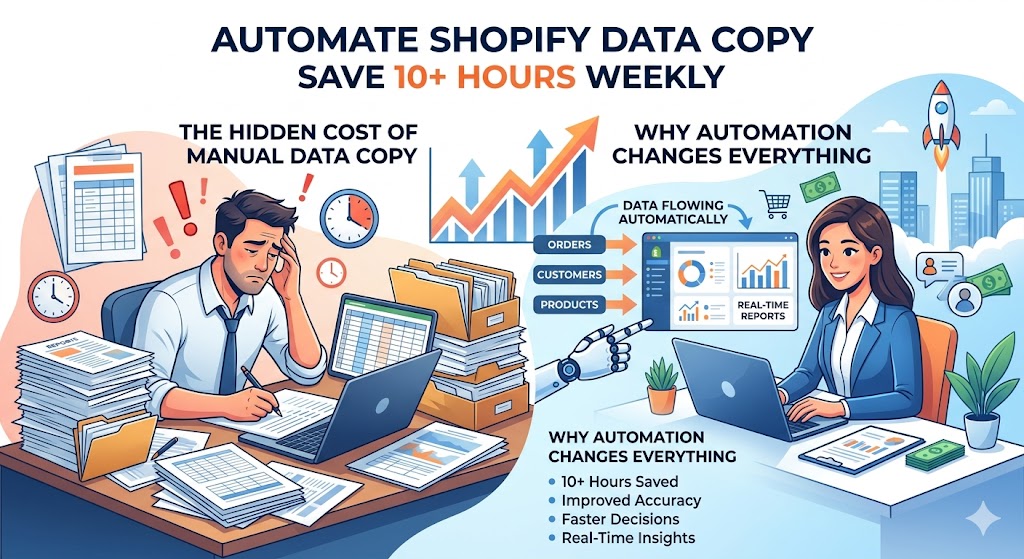
The Hidden Cost of Manual Data Copy
Manual data handling often goes unnoticed as a problem because it feels like a routine task. However, its impact is significant.
Each time data is copied manually, it involves:
- Exporting reports
- Opening spreadsheets
- Cleaning and formatting data
- Updating records
These steps are repeated daily or weekly, leading to a substantial time investment. Over time, this can easily add up to 10 or more hours per week.
Beyond time, manual processes introduce other challenges:
- Human errors in copying or formatting
- Inconsistent data across different files
- Delays in accessing updated information
What seems like a small task becomes a major inefficiency when scaled.
Why Automation Changes Everything
Automation replaces repetitive manual tasks with continuous, system-driven processes.
Instead of manually copying data, automation ensures that:
- Data is updated automatically
- Information is organized in real time
- Workflows run without constant supervision
This shift allows businesses to move from effort-based operations to efficiency-based operations.
The biggest advantage is not just saving time—it is creating a system where data works for the business instead of the business working for data.
From Manual Workflows to Intelligent Systems
Traditional workflows follow a fixed pattern:
Export → Copy → Paste → Clean → Analyze
Automation transforms this into:
Capture → Organize → Update → Use
This change may seem simple, but it has a powerful impact.
Data becomes:
- Continuously available
- Consistently formatted
- Instantly usable
This eliminates delays and removes the need for repetitive work.
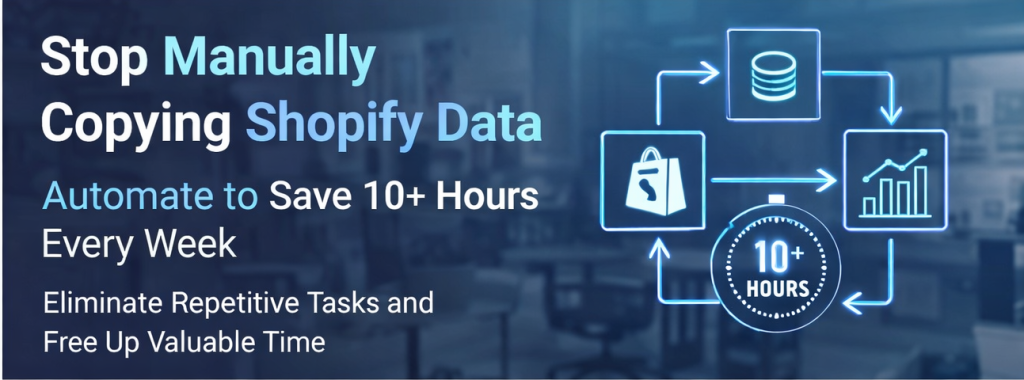
Saving 10+ Hours Weekly: Where the Time Goes
To understand the value of automation, it helps to break down where time is typically spent:
1. Data Exporting
Manually exporting data from Shopify takes time, especially when done frequently.
2. Data Cleaning
Removing unnecessary fields, fixing formats, and organizing rows requires effort.
3. Data Updating
Keeping records up to date involves repeating the same process multiple times.
4. Data Verification
Checking for errors or inconsistencies adds another layer of work.
Automation removes or reduces all these steps, freeing up valuable time.
Real-Time Data Instead of Delayed Reports
Manual processes often result in outdated data. By the time reports are prepared, the business situation may have already changed.
Automation introduces real-time data access.
This means:
- Sales trends are visible instantly
- Customer activity is up to date
- Inventory levels reflect current status
Real-time data allows businesses to respond quickly and make timely decisions.
Reducing Errors and Improving Accuracy
Human error is one of the biggest risks in manual data handling. A small mistake can lead to incorrect analysis and poor decisions.
Automation ensures:
- Consistent data formatting
- Accurate data transfer
- Reduced risk of duplication or loss
With reliable data, businesses can trust their insights and act with confidence.
Making Data Accessible to Everyone
Manual data processes often require specific skills or experience. This creates dependency on certain individuals or teams.
Automation simplifies access.
When data is:
- Organized
- Updated automatically
- Easy to understand
It becomes accessible to a wider range of users, including:
- Business owners
- Marketing teams
- Operations teams
This improves collaboration and speeds up decision-making.
Turning Data into Daily Insights
Data should not be something that is reviewed occasionally. It should be part of everyday business operations.
With automation:
- Data is always ready
- Insights are easier to identify
- Decisions can be made quickly
For example:
- A sudden drop in sales can be noticed immediately
- A high-performing product can be scaled faster
- Customer trends can be tracked in real time
This turns data into a continuous source of guidance.
Improving Productivity Across Teams
When repetitive tasks are removed, teams can focus on more valuable activities.
Instead of spending time on data handling, they can:
- Develop marketing strategies
- Improve customer experience
- Optimize product offerings
This shift increases overall productivity and drives better results.
Scaling Without Increasing Workload
As a Shopify store grows, the volume of data increases significantly.
Manual systems struggle to handle this growth. More data means more time spent on copying, organizing, and updating.
Automation solves this problem by:
- Handling large volumes of data efficiently
- Maintaining consistency regardless of scale
- Ensuring workflows remain smooth
This allows businesses to grow without increasing operational burden.
Creating a More Efficient Workflow
Automation simplifies workflows by removing unnecessary steps.
Instead of multiple processes, businesses operate with a streamlined system where:
- Data flows continuously
- Information is always up to date
- Tasks are completed automatically
This efficiency improves overall performance and reduces stress on teams.
Aligning Data with Business Goals
Not all data is equally important. The key is to focus on data that supports business objectives.
Automation helps highlight relevant information, such as:
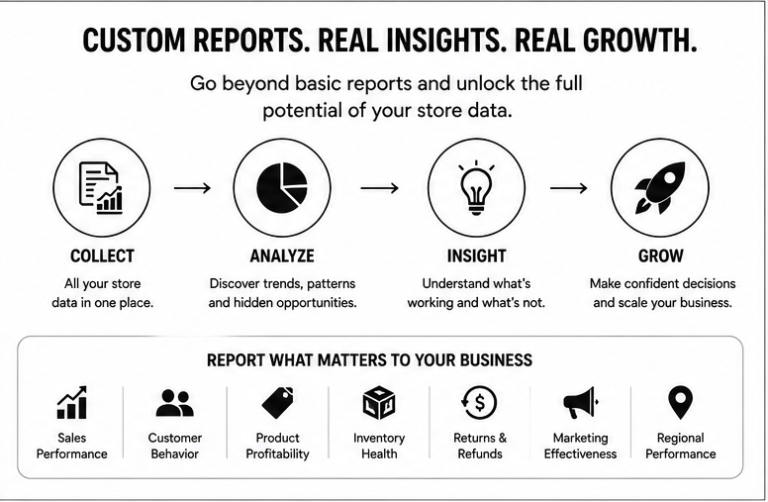
- Revenue growth
- Customer retention
- Product performance
This ensures that attention is directed toward meaningful insights rather than unnecessary details.
Enhancing Decision-Making Speed
In eCommerce, speed matters.
Opportunities can appear and disappear quickly. Businesses that act faster have a competitive advantage.
Automation enables:
- Faster access to information
- Quicker analysis
- Immediate action
This improves responsiveness and increases the chances of success.
Eliminating Repetitive Tasks Completely
One of the biggest benefits of automation is the elimination of repetitive tasks.
Tasks that once required daily effort become:
- Automatic
- Consistent
- Reliable
This not only saves time but also reduces mental fatigue and improves focus.
Building a Data-Driven Culture
Automation encourages a shift in mindset.
Instead of viewing data as a task, businesses begin to see it as a resource.
Teams start to:
- Rely on data for decisions
- Monitor performance regularly
- Use insights to guide strategies
This creates a culture where data plays a central role in growth.
Long-Term Benefits of Automation
The impact of automation goes beyond immediate time savings.
Over time, it leads to:
- Better efficiency
- Improved accuracy
- Faster growth
- Stronger decision-making
These benefits compound, creating a sustainable advantage for the business.
Final Perspective
Automating Shopify data copy is not just about convenience—it is a necessity for modern eCommerce businesses.
Manual processes limit efficiency, slow down operations, and create unnecessary complexity. Automation removes these barriers and creates a system where data flows smoothly and supports business goals.
Saving 10+ hours weekly is just the beginning. The real value lies in how that time is used—whether it is improving products, enhancing marketing, or building stronger customer relationships.
In Essence
Manual work consumes time.
Automation creates efficiency.
Data becomes a continuous, reliable flow.
When Shopify data copy is automated, businesses gain more than just time—they gain clarity, speed, and the ability to grow smarter and faster. 🚀