No-Code Shopify Reports: Smarter Business Visibility for Modern E-commerce
Introduction
In modern eCommerce, success depends on more than just selling products. A strong Shopify store needs clear visibility into sales performance, customer behavior, inventory movement, profit margins, and operational efficiency. Without proper reporting, even a growing business can struggle with hidden problems.
Many store owners focus heavily on marketing and sales, but often overlook one of the most powerful growth tools—reporting.
Reports are not just numbers on a screen.
They are business direction.
They help store owners understand what is working, what is slowing growth, and where better decisions need to be made.
Traditionally, advanced reporting required technical knowledge, complex setups, and developer support. Many businesses depended on coding, API access, spreadsheet exports, and manual analysis just to answer simple business questions.
This created delays, confusion, and unnecessary operational stress.
Today, no-code reporting has changed that experience.
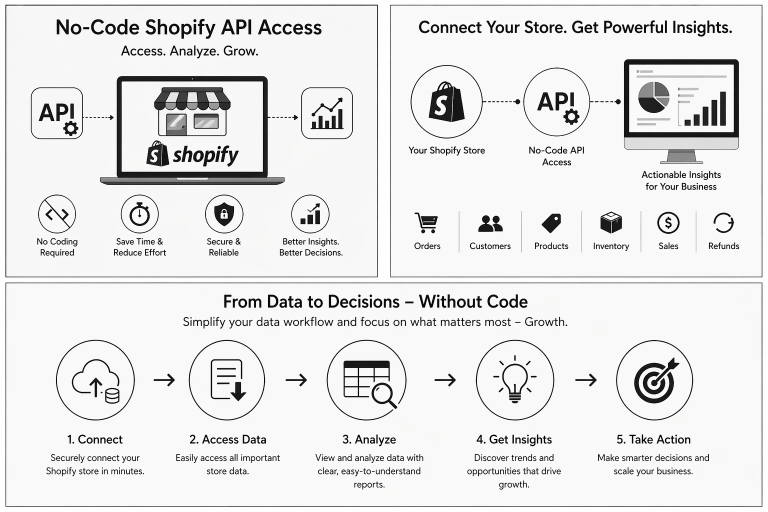
Businesses can now access powerful Shopify insights without technical barriers. They can track performance, understand customer patterns, monitor inventory, and improve decision-making without writing a single line of code.
This shift is not just about convenience.
It is about speed, confidence, and smarter business leadership.
No-code reporting allows businesses to focus less on technical processes and more on growth.
And in today’s competitive market, that advantage matters.
Why Reporting Matters More Than Most Businesses Realize
Many Shopify stores generate large amounts of data every day.
Orders are placed.
Products are viewed.
Customers return—or leave.
Inventory moves.
Refunds happen.
Campaigns perform differently.
Each of these actions creates information.
But data alone does not improve a business.
Understanding does.
Without clear reporting, businesses often operate with assumptions instead of facts.
They assume certain products are profitable.
They assume customers are satisfied.
They assume marketing campaigns are working.
Sometimes those assumptions are correct.
Often, they are expensive mistakes.
Reports provide clarity.
They reveal:
Sales performance
Customer retention trends
Product profitability
Inventory health
Refund patterns
Operational weaknesses
This visibility improves leadership.
Because businesses that understand better always grow stronger.
The Problem with Traditional Reporting Methods
Many businesses still rely on manual reporting systems.
They export data into spreadsheets.
They compare multiple files.
They request reports from technical teams.
They spend hours trying to organize information that should already be clear.
This creates serious problems.
Manual reporting often leads to:
Time loss
Copy-paste mistakes
Outdated information
Disconnected data
Delayed decisions
Operational frustration
A simple question like “Which products are creating the highest profit?” can take far too long to answer.
This slows growth.
In eCommerce, delayed decisions are expensive.
By the time reports are prepared, the opportunity may already be gone.
This is why modern businesses are moving toward no-code reporting systems.
They need clarity faster.
And they need it without technical complexity.
No-Code Reporting Creates Business Independence
One of the biggest advantages of no-code reports is independence.
Not every business has a developer.
Even larger companies often struggle when every small reporting request depends on technical teams.
Marketing teams wait for customer insights.
Sales teams wait for performance analysis.
Operations teams wait for inventory visibility.
Decision-making slows down.
No-code reporting removes this dependency.
It allows store owners, managers, and teams to access information directly.
They can review performance without waiting for someone else to prepare reports.
This creates:
Faster decision-making
Stronger operational control
Better team productivity
Less reporting stress
Greater leadership confidence
Businesses stop waiting.
They start leading.
That independence becomes a major competitive advantage.
Sales Reports That Actually Improve Profit
Sales reporting should do more than show total revenue.
Revenue alone does not explain business health.
A store may have high sales but weak profitability.
A popular product may create frequent returns.
A promotion may increase traffic while reducing margins.
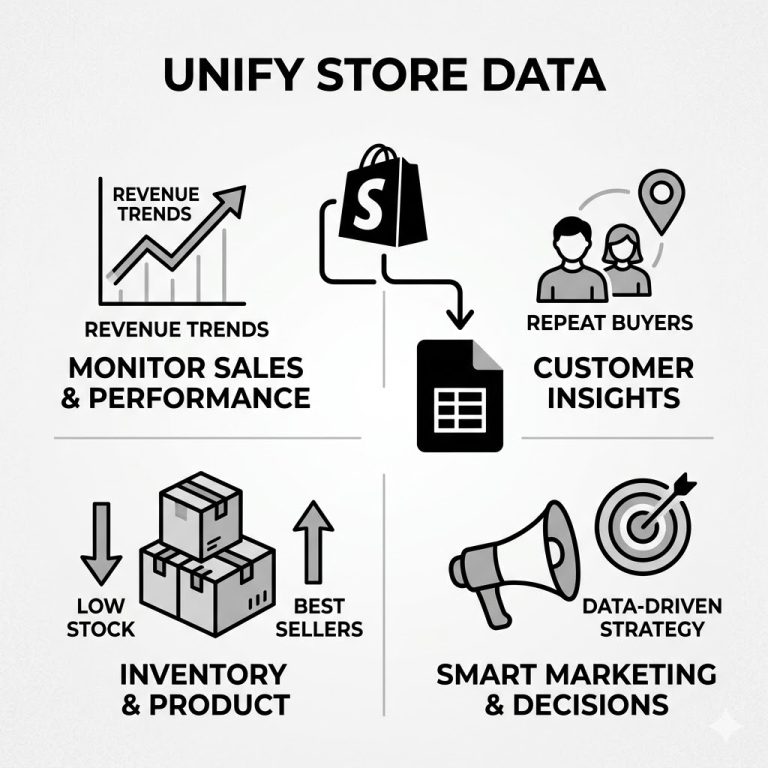
No-code reports help businesses understand deeper sales performance by showing:
Best-selling products
Profit per product
Revenue by customer type
Discount impact
Sales channel performance
Repeat customer revenue
This helps businesses improve:
Pricing strategies
Product focus
Campaign planning
Upselling opportunities
Profit forecasting
Sales become strategic instead of reactive.
And strategic sales management creates stronger long-term growth.
Because profit matters more than popularity.
Customer Behavior Becomes Easier to Understand
Customer insights are one of the most valuable parts of eCommerce reporting.
But many businesses only track basic order numbers instead of real customer behavior.
No-code reports help businesses understand:
Who buys repeatedly
Which products create loyalty
Where customers leave the buying journey
How often customers return
Which customers create the highest lifetime value
This supports:
Better customer retention
Personalized marketing
Higher conversion rates
Improved shopping experiences
Stronger long-term brand loyalty
Repeat customers are often more valuable than constant new customer acquisition.
That is why customer reporting is not optional.
It is a growth strategy.
And when customer understanding improves, revenue becomes more stable.
Inventory Reports Protect Profit Quietly
Inventory problems are one of the most common hidden causes of financial loss.
Too much stock creates storage pressure.
Too little stock causes missed sales.
Slow-moving products reduce cash flow without immediate warning.
Many businesses notice inventory issues too late.
No-code reporting helps businesses track:
Fast-moving inventory
Slow-selling products
Restocking priorities
Seasonal stock patterns
Supplier performance
Return-related inventory pressure
This improves:
Cash flow management
Profit margins
Purchasing decisions
Operational efficiency
Revenue stability
Inventory becomes more than stock control.
It becomes a financial strategy.
And strong financial control creates stronger business confidence.
Real-Time Visibility Improves Business Speed
Traditional reporting often creates delays.
Reports are prepared weekly or monthly.
But modern eCommerce changes daily.
A product may suddenly trend.
Inventory may run low.
Customer behavior may shift.
Marketing performance may drop.
Waiting too long creates lost opportunities.
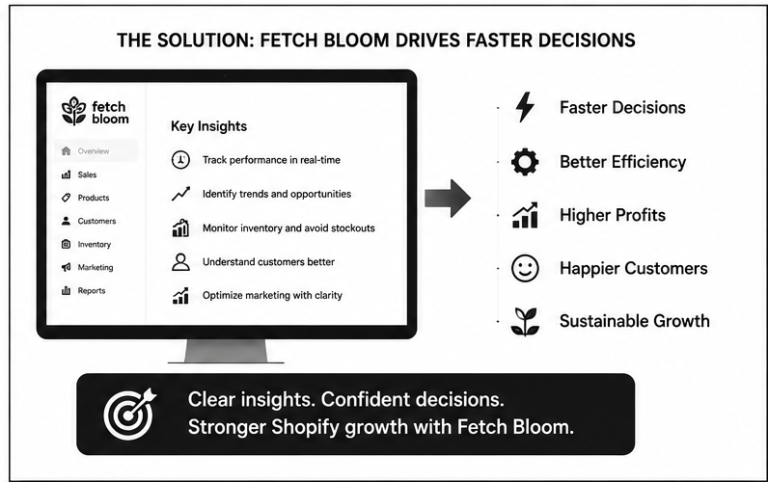
No-code reporting supports faster visibility by helping businesses monitor store activity continuously.
This allows teams to:
Respond faster to sales changes
Adjust campaigns quickly
Improve customer service faster
Manage inventory proactively
Protect profit before losses grow
Speed creates competitive advantage.
Businesses that act quickly protect revenue more effectively than businesses that react late.
And fast decisions are only possible with clear visibility.
Small Teams Need Better Systems, Not More Work
Many Shopify businesses operate with small teams.
Often the same people manage:
Sales
Marketing
Customer service
Operations
Inventory
Growth planning
This creates pressure when reporting systems are inefficient.
Small teams do not need more reports.
They need smarter reports.
No-code systems reduce:
Manual spreadsheet work
Repeated reporting mistakes
Dependency on technical support
Time wasted searching for answers
Daily operational stress
This allows small teams to operate with the structure and clarity of larger brands.
Success is not always about team size.
Often, it is about operational quality.
Strong reporting improves that quality.
And stronger operations create stronger businesses.
Scaling Growth Without Losing Control
As Shopify stores grow, reporting complexity increases.
More products create more data.
More customers create more support needs.
More transactions create larger operational pressure.
Manual systems that once worked begin to fail.
This creates confusion and leadership stress.
No-code reporting supports scale by maintaining:
Clear reporting structures
Consistent visibility
Reliable decision-making
Stable operations
Stronger planning control
Growth becomes organized instead of chaotic.
Businesses can expand without losing confidence in daily performance.
Sustainable growth depends on systems that grow with the business.
Without structure, fast growth often becomes expensive.
Clear reporting protects success.
Confidence Is the Hidden Power of Better Reports
One of the strongest benefits of no-code reporting is confidence.
When business owners trust their reports, decisions become easier.
They know when to invest.
They know when to improve pricing.
They know where profit is increasing—and where it is leaking.
Without visibility, every decision feels risky.
Should marketing spend increase?
Should inventory investment grow?
Should a new product category launch?
Should hiring happen now?
Clear reporting removes hesitation.
It creates leadership confidence.
And confident businesses move faster than uncertain ones.
This often becomes the hidden reason some stores grow faster than others.
Because confidence creates action.
And action creates growth.
Final Thoughts
No-code Shopify reports are not just a convenience.
They are a modern business advantage.
They transform:
Manual reporting into operational clarity
Disconnected spreadsheets into smart visibility
Delayed decisions into faster action
Uncertainty into confident leadership
Most importantly, they help businesses stop guessing and start leading with purpose.
The goal of reporting is not simply to collect numbers.
It is to create better business decisions.
And better decisions always begin with better visibility.
In modern eCommerce, businesses that understand their store clearly do not just save time—
they build stronger operations, smarter strategies, and long-term success.
That is the real power of no-code reporting.