From Data Chaos to Smart Decisions: The Future of Shopify Insights
Introduction
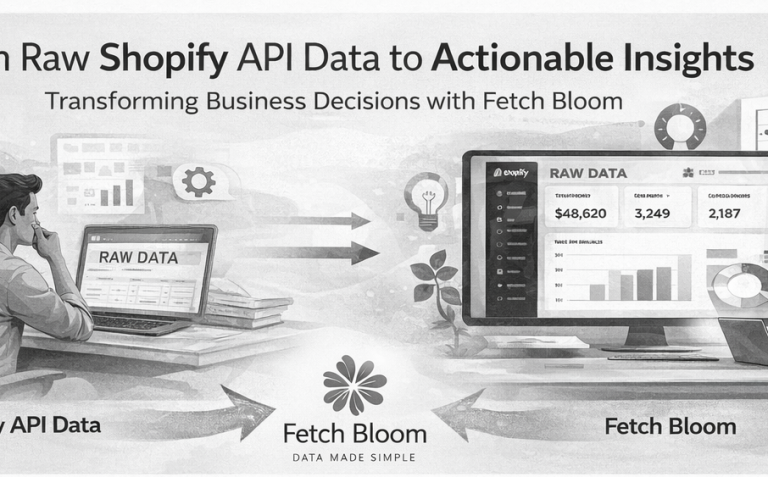
In today’s fast-moving eCommerce landscape, data is everywhere—but clarity is rare. Every Shopify store generates a continuous stream of information: orders, customer interactions, product performance, returns, inventory updates, and marketing activity. This data holds immense potential, yet for many businesses, it remains underutilized.
The problem is not the lack of data.
The problem is turning that data into meaningful, decision-ready insights.
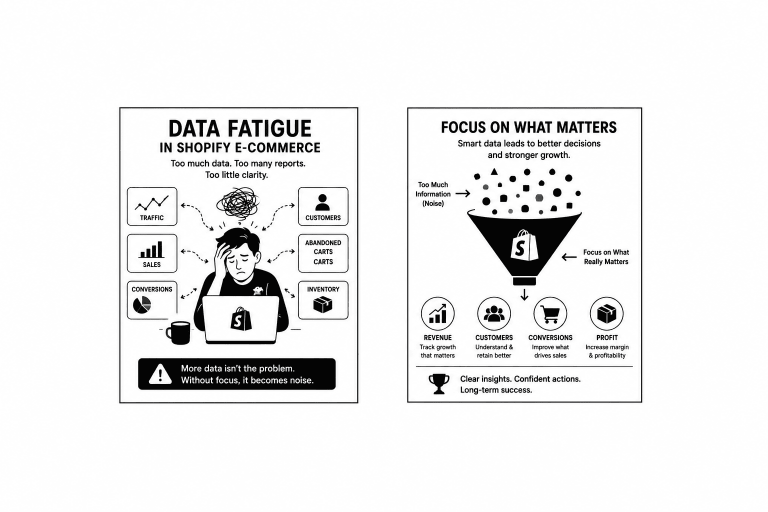
Raw information, when left unstructured, becomes overwhelming. Business owners often find themselves surrounded by numbers but lacking direction. Reports may exist, but they are fragmented. Insights may be available, but they are not easy to interpret. As a result, decisions become slower, less accurate, and often reactive instead of strategic.
This is where transformation becomes critical.
When data evolves from raw information into actionable insights, businesses shift from simply operating to strategically growing. They stop guessing and start knowing. They stop reacting and start planning.
This article explores how that transformation happens—and why it plays a central role in building smarter, faster, and more successful Shopify businesses.
The Gap Between Data and Decisions
Most businesses believe they are using data effectively because they track sales, monitor orders, and review basic reports. However, there is a major difference between having data and using it intelligently.
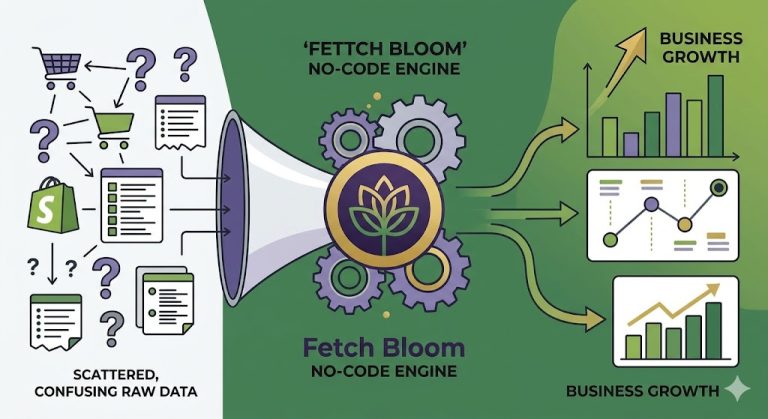
Raw data typically exists in separate formats:
Orders are tracked in one section
Customers are listed in another
Inventory updates are managed elsewhere
Marketing performance is reviewed separately
This creates fragmentation.
Business owners must manually connect these data points to understand the full picture. This process is time-consuming and often inaccurate. Important patterns remain hidden, and opportunities are missed.
For example:
A product may appear successful based on sales but may have a high return rate.
A marketing campaign may generate traffic but fail to convert into revenue.
Inventory levels may seem stable while certain products quietly underperform.
Without connected insights, businesses cannot see these relationships clearly.
This creates a gap between data and decision-making.
And that gap slows growth.
Moving from Information to Intelligence
The real value of data begins when it is transformed into intelligence.
Information answers “what happened.”
Intelligence answers “why it happened” and “what should happen next.”
This shift is critical.
Businesses that rely only on information remain reactive. They respond after problems occur. They adjust strategies after performance declines.
Businesses that use intelligence become proactive. They identify patterns early. They act before problems grow. They optimize performance continuously.
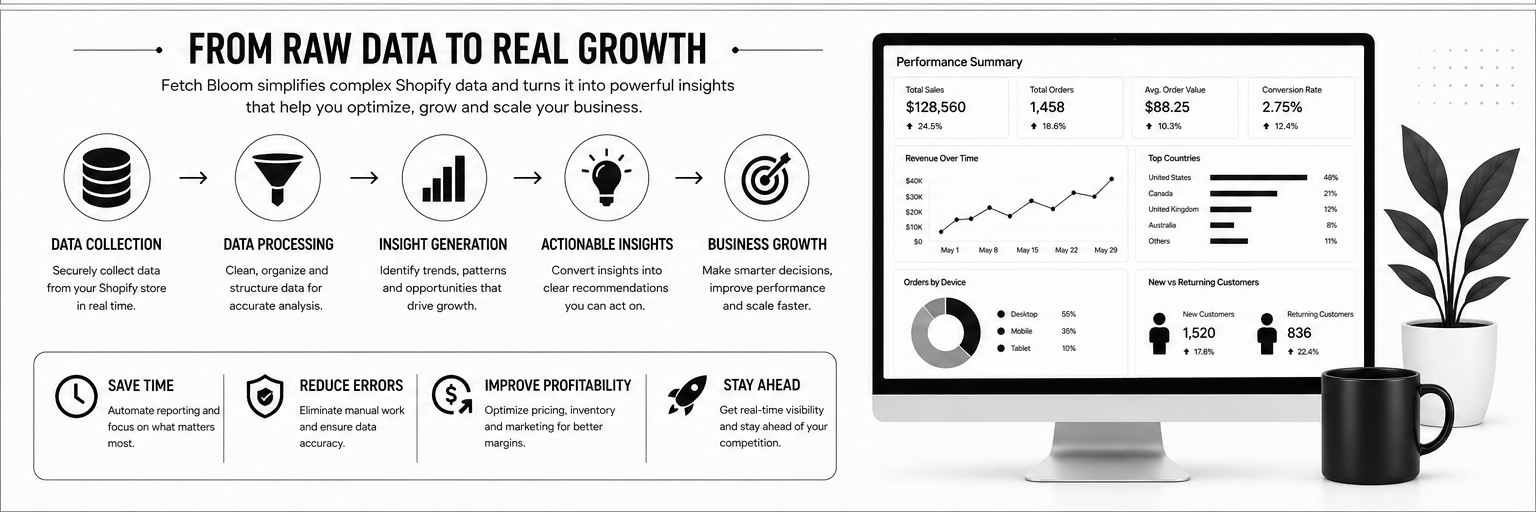
Transforming data into intelligence involves:
Organizing information into structured formats
Connecting different data points
Identifying meaningful patterns
Presenting insights in a clear and usable way
When this process is streamlined, businesses gain a powerful advantage.
They do not just see data.
They understand it.
Creating Structured Data Flow
One of the biggest challenges with raw Shopify data is lack of structure.
Data exists, but it is scattered.
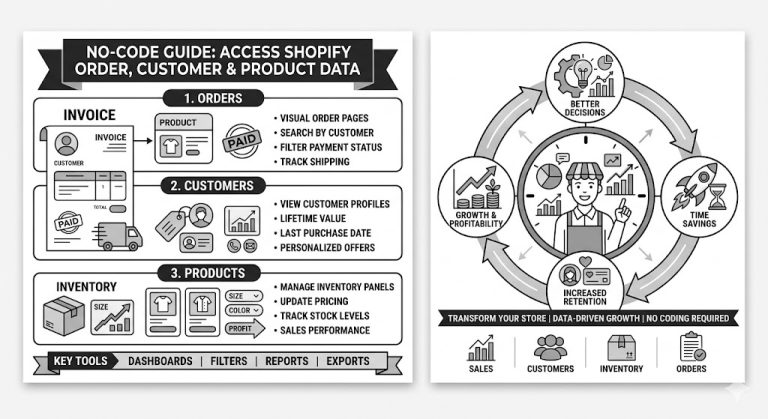
Orders, customers, products, and inventory often remain disconnected, making it difficult to build a complete business view.
A structured data flow solves this problem.
It connects different datasets into one consistent system where information is aligned and easy to interpret.
This creates:
Clarity across operations
Consistency in reporting
Faster access to insights
Reduced manual effort
Instead of searching for answers across multiple reports, businesses can view connected information in one place.
This removes confusion and allows teams to focus on decision-making rather than data management.
Structure creates simplicity.
And simplicity improves speed.
Turning Numbers into Meaningful Insights
Numbers alone do not guide decisions.
Context does.
A revenue figure, for example, does not explain whether growth is sustainable. A high order count does not guarantee profitability. A popular product does not always mean customer satisfaction.
Meaningful insights come from understanding relationships between data points.
For example:
A drop in sales may indicate seasonal demand changes or pricing issues.
An increase in returns may reveal product quality concerns.
A rise in abandoned carts may highlight checkout friction.
When data is interpreted with context, it becomes actionable.
Businesses can:
Improve pricing strategies
Adjust marketing campaigns
Enhance customer experience
Optimize product offerings
This transformation—from numbers to meaning—is what makes data valuable.
Without meaning, data remains static.
With meaning, it becomes a decision-making tool.
Real-Time Visibility for Faster Decisions
Speed is one of the most important factors in eCommerce success.
Markets change quickly.
Customer behavior shifts constantly.
Opportunities appear and disappear rapidly.
Traditional reporting methods often create delays. Businesses rely on manual exports, outdated spreadsheets, and periodic reviews. By the time insights are available, the situation may have already changed.
Real-time visibility changes this dynamic.
It allows businesses to monitor performance continuously and respond immediately.
This enables:
Faster reaction to sales trends
Immediate adjustment of marketing strategies
Quick identification of operational issues
Proactive inventory management
Speed improves competitiveness.
Businesses that act quickly capture opportunities before competitors do.
Real-time insights turn decision-making into a continuous process rather than a delayed activity.
Reducing Complexity for Non-Technical Users
One of the biggest barriers to effective data usage is technical complexity.
Many business owners are not developers.
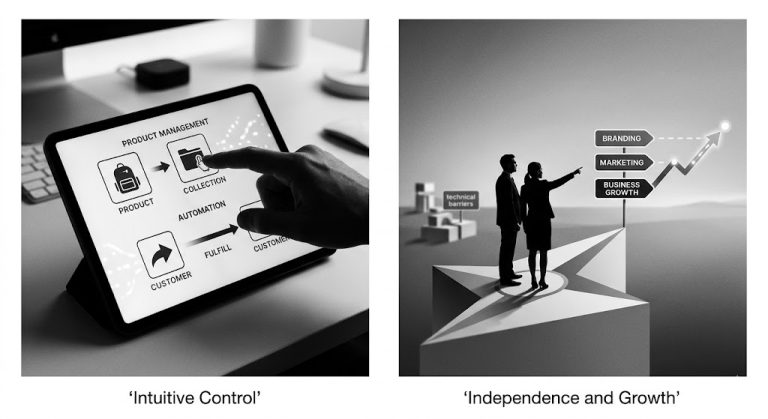
They do not want to manage APIs, write code, or handle complex integrations just to understand their store performance.
When data systems are too technical, they create dependency.
Teams must rely on developers or analysts to access insights. This slows decision-making and reduces flexibility.
Simplifying data access removes this barrier.
It allows non-technical users to:
View insights independently
Understand performance clearly
Make decisions without delay
This improves efficiency across teams.
Marketing, sales, and operations can all access the information they need without waiting.
Independence creates agility.
And agility improves business performance.
Improving Accuracy and Reducing Errors
Manual data handling often introduces errors.
Common issues include:
Incorrect data entry
Missing records
Inconsistent reporting formats
Outdated information
These errors may seem small, but they can lead to poor decisions.
For example:
Incorrect sales data may result in wrong pricing strategies.
Incomplete inventory data may cause stock shortages or overstocking.
Misinterpreted customer data may affect marketing effectiveness.
Reducing manual intervention improves accuracy.
Consistent data processing ensures that information remains reliable and trustworthy.
Reliable data leads to reliable decisions.
And reliable decisions strengthen business outcomes.
Enhancing Sales and Revenue Strategy
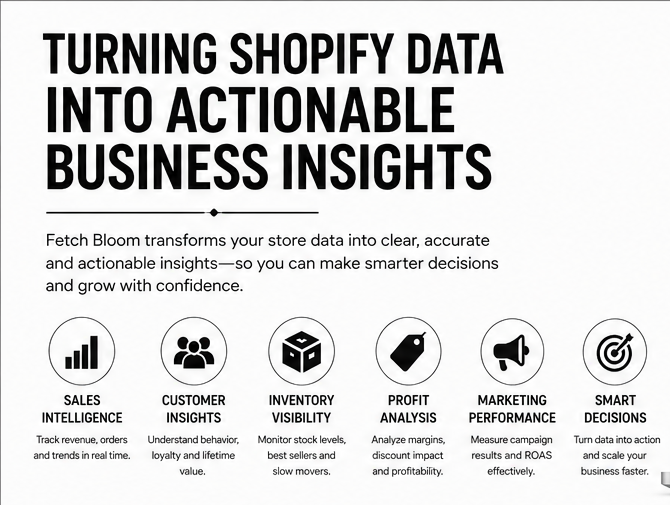
Sales data becomes far more powerful when it is properly structured and analyzed.
Instead of simply tracking revenue, businesses can understand:
Which products generate the highest profit
Which categories are growing or declining
Which customers contribute most to revenue
How discounts affect margins
This allows businesses to:
Focus on high-performing products
Improve pricing strategies
Optimize promotional campaigns
Increase overall profitability
Sales become strategic rather than reactive.
This leads to more stable and predictable growth.
Understanding Customer Behavior at a Deeper Level
Customer insights are one of the most valuable outcomes of structured data.
Beyond transactions, businesses can analyze:
Customer preferences
Purchase frequency
Loyalty patterns
Drop-off points in the buying journey
This information supports:
Better retention strategies
Personalized marketing
Improved customer experience
Higher conversion rates
Understanding customers at this level creates stronger relationships.
And strong relationships lead to repeat business.
Customer behavior becomes a roadmap for growth.
Supporting Scalable Business Growth
As a Shopify store grows, its data becomes more complex.
More products, more customers, and more transactions increase operational pressure.
Without proper systems, this complexity leads to confusion.
Scalable data processes ensure that growth remains manageable.
They maintain:
Clear reporting structures
Consistent data organization
Reliable access to insights
This allows businesses to expand without losing control.
Growth becomes structured instead of chaotic.
And structured growth is sustainable.
Building a Data-Driven Business Culture
When insights are easy to access, data becomes part of everyday operations.
Teams begin to rely on evidence rather than assumptions.
They review performance regularly.
They make decisions based on real insights.
This creates a data-driven culture.
In such an environment:
Decisions are faster
Strategies are more accurate
Performance improves consistently
The entire organization becomes more aligned and focused.
This cultural shift is often more valuable than the technology itself.
Final Perspective
Turning Shopify data into actionable business insights is not just a technical process.
It is a strategic transformation.
It bridges the gap between information and decision-making.
It converts complexity into clarity.
It transforms raw numbers into meaningful direction.
Businesses that embrace this transformation gain a powerful advantage.
They operate with confidence.
They make faster decisions.
They respond proactively.
They grow strategically.
In modern eCommerce, success is no longer defined by how much data a business has.
It is defined by how well that data is used.
And when data becomes actionable, it becomes one of the strongest drivers of long-term growth.