
From Manual Operations to Smart Workflows
In today’s fast-moving digital economy, businesses are under constant pressure to operate faster, smarter, and more efficiently. Customer expectations are rising, competition is growing stronger, and operational complexity continues to increase across every industry. In this environment, relying heavily on manual operations is no longer sustainable for businesses that want to scale successfully.
For years, many companies managed daily operations through spreadsheets, repetitive administrative work, disconnected systems, and manual communication processes. While these methods may have worked during the early stages of business growth, they often become major obstacles as operations expand.
Manual systems create delays.
They increase the risk of human error.
They slow down decision-making.
And most importantly, they prevent businesses from operating at their full potential.
This is why modern organizations are rapidly shifting toward smart workflows.
Smart workflows are transforming the way businesses operate by replacing repetitive manual tasks with intelligent, connected, and streamlined processes. Instead of depending on constant human intervention for every operational activity, businesses are building systems that work faster, more accurately, and more consistently.
The transition from manual operations to smart workflows is not simply a technology upgrade.
It is a complete transformation in how businesses think, manage, and grow.
Understanding Manual Operations
Manual operations refer to business processes that rely heavily on human effort to complete routine tasks.
These tasks may include:
- Entering data manually
- Managing spreadsheets
- Sending repetitive emails
- Tracking orders individually
- Updating customer information manually
- Handling repetitive reporting tasks
- Coordinating workflows across disconnected systems
In many businesses, these processes are deeply embedded into daily operations.
At first, manual workflows may appear manageable because teams are smaller and operational complexity is limited. However, as businesses grow, manual systems begin creating significant inefficiencies.
Tasks that once required minutes may start consuming hours.
Processes become inconsistent.
Communication gaps increase.
And operational visibility becomes more difficult.
Eventually, businesses spend more time managing workflows than improving them.
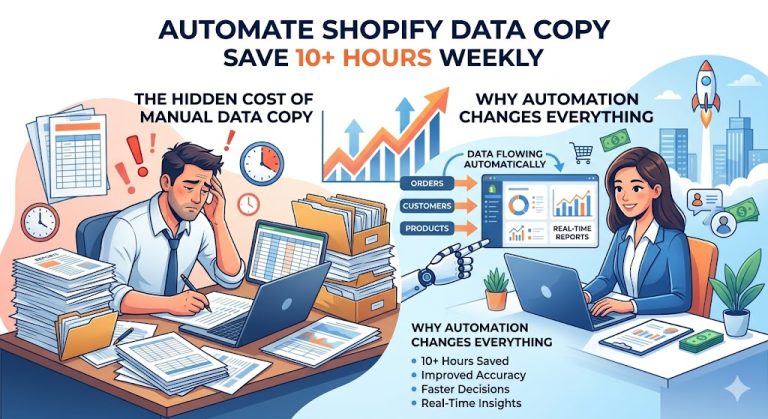
The Hidden Cost of Manual Work
One of the biggest problems with manual operations is that inefficiency often grows quietly.
Businesses may not immediately notice how much time, energy, and money are being lost through repetitive work.
For example:
- Employees repeatedly copy data between systems
- Teams spend hours preparing reports manually
- Customer requests are delayed because workflows are disconnected
- Inventory updates require constant monitoring
- Important information becomes scattered across multiple platforms
These small inefficiencies accumulate over time and create major operational pressure.
Manual operations also increase dependency on individuals rather than systems.
When workflows depend heavily on specific employees, businesses become more vulnerable to delays, inconsistencies, and communication breakdowns.
As operational complexity increases, scalability becomes difficult.
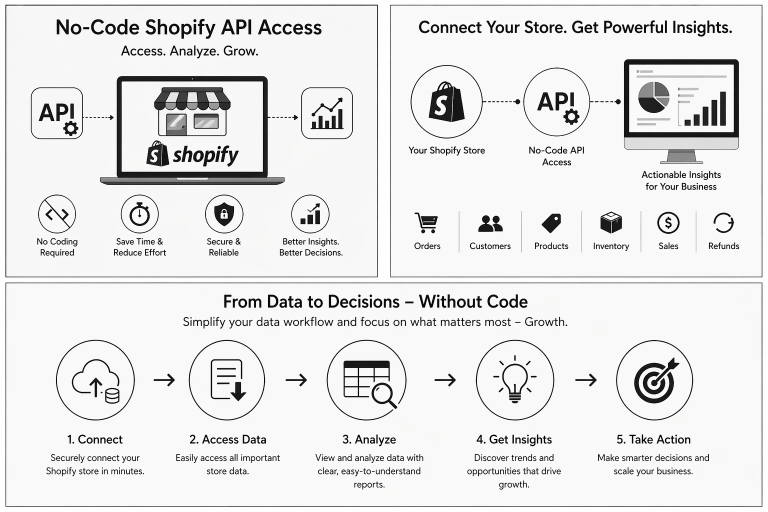
Why Businesses Are Moving Toward Smart Workflows
Modern businesses need operational systems that can adapt quickly, reduce repetitive work, and improve decision-making speed.
Smart workflows solve these challenges by creating connected operational environments where tasks move efficiently between systems, teams, and processes.
Instead of relying on manual coordination, businesses can create workflows that automatically support daily operations.
This shift creates several major advantages:
- Faster execution
- Better accuracy
- Improved operational visibility
- Reduced administrative workload
- More scalable business processes
Smart workflows allow businesses to focus more on growth, strategy, and customer experience instead of repetitive operational management.
Simplifying Daily Business Operations
One of the biggest benefits of smart workflows is operational simplicity.
Businesses often become overwhelmed because processes grow more complicated over time.
Different teams use different systems.
Data becomes fragmented.
Communication slows down.
And workflows become difficult to track.
Smart workflows simplify these operations by connecting processes into a more organized structure.
Instead of managing tasks manually across multiple platforms, businesses can create centralized operational flows where information moves smoothly and consistently.
This reduces confusion and improves overall efficiency.
Teams spend less time managing operations and more time improving business performance.
Improving Speed Across the Organization
Speed has become one of the most valuable competitive advantages in modern business.
Customers expect faster responses.
Markets change quickly.
Business opportunities appear and disappear rapidly.
Manual workflows often slow down operations because every step depends on human action.
For example:
- Orders require manual approval
- Customer information needs manual updates
- Reports must be prepared manually
- Internal communication depends on repetitive follow-ups
These delays create friction throughout the organization.
Smart workflows reduce these delays by streamlining operational movement.
Processes become faster because information flows automatically between systems and teams.
This allows businesses to:
- Respond to customers faster
- Process orders more efficiently
- Make decisions more quickly
- Improve overall business agility
Faster operations improve both customer experience and internal productivity.
Reducing Human Error
Human error is one of the most common challenges in manual operations.
Even highly skilled employees can make mistakes when performing repetitive tasks repeatedly.
Common problems include:
- Incorrect data entry
- Duplicate information
- Missing updates
- Reporting inconsistencies
- Communication mistakes
As businesses grow, these errors become more expensive.
Small mistakes can affect customer satisfaction, operational accuracy, and financial reporting.
Smart workflows reduce this risk by creating more consistent operational systems.
When processes are structured clearly and information flows automatically, businesses experience fewer operational disruptions and stronger reliability.
Consistency becomes easier to maintain across the organization.
Better Visibility Creates Better Decisions
One major limitation of manual operations is poor visibility.
When information exists across disconnected systems and spreadsheets, decision-makers struggle to see the complete picture.
This creates uncertainty.
Businesses may not fully understand:
- Operational bottlenecks
- Customer behavior patterns
- Sales performance
- Inventory issues
- Workflow inefficiencies
Smart workflows improve visibility by organizing information into connected systems.
This allows businesses to monitor operations more clearly and identify problems earlier.
Better visibility leads to:
- Faster decision-making
- Improved forecasting
- Stronger operational planning
- More strategic leadership
Businesses become proactive instead of reactive.
Creating More Scalable Operations
Scalability is one of the biggest reasons businesses move toward smart workflows.
Manual operations often work temporarily during early growth stages.
But as businesses expand, operational complexity increases rapidly.
More customers.
More transactions.
More products.
More communication.
More operational pressure.
Without scalable workflows, growth can become difficult to manage.
Businesses may need to hire additional staff simply to handle repetitive operational work.
This increases costs without necessarily improving efficiency.
Smart workflows allow businesses to scale more effectively because systems handle operational complexity more efficiently.
Instead of increasing manual workload, businesses improve process efficiency.
This creates sustainable growth.
Enhancing Customer Experience
Customer expectations are higher than ever.
Modern customers expect:
- Fast responses
- Smooth purchasing experiences
- Accurate information
- Reliable service
- Consistent communication
Manual workflows often struggle to meet these expectations because operational delays affect customer interactions directly.
For example:
- Slow response times frustrate customers
- Delayed updates reduce trust
- Inconsistent communication creates confusion
Smart workflows improve customer experience by creating faster and more reliable operational systems.
Businesses can respond more efficiently, maintain better communication, and deliver smoother experiences throughout the customer journey.
Customer satisfaction improves when operations become more organized and responsive.
Empowering Teams to Focus on Higher-Value Work
One major problem with manual operations is that employees spend excessive time on repetitive administrative tasks.
This reduces productivity and limits creativity.
Talented employees should focus on:
- Strategic planning
- Customer relationships
- Innovation
- Business development
- Problem-solving
Instead, many teams become trapped in repetitive operational work.
Smart workflows reduce repetitive workload and allow employees to focus on more valuable contributions.
This improves:
- Team productivity
- Employee satisfaction
- Business innovation
- Operational efficiency
Businesses become more dynamic and growth-focused.
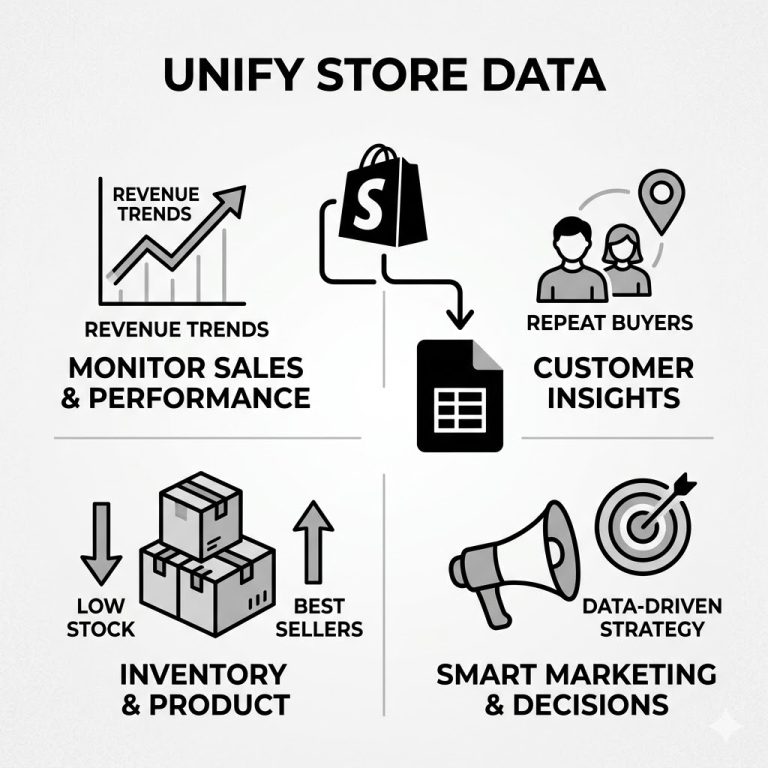
Data Becomes More Useful
Modern businesses generate enormous amounts of operational data.
However, manual workflows often create fragmented information that is difficult to analyze effectively.
Smart workflows improve data organization and accessibility.
This allows businesses to:
- Track performance more accurately
- Identify operational patterns
- Improve forecasting
- Make data-driven decisions
Data becomes a strategic asset instead of scattered information.
Better data visibility improves overall business intelligence.
Improving Collaboration Across Departments
Disconnected workflows often create communication barriers between teams.
Marketing, sales, operations, and customer support may all operate separately with limited coordination.
This creates inefficiency and slows down decision-making.
Smart workflows improve collaboration by creating more connected operational environments.
Teams can access shared information more easily and coordinate actions more efficiently.
This improves organizational alignment and reduces operational friction.
Businesses operate more cohesively.
The Shift Toward Intelligent Business Operations
The move from manual operations to smart workflows represents a broader transformation in modern business thinking.
Businesses are no longer focused only on working harder.
They are focused on working smarter.
Efficiency, visibility, and operational intelligence are becoming central to long-term business success.
Modern organizations understand that sustainable growth requires systems that can adapt, scale, and support continuous improvement.
Smart workflows provide that foundation.
They create environments where businesses can operate more strategically, respond faster, and improve continuously.
Simplicity Is Becoming a Competitive Advantage
One important lesson modern businesses are learning is that simplicity often creates stronger performance.
Complicated workflows create confusion.
Disconnected systems create delays.
Excessive manual work reduces agility.
Smart workflows simplify operations by reducing unnecessary friction.
Businesses become easier to manage.
Teams become more productive.
Decision-making becomes clearer.
Simplicity improves operational speed and scalability.
And in competitive markets, businesses that operate more efficiently often outperform businesses with more complicated systems.
Final Thoughts
The transition from manual operations to smart workflows is reshaping how modern businesses operate.
Manual systems may have supported businesses in the past, but growing operational complexity now requires smarter and more connected approaches.
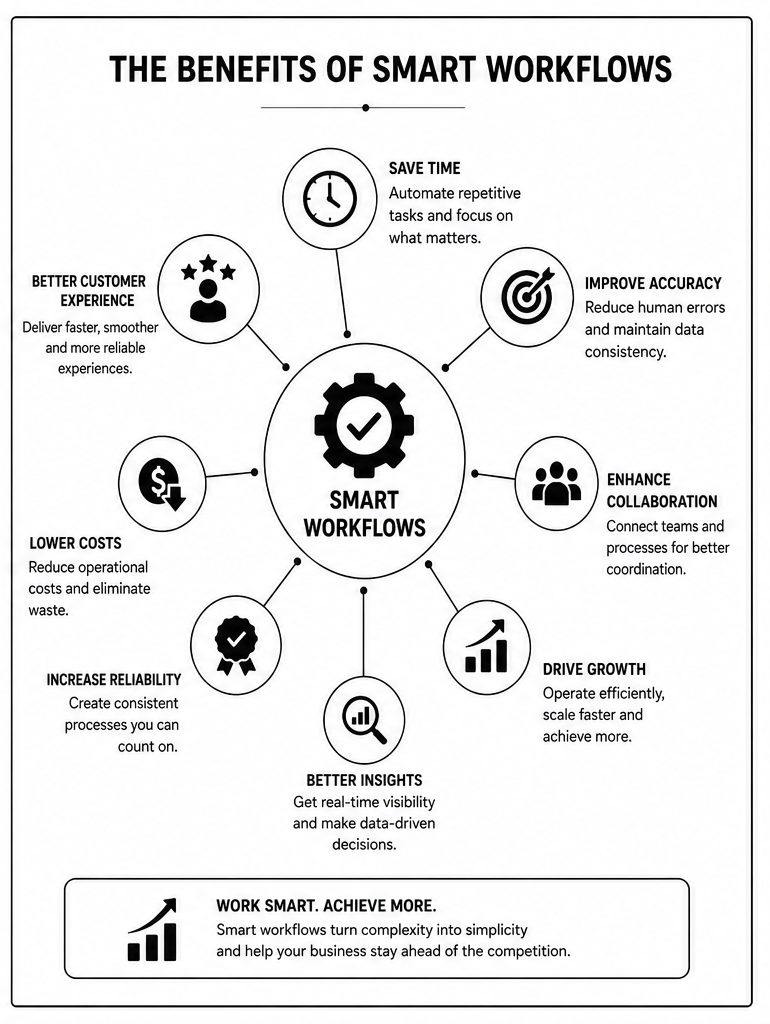
Smart workflows improve:
- Operational efficiency
- Business scalability
- Customer experience
- Decision-making speed
- Data visibility
- Team productivity
- Organizational consistency
Most importantly, they allow businesses to focus less on repetitive management and more on strategic growth.
In today’s fast-changing business environment, success is no longer determined only by effort.
It is determined by how intelligently businesses operate, adapt, and scale.
Because the future belongs to businesses that can transform complexity into simplicity and operations into smart systems.