Export Shopify Data to Google Sheets: A Smarter Way to Manage E-commerce Operations
Introduction
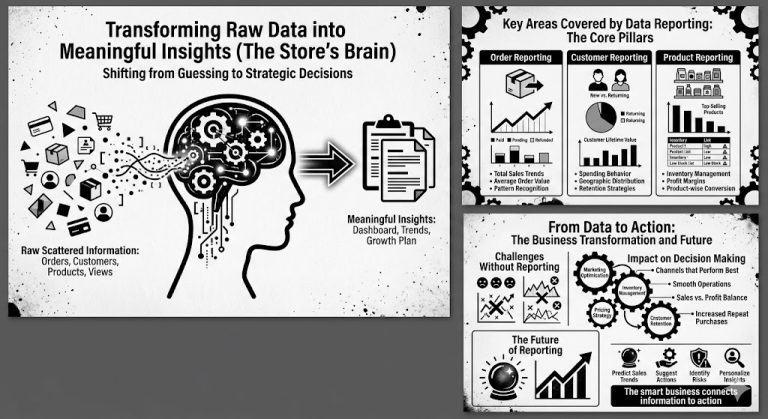
In the world of modern eCommerce, data is one of the most valuable business assets. Every Shopify store generates important information every day—orders, customer details, product performance, inventory updates, shipping records, refunds, and sales trends. This data helps businesses understand what is working, what needs improvement, and where future growth opportunities exist.
However, having access to data is not the same as using it effectively.
Many store owners struggle because important information remains scattered across different sections of the store. Reports may exist inside dashboards, but comparing performance, tracking patterns, and making quick decisions often becomes difficult when data is not organized in a flexible and accessible format.
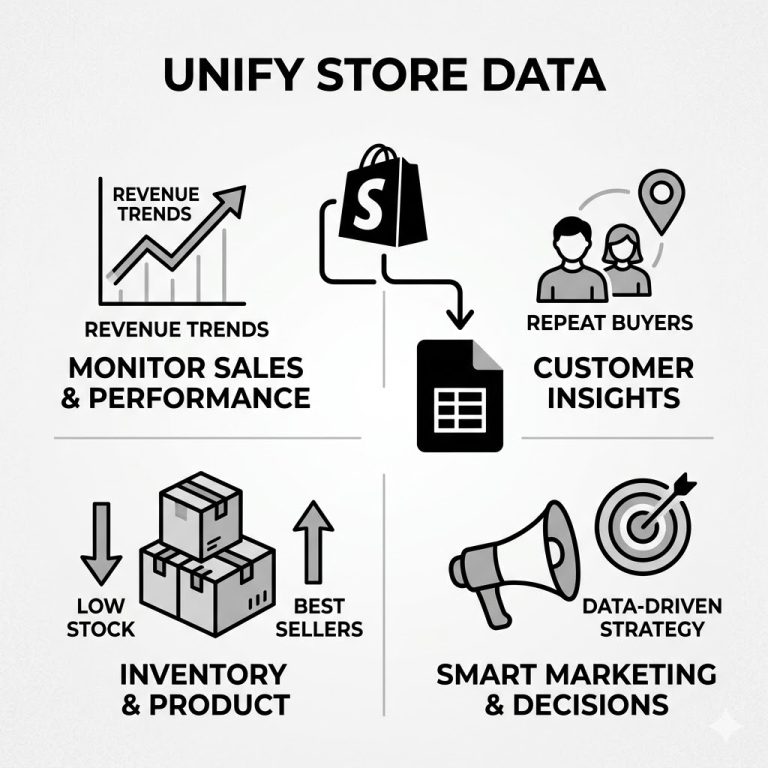
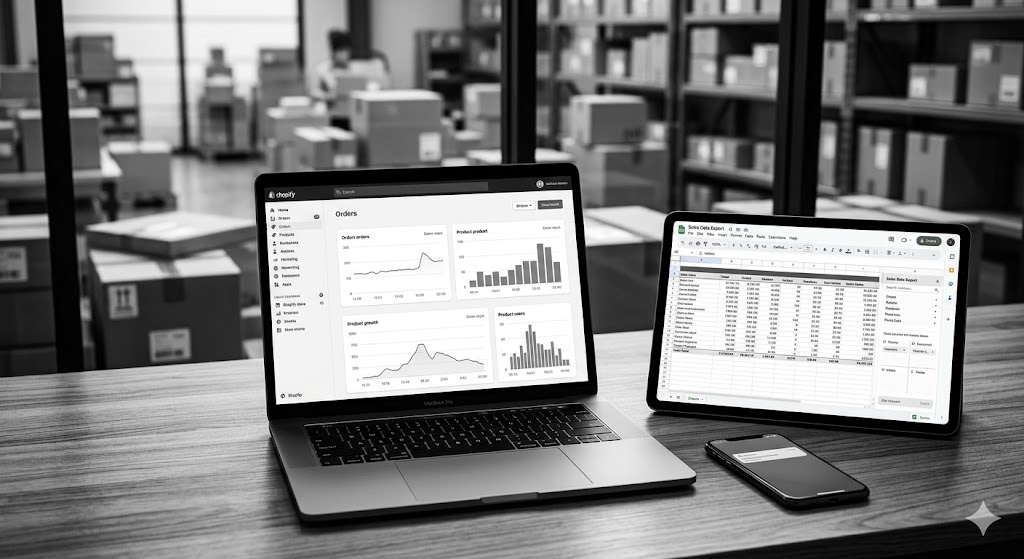
This is why exporting Shopify data to Google Sheets has become a smart operational strategy.
Google Sheets offers simplicity, accessibility, collaboration, and better visibility for teams that need quick business insights without technical complexity. It allows store owners, managers, marketers, and operations teams to work with live business information in a structured and familiar environment.
Instead of relying only on platform dashboards, businesses can create custom views, track performance trends, compare reports, and make stronger decisions using organized spreadsheet workflows.
This is not just about convenience.
It is about improving speed, accuracy, and business control.
Modern eCommerce growth depends on how quickly teams can understand information and act on it.
Google Sheets helps make that possible.
Why Businesses Need Flexible Data Access
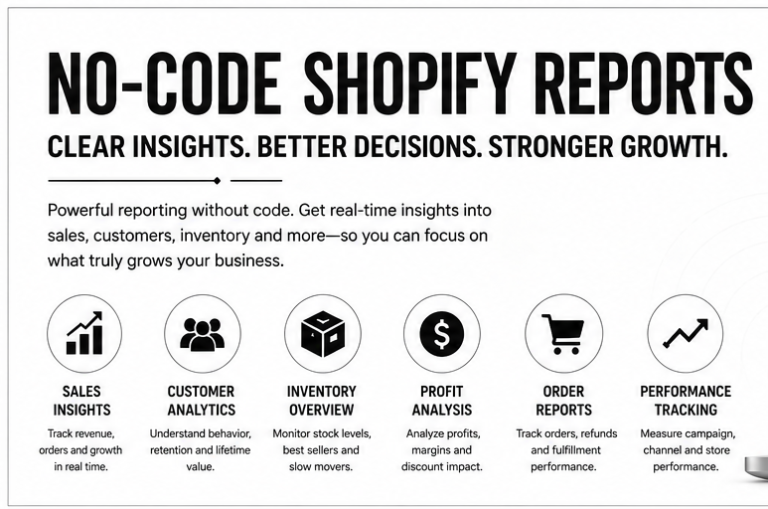
Shopify provides valuable reporting features, but many businesses need more flexibility than standard dashboards can offer.
A growing store may want to compare:
Monthly sales performance
Customer purchase behavior
Best-selling product trends
Inventory movement
Marketing campaign results
Refund patterns
Profitability by product category
Standard reports often provide useful information, but they may not always offer the exact structure needed for strategic planning.
Business owners want freedom.
They want to filter data differently, create custom summaries, track specific KPIs, and collaborate across teams without depending on complicated systems.
This is where Google Sheets becomes powerful.
It allows businesses to move beyond fixed reporting and build personalized visibility based on actual business goals.
The goal is not simply to view data.
It is to use data intelligently.
And flexible access makes that possible.
Why Google Sheets Works So Well for E-commerce
Google Sheets has become one of the most practical tools for business operations because it combines simplicity with strong collaboration.
Unlike traditional spreadsheets stored on one device, Google Sheets offers:
Cloud-based access
Real-time collaboration
Automatic saving
Easy sharing
Flexible reporting structures
Cross-team visibility
This means store owners, marketing teams, operations managers, and leadership teams can work with the same information at the same time.
There is no confusion about outdated files or multiple spreadsheet versions.
Everyone works from one clear source of truth.
This improves communication and reduces reporting mistakes.
For eCommerce businesses, speed and alignment matter.
Google Sheets supports both.
That is why it remains one of the most effective operational tools for modern Shopify stores.
Sales Reporting Becomes More Strategic
Sales reporting is one of the strongest reasons businesses export Shopify data to Google Sheets.
Revenue numbers alone do not explain business performance.
Businesses need deeper understanding.
They need visibility into:
Best-selling products
Revenue by time period
Repeat customer purchases
Discount impact
Refund trends
Sales by location
Profit opportunities
Google Sheets allows businesses to organize this information in ways that support better decisions.
Teams can create custom sales summaries, compare growth periods, and identify weak-performing areas before they become larger problems.
This helps improve:
Pricing strategies
Promotion planning
Product prioritization
Revenue forecasting
Sales team decision-making
Sales become more than transactions.
They become a strategic growth system.
And strategy creates stronger profitability.
Customer Insights Become Easier to Track
Customer behavior is one of the most valuable drivers of long-term business success.
But customer understanding often becomes difficult when information is spread across multiple reports.
Businesses need to know:
Who buys repeatedly
Which products create loyalty
How often customers return
Where customers stop purchasing
Which customers bring the highest value
Google Sheets helps organize this information clearly.
Instead of reviewing scattered customer reports, businesses can build simple customer performance tracking systems that improve retention planning.
This supports:
Better customer loyalty strategies
Personalized marketing decisions
Improved customer experience
Higher repeat purchase rates
Long-term brand trust
Repeat customers often create the most stable revenue.
That is why customer reporting is not just useful—
it is essential.
And stronger visibility creates stronger relationships.
Inventory Management Improves with Better Visibility
Inventory mistakes are expensive.
Too much stock blocks cash flow.
Too little stock causes missed sales.
Slow-moving products quietly reduce profitability over time.
Many businesses struggle with inventory because visibility is weak.
Google Sheets helps teams track:
Fast-selling inventory
Low-performing stock
Restocking priorities
Seasonal demand changes
Supplier performance
Product return impact
This improves:
Cash flow planning
Inventory investment decisions
Supplier coordination
Profit margin protection
Operational efficiency
Inventory becomes more than stock management.
It becomes a financial strategy.
And financial control improves business confidence.
Because healthy operations begin with healthy visibility.
Marketing Performance Becomes Clearer
Marketing campaigns should create measurable business results.
But many businesses struggle to connect ad spend with actual store performance.
They know traffic increased—but did revenue improve?
They launched promotions—but did customer retention grow?
Google Sheets helps connect marketing activity with business outcomes.
Teams can compare:
Campaign performance
Sales generated by promotions
Customer acquisition patterns
Repeat purchase behavior
Conversion changes
Retention improvements
This creates stronger marketing decisions.
Budgets become smarter.
Campaigns become more intentional.
Weak strategies are identified faster.
Strong strategies receive more investment.
Marketing becomes performance-driven instead of assumption-based.
And that improves long-term profitability.
Small Teams Gain Better Operational Control
Many Shopify businesses run with small teams.
Often, the same people handle:
Sales
Customer support
Marketing
Inventory
Operations
Growth planning
This creates pressure when reporting systems are unclear.
Google Sheets helps small teams work with more structure and less stress.
Instead of depending on multiple disconnected systems, teams gain one organized operational view.
This reduces:
Manual reporting delays
Repeated data confusion
Communication gaps
Operational mistakes
Daily business stress
Small teams do not always need bigger systems.
Often, they need clearer systems.
And clarity creates stronger leadership.
Because organized businesses grow faster than overwhelmed ones.
Scaling Growth Without Losing Visibility
As a Shopify store grows, data complexity increases.
More products create more reporting.
More customers create more service needs.
More orders create more financial decisions.
Manual tracking methods that once worked begin to fail.
This creates confusion.
Google Sheets supports growth by helping businesses maintain:
Consistent reporting structures
Clear operational visibility
Reliable performance tracking
Better financial planning
Scalable team collaboration
Growth becomes manageable instead of chaotic.
Businesses can scale without losing confidence in daily operations.
Sustainable growth depends on systems that grow with the business.
Without visibility, fast growth often becomes expensive.
Clear reporting protects success.

Better Decisions Start with Better Access
One of the most important benefits of exporting Shopify data to Google Sheets is decision-making confidence.
When leaders trust their reporting, they move faster.
They know when to increase inventory.
They know when to improve pricing.
They know where customer retention needs attention.
They know which products deserve more investment.
Without clear access, even simple decisions feel risky.
Should marketing spend increase?
Should a new product category launch?
Should hiring happen now?
Should supplier relationships change?
Clear reporting removes hesitation.
It replaces assumptions with evidence.
And evidence creates stronger business leadership.
Confidence often becomes the hidden reason behind successful growth.
Because businesses that move clearly outperform businesses that move slowly.
Final Thoughts
Exporting Shopify data to Google Sheets is not just a reporting task.
It is a smarter way to manage modern eCommerce operations.
It transforms:
Scattered store data into organized business visibility
Manual reporting into faster decision-making
Disconnected teams into collaborative workflows
Operational confusion into strategic clarity
Most importantly, it helps businesses use information with purpose.
The goal is not simply to collect more data.
It is to make better business decisions.
And better decisions always begin with better access.
Google Sheets provides that access in a practical, flexible, and business-friendly way.
For modern Shopify stores, this creates more than efficiency.
It creates stronger operations, smarter leadership, and sustainable long-term growth.
That is the real value of exporting store data the right way.