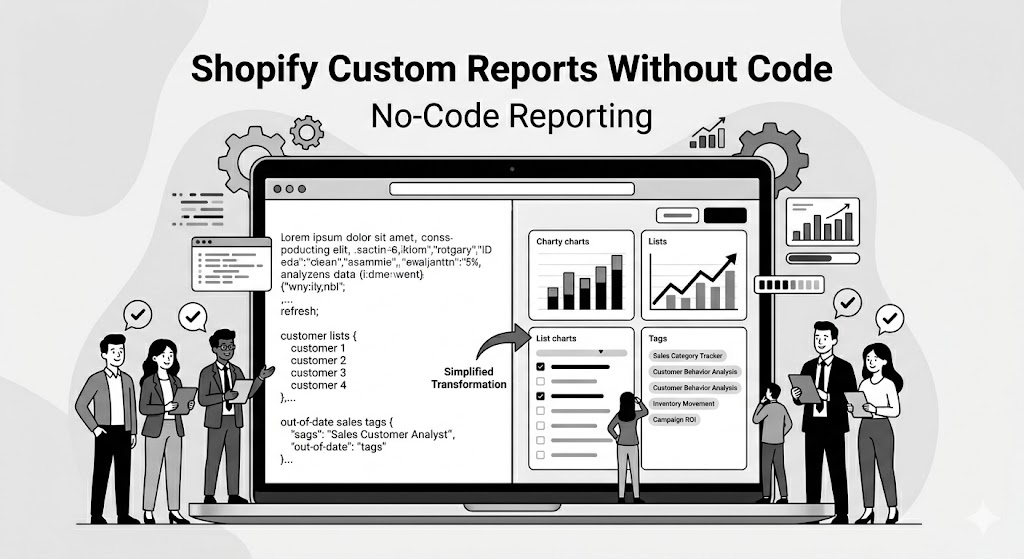
Shopify Custom Reports Without Code: Simplifying Data Insights for Modern eCommerce
Shopify Custom Reports Without Code: Simplifying Data Insights for Modern eCommerce
In today’s competitive eCommerce environment, data plays a critical role in shaping business success. Every interaction within an online store—from product views and customer behavior to completed transactions—generates valuable information. For businesses operating on Shopify, this data holds immense potential. However, the real challenge lies not in collecting data, but in transforming it into meaningful insights that support decision-making.
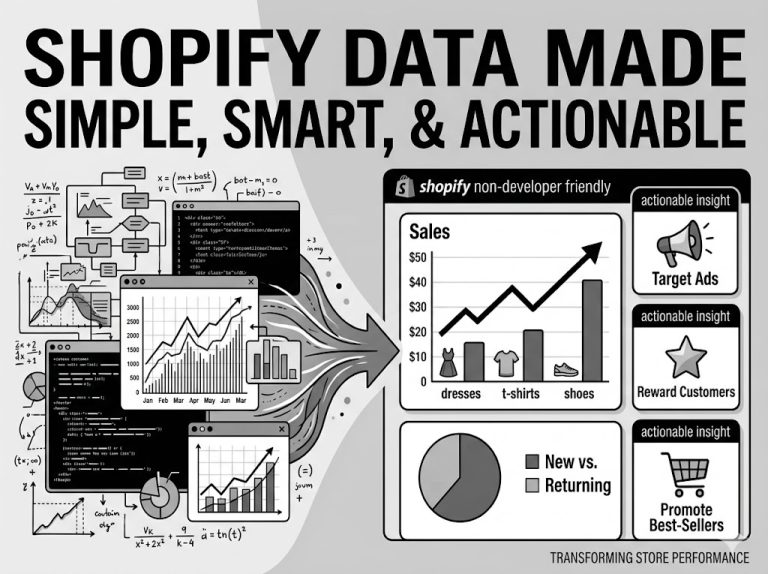
Traditionally, creating custom reports required technical expertise, complex tools, or manual data handling. This created a gap between data availability and usability, especially for non-technical users. The emergence of no-code approaches has transformed this landscape, allowing businesses to generate custom reports easily without relying on developers or advanced technical skills.
This article explores how Shopify custom reports can be created without code, why they matter, and how they contribute to efficient and scalable business operations.
Understanding Shopify Custom Reports
Custom reports refer to tailored data views that focus on specific business needs. Instead of relying on standard, pre-built reports, businesses can define what data they want to see and how they want to analyze it.
For example, a business may want to:
- Track sales performance for a specific product category
- Analyze customer purchase behavior over time
- Monitor inventory movement for selected products
- Evaluate marketing campaign effectiveness
Custom reports provide flexibility, allowing businesses to focus on metrics that directly impact their goals.

The Limitations of Traditional Reporting Methods
Before the rise of no-code solutions, generating custom reports often involved several challenges:
- Technical Complexity
Creating reports required knowledge of data structures, APIs, or database queries. Non-technical users found it difficult to access and manipulate data. - Time-Consuming Processes
Manual data extraction, spreadsheet formatting, and repeated updates consumed significant time and effort. - Fragmented Data Sources
Data was often scattered across different sections such as orders, customers, and products, making it difficult to create a unified view. - Delayed Insights
By the time reports were prepared, the data was often outdated, reducing its usefulness for decision-making.
These limitations highlighted the need for a more efficient and accessible approach.
The Rise of No-Code Reporting
No-code reporting introduces a simplified way to work with data. It eliminates the need for programming and allows users to create custom reports using intuitive interfaces.
This approach is based on a simple idea:
Users should be able to access and analyze data without needing technical expertise.
No-code reporting focuses on:
- Ease of use
- Speed of execution
- Accessibility for all users
It transforms reporting from a technical task into a business-friendly process.
How No-Code Custom Reports Work in Shopify
Creating custom reports without code follows a streamlined and structured workflow. While the exact process may vary, the core steps remain consistent:
- Data Selection
Users choose the type of data they want to analyze, such as sales, customers, or inventory. - Filtering and Segmentation
Specific conditions can be applied to refine the data. For example:
- Date ranges
- Product categories
- Customer segments
- Data Structuring
The selected data is organized into a clear and readable format, making it easier to interpret. - Visualization and Output
Reports are presented in formats such as tables, charts, or summaries, depending on the user’s needs.
This process ensures that users can generate meaningful reports quickly and efficiently.
Benefits of No-Code Shopify Custom Reports
The adoption of no-code reporting provides several advantages for businesses:
1. Accessibility for Non-Technical Users
No-code systems eliminate the need for coding knowledge, making reporting accessible to business owners, marketers, and operational teams.
2. Faster Report Generation
Reports can be created in minutes instead of hours, enabling quicker access to insights.
3. Improved Decision-Making
With easy access to relevant data, businesses can make informed decisions based on real-time information.
4. Reduced Dependency on Technical Teams
Users can generate reports independently, reducing reliance on developers or analysts.
5. Increased Efficiency
Automation and simplified workflows reduce manual effort and improve productivity.
Practical Applications of Custom Reports
Custom reports without code can be used across multiple business functions:
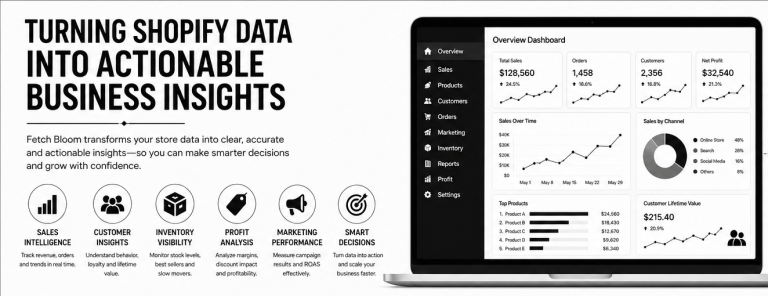
Sales Performance Analysis
Businesses can track:
- Daily, weekly, or monthly revenue
- Best-selling products
- Seasonal trends
This helps in identifying growth opportunities and optimizing sales strategies.
Customer Behavior Insights
Understanding customer behavior is essential for long-term success. Reports can reveal:
- Purchase frequency
- Customer lifetime value
- Buying patterns
These insights support personalized marketing and improved customer retention.
Inventory Management
Custom reports help businesses:
- Monitor stock levels
- Identify fast-moving products
- Prevent overstocking or stockouts
Efficient inventory management reduces costs and improves operations.
Marketing Performance Evaluation
Businesses can measure:
- Campaign effectiveness
- Conversion rates
- Return on investment
This ensures that marketing efforts are aligned with business goals.
From Raw Data to Actionable Insights
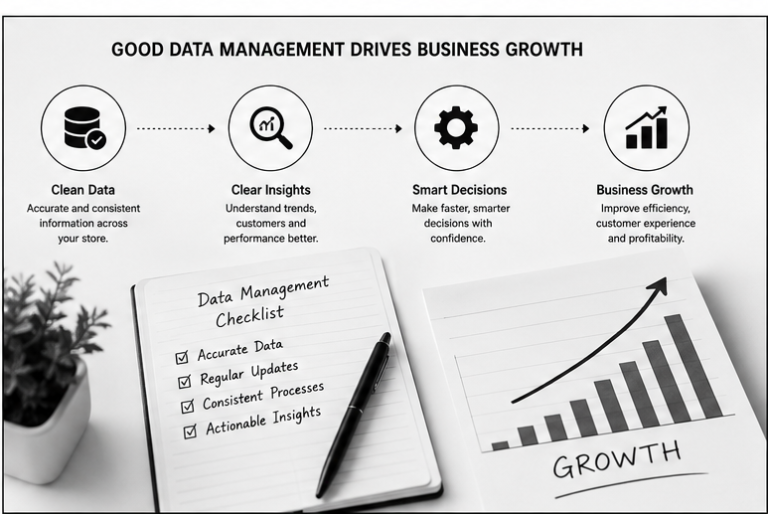
Raw data alone does not create value. Its true potential is realized when it is transformed into actionable insights.
No-code custom reporting simplifies this transformation by:
- Organizing data into meaningful structures
- Highlighting key metrics
- Presenting clear patterns and trends
This enables users to move from data observation to decision-making quickly.
Encouraging Data-Driven Culture
When reporting becomes simple and accessible, it encourages regular data usage across the organization.
Teams can:
- Monitor performance regularly
- Identify issues early
- Adjust strategies proactively
This creates a data-driven culture where decisions are based on evidence rather than assumptions.
Reducing Errors and Improving Accuracy
Manual data handling often leads to inconsistencies and errors. No-code systems reduce these risks by:
- Automating data processing
- Maintaining consistent formats
- Eliminating repetitive manual tasks
Accurate data ensures reliable insights and better business outcomes.
Scalability and Growth
As a business grows, its data becomes more complex. Managing this data manually becomes increasingly difficult.
No-code custom reporting supports scalability by:
- Handling large datasets efficiently
- Maintaining clarity and organization
- Delivering insights regardless of data volume
This ensures that reporting remains effective at every stage of growth.

Integrating Reporting into Daily Operations
Reporting should not be treated as a separate task. It should be integrated into daily business operations.
No-code systems make this possible by:
- Providing real-time access to data
- Delivering instant insights
- Supporting quick decision-making
This integration improves responsiveness and operational efficiency.
Bridging the Gap Between Data and Action
One of the biggest advantages of no-code reporting is its ability to connect insights with action.
Instead of just presenting data, it enables users to:
- Understand what is happening
- Identify why it is happening
- Take immediate action
This connection transforms reporting into a strategic tool.
Challenges and Considerations
While no-code reporting offers many benefits, businesses should consider:
- Ensuring data accuracy and consistency
- Defining clear reporting objectives
- Avoiding information overload
A focused approach ensures that reports remain useful and relevant.
The Future of No-Code Reporting in eCommerce
The shift toward no-code solutions reflects a broader trend in technology. Businesses are moving toward tools that prioritize usability and accessibility.
In the future:
- More advanced reporting features will become available without coding
- Data accessibility will become a standard expectation
- Businesses will rely more on self-service analytics
This evolution will further empower non-technical users.
Conclusion
Shopify custom reports without code represent a significant advancement in how businesses interact with data. By removing technical barriers, simplifying workflows, and improving accessibility, no-code reporting enables users to unlock the full potential of their data.
It transforms reporting from a complex, time-consuming task into a fast, intuitive, and valuable process. Businesses can generate insights quickly, make informed decisions, and operate more efficiently.
In Essence
Data becomes accessible.
Reporting becomes effortless.
Insights become actionable.
No-code custom reporting empowers businesses to move beyond limitations and fully embrace data-driven growth, making it an essential component of modern eCommerce success. 🚀