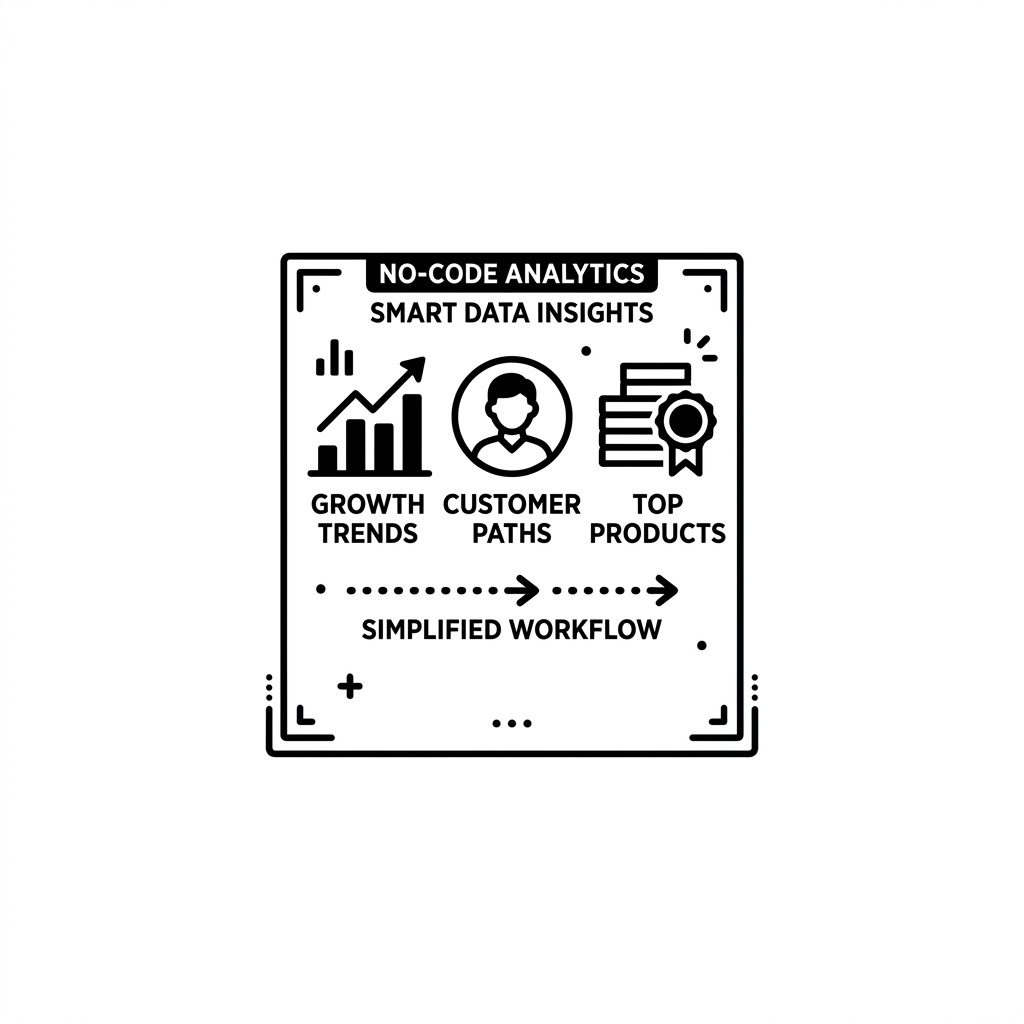
Shopify Analytics Dashboard No Code – Making Store Data Easy for Everyone
In the world of e-commerce, data has become one of the most valuable business assets. Every visitor, order, product click, customer interaction, and checkout action creates information that can help businesses grow faster and make smarter decisions.
But there’s one major problem many Shopify store owners face:
Most people are not developers.
They don’t know coding, technical reporting systems, or complicated analytics setups. Yet they still need clear insights to understand what is happening inside their store.
This is exactly why the demand for a Shopify analytics dashboard with no code has grown rapidly.
A no-code analytics dashboard simplifies complex store data into visual, easy-to-understand insights that anyone can use—whether they are business owners, marketers, operations managers, or customer support teams.
Instead of struggling with technical complexity, businesses can focus on what truly matters:
- Understanding performance
- Identifying opportunities
- Improving customer experience
- Growing revenue
In modern e-commerce, simplicity is becoming one of the biggest competitive advantages.
What Is a Shopify Analytics Dashboard?
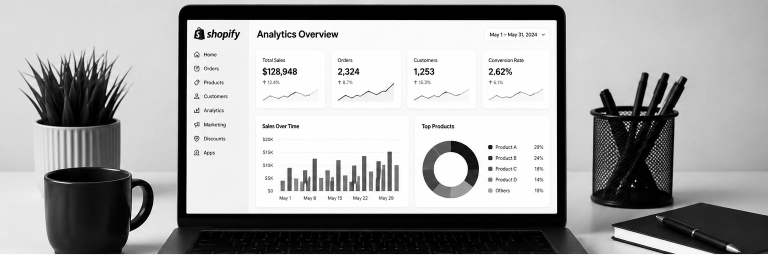
A Shopify analytics dashboard is a centralized view of store performance data.
Instead of checking multiple reports separately, businesses can see everything in one organized place.
The dashboard typically displays:
- Sales performance
- Customer behavior
- Product analytics
- Order trends
- Conversion metrics
- Inventory insights
- Traffic activity
The purpose is simple:
Transform raw store data into clear business insights.
Why “No Code” Matters So Much
Traditional analytics systems often require:
- Technical setup
- Coding knowledge
- Complex integrations
- Manual reporting work
This creates problems for many Shopify businesses because:
- Small teams lack developers
- Store owners want faster access to data
- Marketing teams need simple reporting
- Decision-making should not depend on technical skills
A no-code approach removes these barriers completely.
It allows anyone to:
- Access reports easily
- Understand performance quickly
- Create visual dashboards
- Make data-driven decisions without technical expertise
This makes analytics accessible to everyone inside the business.
The Growing Importance of Data in Shopify Stores
Modern Shopify stores generate massive amounts of data daily.
Every customer action creates information such as:
- Product views
- Cart activity
- Purchase history
- Checkout behavior
- Returning customer trends
Without proper organization, this information becomes overwhelming.
Many store owners experience:
- Data overload
- Reporting confusion
- Delayed decisions
- Difficulty identifying priorities
A no-code analytics dashboard solves this by simplifying information into meaningful visuals and actionable insights.
Turning Raw Numbers Into Clear Insights
Numbers alone are not useful unless businesses understand what they mean.
For example:
- 10,000 visitors may sound impressive
- But if conversions are low, traffic alone means little
A strong analytics dashboard helps businesses understand:
- Why sales are growing
- Which products perform best
- Where customers drop off
- Which marketing efforts actually work
This transforms data from random numbers into strategic business guidance.
Sales Analytics Made Simple
Sales performance is one of the most important areas for Shopify businesses.
A no-code dashboard allows store owners to track:
- Daily revenue
- Weekly and monthly sales trends
- Average order value
- Refund activity
- Growth patterns
Why This Matters
Instead of guessing whether business is improving, businesses can clearly measure performance.
For example:
- Sales may increase during weekends
- Certain promotions may improve order value
- Some product categories may outperform others consistently
This helps businesses optimize pricing, promotions, and product strategies.

Customer Insights Without Technical Complexity
Customers are the foundation of every Shopify business.
A no-code analytics dashboard helps businesses understand:
- New vs returning customers
- Customer lifetime value
- Repeat purchase behavior
- Geographic trends
- Shopping habits
Why This Matters
Understanding customer behavior allows businesses to:
- Improve retention
- Create personalized offers
- Reward loyal customers
- Increase repeat purchases
Businesses stop treating all customers the same and begin building smarter relationships.
Product Performance Tracking
Not every product contributes equally to store growth.
A dashboard helps businesses identify:
- Best-selling products
- Slow-moving inventory
- High-conversion items
- Most viewed products
Why This Matters
This helps Shopify stores:
- Promote winning products
- Improve underperforming listings
- Manage inventory more efficiently
- Focus marketing efforts strategically
Product decisions become data-driven instead of emotional.
Visual Dashboards Create Faster Understanding
One of the biggest advantages of no-code analytics is visualization.
Instead of complicated spreadsheets, businesses see:
- Graphs
- Charts
- Trend lines
- Performance summaries
This makes information easier to understand instantly.
For example:
- A graph showing declining conversions quickly highlights a problem
- A rising revenue chart clearly shows business growth
Visual dashboards reduce confusion and improve decision-making speed.
Real-Time Insights Improve Business Agility
E-commerce changes quickly.
Customer behavior, sales trends, and marketing performance can shift daily.
A no-code analytics dashboard provides real-time visibility into:
- Current sales
- Live orders
- Inventory changes
- Traffic spikes
Why This Matters
Businesses can react faster when:
- Products suddenly trend
- Inventory runs low
- Marketing campaigns perform exceptionally well
Speed becomes a major competitive advantage.
Helping Non-Technical Teams Work Better
One of the biggest benefits of no-code dashboards is accessibility.
Different teams inside a Shopify business can easily use the same data:
- Marketing teams monitor campaigns
- Sales teams track revenue
- Operations teams manage fulfillment
- Leadership reviews growth performance
Because the system is simple and visual, everyone can understand the information clearly.
This improves communication and collaboration across the business.
Simplifying Decision-Making
Without organized analytics, businesses often make decisions based on assumptions.
For example:
- “This product seems popular.”
- “This campaign probably works.”
But assumptions create risk.
A no-code analytics dashboard replaces assumptions with clarity.
Businesses can answer questions like:
- Which products generate the highest profit?
- Which traffic source converts best?
- Why are customers abandoning checkout?
- Which customers return most frequently?
This creates smarter, more confident decision-making.
Reducing Data Fatigue
Many Shopify store owners suffer from data fatigue.
Too many reports, too many dashboards, and too many metrics create mental overload.
No-code dashboards solve this problem by focusing on:
- Simplicity
- Clarity
- Prioritized insights
Instead of overwhelming users with endless numbers, they highlight what truly matters.
This helps businesses stay focused and productive.
Improving Marketing Performance
Marketing becomes far more effective when connected to clear analytics.
Businesses can identify:
- Which campaigns generate sales
- Which audiences convert best
- Which products respond well to promotions
This allows businesses to:
- Spend marketing budgets more efficiently
- Improve targeting
- Increase return on investment
Marketing decisions become strategic rather than experimental.
Inventory Management Becomes Smarter
Inventory issues can damage customer experience and profitability.
Analytics dashboards help businesses track:
- Fast-selling products
- Low-stock inventory
- Seasonal demand trends
- Product movement patterns
This improves:
- Stock planning
- Cash flow management
- Product availability
Businesses avoid both overstocking and stock shortages.
Why Simplicity Is Becoming the Future of E-commerce Analytics
As Shopify stores grow, data complexity naturally increases.
But businesses are learning an important lesson:
Complicated systems do not always create better results.
The most effective analytics systems are often:
- Easy to use
- Easy to understand
- Focused on actionable insights
Simplicity allows businesses to move faster and make decisions with greater confidence.
The Future of No-Code Shopify Analytics
The future of Shopify analytics will become:
- More visual
- More automated
- More personalized
- More intelligent
Businesses will increasingly rely on systems that:
- Highlight important insights automatically
- Predict trends
- Simplify reporting
- Reduce manual analysis work
The goal is not to give businesses more data.
The goal is to help businesses understand what matters most.
Final Thoughts
A Shopify analytics dashboard with no code is transforming how modern e-commerce businesses operate.
It removes technical barriers and makes powerful store insights accessible to everyone—not just developers or analysts.
By simplifying store data into visual, actionable insights, businesses can:
- Understand customers better
- Improve product strategies
- Optimize marketing performance
- Increase operational efficiency
- Make smarter business decisions faster
In today’s competitive Shopify ecosystem, success is no longer just about having data.
It is about understanding data clearly, focusing on the right insights, and taking action quickly.
Because the fastest-growing Shopify businesses are not always the most technical—they are the ones that can turn simple insights into smart growth strategies.