Shopify Bulk Data Export – The Smart Way to Manage, Analyze, and Scale Your Store Data
As an online store grows, data starts increasing at an incredible speed. Orders multiply, customer records expand, products grow in number, and sales information becomes more complex every single day. At first, managing this data manually may seem possible, but once a store begins scaling, handling everything individually becomes difficult and time-consuming.
This is where Shopify bulk data export becomes extremely important.
Bulk data export allows businesses to move large amounts of store data quickly and efficiently into organized formats for reporting, analysis, operations, and business decision-making. Instead of working with one order or product at a time, businesses can handle thousands of records together in a structured way.
For growing e-commerce brands, bulk export is not just a convenience—it becomes a core part of running the business efficiently.
Understanding Shopify Bulk Data Export
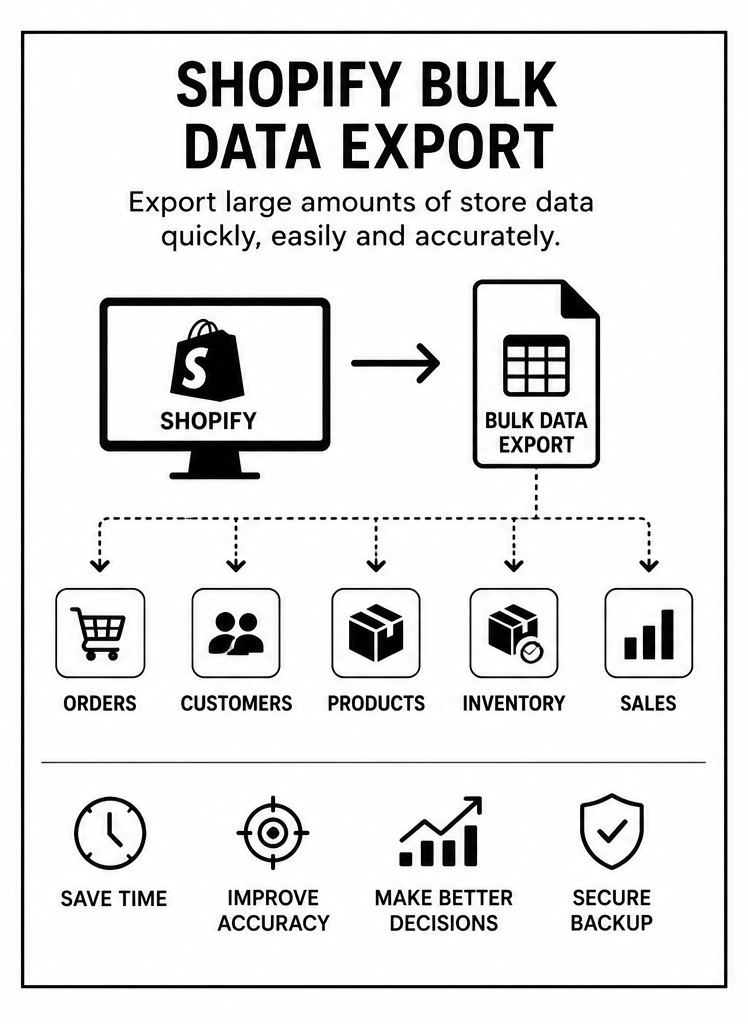
Bulk data export simply means extracting large amounts of store information from Shopify all at once instead of handling records individually.
This data can include:
- Orders
- Customers
- Products
- Inventory information
- Sales records
- Shipping details
- Payment status
- Product variants
The purpose is to make store information easier to:
- Analyze
- Organize
- Share
- Back up
- Report
As stores scale, this process becomes critical for maintaining clarity and operational control.
Why Bulk Export Matters for Growing Stores
Small stores may manage data manually, but large or fast-growing stores deal with thousands of records.
Without bulk export capabilities:
- Reporting becomes slow
- Analysis becomes incomplete
- Data tracking becomes difficult
- Teams waste valuable time
Bulk exporting solves these issues by giving businesses access to organized information instantly.
This creates faster workflows and smarter decision-making.
The Shift from Manual Work to Smart Operations
Manual data management creates several problems:
- Repetitive work
- Human errors
- Delayed reporting
- Inconsistent records
Bulk export changes the process completely.
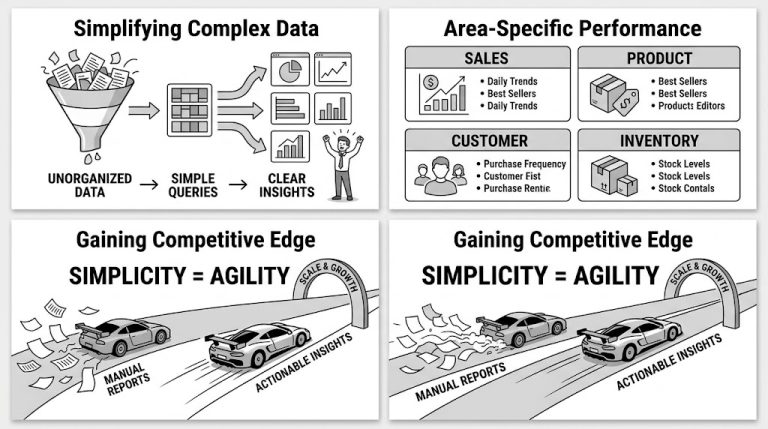
Instead of checking orders one by one, businesses can:
- Access all orders together
- Analyze customer trends quickly
- Review inventory in one place
- Create reports faster
This shift improves both productivity and accuracy.
Types of Data Businesses Commonly Export
Different businesses export different types of information depending on their goals.
1. Order Data Export
Order data is one of the most important exports for e-commerce businesses.
It may include:
- Order IDs
- Customer names
- Products purchased
- Order value
- Shipping status
- Payment details
- Purchase dates
Why It Matters
Order exports help businesses:
- Track sales performance
- Manage fulfillment
- Analyze purchasing trends
- Create financial reports
For example:
A business may analyze order exports to discover which products sell best during specific seasons.
2. Customer Data Export
Customer data provides deep insight into buyer behavior.
This may include:
- Customer names
- Email addresses
- Purchase history
- Location information
- Total spending
Why It Matters
Customer exports help businesses:
- Build targeted marketing campaigns
- Identify loyal customers
- Improve customer retention
For example:
A store can identify repeat customers and reward them with loyalty offers.
3. Product Data Export
As product catalogs grow, managing them manually becomes difficult.
Product exports may include:
- Product titles
- Pricing
- Inventory levels
- Product categories
- Variants and options
Why It Matters
This helps businesses:
- Update product catalogs faster
- Monitor stock availability
- Compare product performance
Large inventories become much easier to manage when data is organized in bulk.
4. Inventory Data Export
Inventory tracking is critical for smooth operations.
Bulk inventory exports help businesses:
- Detect low stock items
- Avoid overselling
- Forecast demand
This creates more efficient inventory planning.
How Bulk Export Improves Business Decision-Making
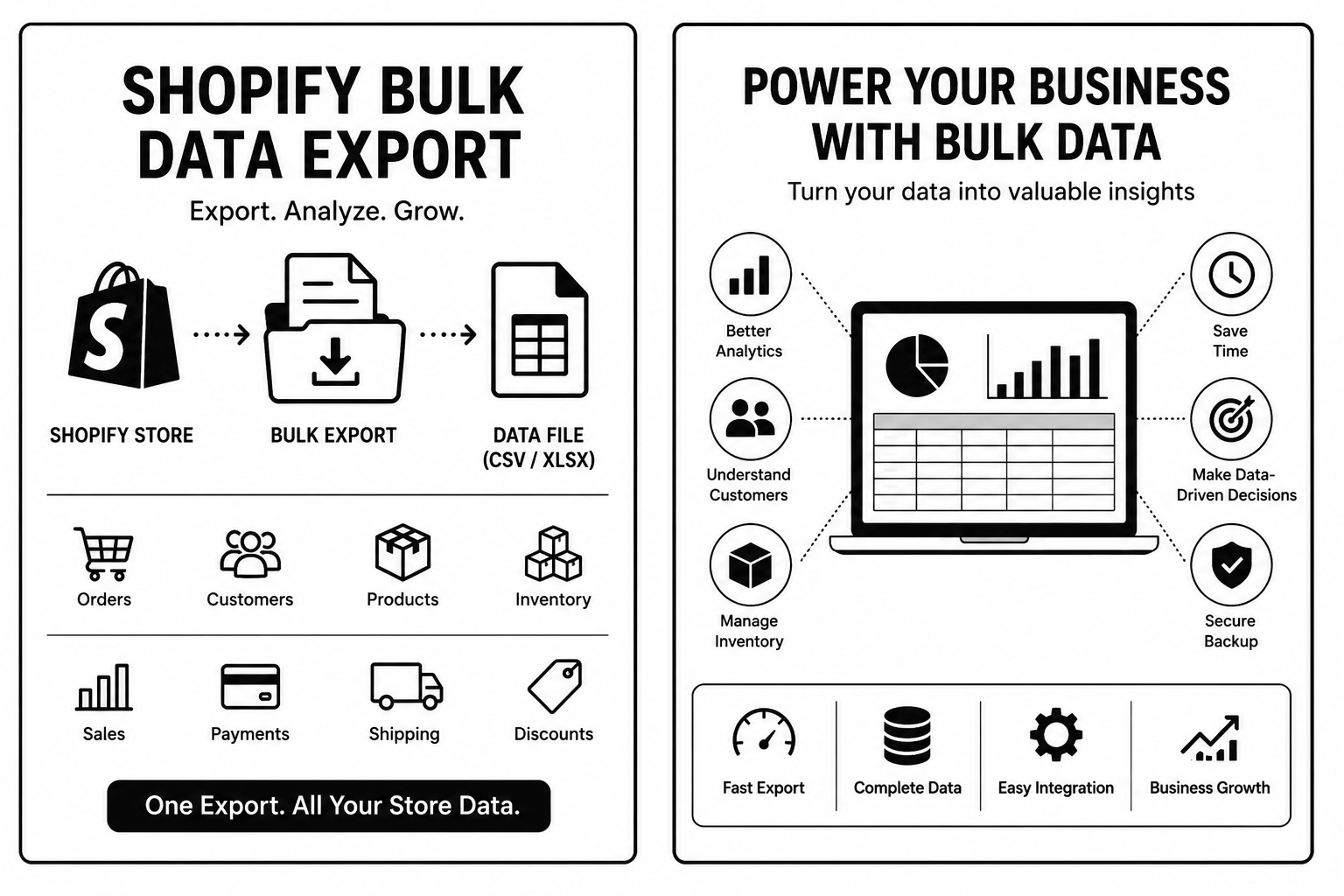
One of the biggest advantages of bulk export is visibility.
Instead of isolated information, businesses see the bigger picture.
For example:
- Which products generate the highest revenue
- Which customers buy most frequently
- Which months produce the best sales
This allows store owners to make decisions based on real performance rather than assumptions.
Faster Reporting and Analysis
Creating reports manually is extremely time-consuming.
Bulk exports simplify reporting by making all store data available in structured form.
Businesses can quickly create:
- Sales reports
- Revenue summaries
- Customer behavior analysis
- Inventory performance reports
This saves hours of manual effort.
Better Collaboration Across Teams
Bulk exports also improve teamwork.
Different departments can use the same organized data:
- Marketing teams analyze customer behavior
- Operations teams monitor orders
- Finance teams review revenue
This keeps everyone aligned and improves communication.
Data Backup and Security Benefits
Store data is one of the most valuable assets in e-commerce.
Bulk exporting helps businesses maintain backups of:
- Orders
- Customer records
- Product information
This adds an extra layer of protection and business continuity.
Having organized backups reduces risk and improves reliability.
Simplifying Migration and Store Expansion
As businesses grow, they may:
- Expand into new markets
- Reorganize operations
- Move systems
- Launch additional stores
Bulk export makes these transitions easier because store data is already organized and accessible.
Instead of rebuilding information manually, businesses can move data efficiently.
Identifying Growth Opportunities Through Data
Bulk data analysis often reveals hidden opportunities.
Businesses can discover:
- High-performing customer segments
- Best-selling product categories
- Seasonal buying patterns
- Underperforming products
These insights help businesses:
- Improve marketing
- Optimize pricing
- Expand winning categories
Data becomes a growth strategy rather than just a record system.
Common Challenges Without Bulk Export
Without organized export systems, stores often struggle with:
1. Slow Data Access
Finding information becomes frustrating.
2. Poor Reporting Accuracy
Manual reporting increases mistakes.
3. Limited Business Insights
Important trends remain hidden.
4. Time Loss
Teams spend more time managing data than growing the business.
Bulk export solves these issues by centralizing information.
Why Simplicity Is Important
Many businesses assume data management must be complicated.
In reality, the most effective systems are often the simplest.
Bulk export works because it:
- Organizes information clearly
- Reduces unnecessary complexity
- Makes analysis accessible
Even non-technical teams can work with exported data effectively.
The Role of Bulk Export in E-commerce Scaling
As stores scale, operational efficiency becomes more important than ever.
Bulk data export supports scaling by:
- Reducing manual workload
- Improving operational speed
- Enhancing reporting quality
- Supporting data-driven strategies
Without organized data handling, growth becomes difficult to manage.
The Future of Bulk Data Management
The future of e-commerce will become increasingly data-focused.
Businesses will rely more on:
- Automated reporting
- Real-time analytics
- Predictive insights
- Intelligent forecasting
Bulk export will continue playing a major role because businesses will always need organized access to their information.
Data will become not just a support system—but the foundation of strategic growth.
Final Thoughts
Shopify bulk data export is far more than a technical process. It is a smarter way to organize, understand, and grow an online business.
It transforms scattered store activity into structured insights that help businesses:
- Improve efficiency
- Understand customers better
- Optimize inventory
- Track growth accurately
- Make confident business decisions
In modern e-commerce, businesses that manage their data effectively gain a huge competitive advantage.
Because growth does not come from collecting information alone—it comes from turning that information into action.