Data Fatigue in Shopify E-commerce – When Too Much Store Data Starts Slowing Growth
In the Shopify ecosystem, data is everywhere.
Every visitor, product click, abandoned cart, customer interaction, and completed order generates valuable information. Shopify store owners now have access to more business data than ever before. On the surface, this sounds like a huge advantage—and in many ways, it is.
But there’s a growing problem many Shopify businesses quietly struggle with:
Too much data can become overwhelming.
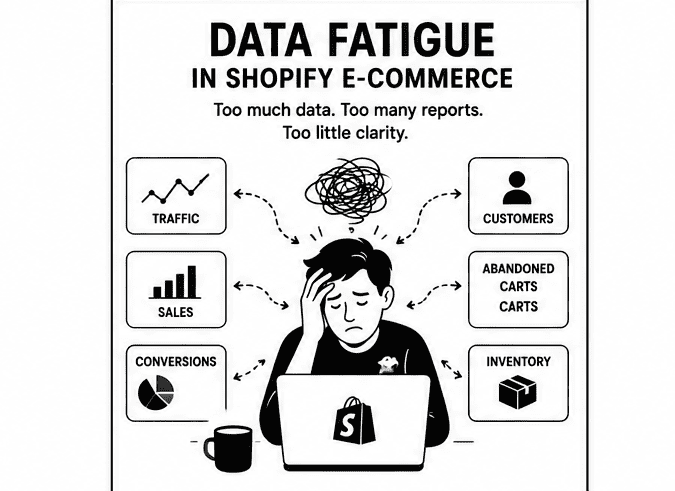
Instead of helping businesses grow faster, excessive reporting and endless metrics can create confusion, stress, and slower decision-making. Store owners start spending more time analyzing dashboards than actually improving their business.
This growing challenge is known as data fatigue.
For many Shopify businesses, data fatigue has become one of the biggest hidden obstacles to scaling efficiently.
What Is Data Fatigue in Shopify?
Data fatigue happens when Shopify store owners or teams become overwhelmed by the amount of information available to them.
Modern Shopify stores track:
- Orders
- Customer behavior
- Product performance
- Inventory levels
- Traffic sources
- Conversion rates
- Checkout activity
- Marketing campaigns
At first, this feels exciting because data provides visibility into how the business is performing.
But over time, constantly monitoring hundreds of metrics creates:
- Mental overload
- Confusion about priorities
- Slower decision-making
- Reduced productivity
Instead of helping businesses move faster, data starts slowing them down.
The Problem with Tracking Everything
Many Shopify businesses believe they need to monitor every possible metric to grow successfully.
So they constantly check:
- Traffic reports
- Sales dashboards
- Product analytics
- Customer activity
- Ad performance
- Conversion trends
But tracking more data does not automatically create better decisions.
In fact, when store owners try to monitor everything equally, they often lose focus on what actually matters.
Instead of improving strategy, they become trapped in endless analysis.
Why Data Fatigue Is Growing in Shopify Stores
As Shopify stores scale, the amount of store data increases rapidly.
A small store may handle:
- A few products
- Limited traffic
- Basic reporting
But growing stores deal with:
- Thousands of orders
- Multiple marketing channels
- Large customer databases
- Complex product catalogs
This creates an overwhelming amount of information every single day.
Without a clear strategy for organizing and prioritizing insights, data quickly becomes exhausting instead of useful.
Common Signs of Data Fatigue in Shopify Businesses
Many Shopify store owners experience data fatigue without even realizing it.
Some common signs include:
1. Constant Dashboard Monitoring
Checking store analytics repeatedly without taking meaningful action.
2. Delayed Decision-Making
Spending too much time analyzing reports instead of improving the store.
3. Confusion Between Metrics
Different reports showing different results, making priorities unclear.
4. Stress Over Daily Fluctuations
Panicking over short-term sales drops or traffic changes.
5. Team Burnout
Employees becoming mentally exhausted from constant reporting and tracking.
When Shopify Metrics Become Distractions
Not every Shopify metric is equally important.
One of the biggest causes of data fatigue is focusing too much on “vanity metrics.”
These are numbers that may look impressive but do not directly improve business growth.
Examples include:
- High traffic without conversions
- Social engagement without purchases
- Product views without sales
A Shopify store may receive thousands of visitors, but if customers are not purchasing, traffic alone means very little.
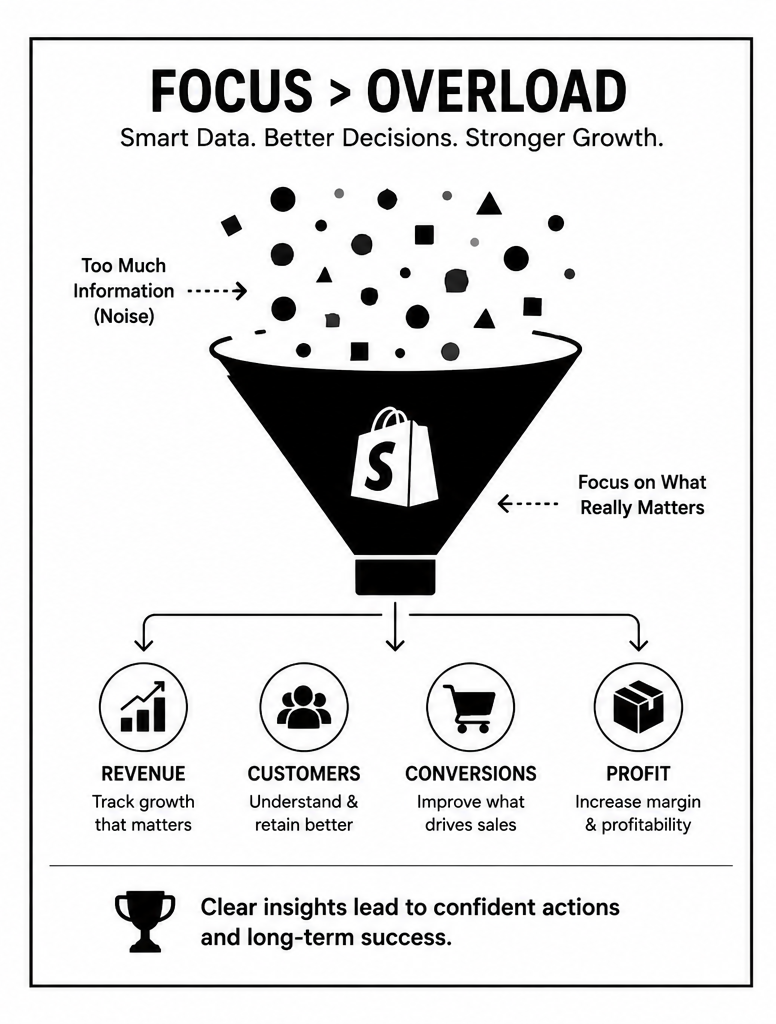
Smart Shopify businesses focus on metrics tied directly to business outcomes:
- Revenue growth
- Customer retention
- Conversion rate
- Profitability
Data Without Context Creates Poor Decisions
Raw Shopify data alone rarely tells the complete story.
For example:
- A sudden drop in traffic may seem negative
- But if conversion rates increase, total revenue may still improve
Similarly:
- A product with many sales may actually have low profit margins
Without context, businesses may react emotionally and make poor strategic decisions.
This is why successful Shopify stores focus on understanding the meaning behind the data rather than reacting to every number individually.
Analysis Paralysis in Shopify Stores
One of the most damaging effects of data fatigue is analysis paralysis.
This happens when Shopify businesses become so focused on analyzing reports that they stop making decisions quickly.
For example:
- Delaying product launches because more data is needed
- Waiting too long to optimize marketing campaigns
- Overcomplicating pricing decisions
Meanwhile, competitors move faster and capture opportunities first.
In e-commerce, speed matters.
The stores that adapt quickly often outperform stores that endlessly analyze.
The Emotional Impact of Data Fatigue
Running a Shopify store already comes with pressure:
- Sales targets
- Customer expectations
- Inventory management
- Marketing performance
When store owners constantly monitor fluctuating metrics, it creates emotional exhaustion.
A temporary dip in sales may create panic.
A lower conversion rate may create stress.
A slow week may feel like failure.
Over time, this constant emotional reaction to data becomes mentally draining.
Instead of feeling empowered by insights, business owners feel trapped by numbers.
The Difference Between Useful Insights and Noise
One of the most important skills in Shopify growth is learning how to separate:
- Valuable business insights
from - Unnecessary data noise
Useful insights help answer important questions:
- Which products generate the highest profit?
- Which customers are most valuable?
- Which traffic sources actually convert?
- Why are customers abandoning checkout?
Noise, on the other hand, creates distraction without strategic value.
Fast-growing Shopify brands focus on the data that directly impacts growth and profitability.
How Successful Shopify Stores Avoid Data Fatigue
The smartest Shopify businesses do not try to analyze everything equally.
Instead, they focus on clarity, simplicity, and action.
1. They Focus on Core Metrics
Rather than tracking hundreds of reports, they prioritize a few important metrics:
- Revenue
- Conversion rate
- Average order value
- Customer retention
- Profit margins
These numbers provide a clearer understanding of business health.
2. They Build Simpler Reporting Systems
Successful Shopify businesses simplify their reporting process.
Instead of overwhelming dashboards, they prefer:
- Clear summaries
- Action-focused insights
- Easy-to-read trends
This reduces mental overload and improves decision-making speed.
3. They Focus on Long-Term Trends
Daily fluctuations can be misleading.
Fast-growing Shopify stores focus more on:
- Monthly performance
- Seasonal trends
- Long-term customer behavior
This creates calmer, more strategic decision-making.
4. They Turn Insights Into Fast Action
The purpose of Shopify data is not endless observation—it is improvement.
Successful stores act quickly when they identify opportunities.
For example:
- A trending product gets promoted immediately
- A weak conversion page gets optimized quickly
- Inventory shortages are solved fast
Execution matters more than perfect analysis.
5. They Understand That Simplicity Is Powerful
As Shopify stores grow, complexity increases naturally.
But smart businesses understand something important:
Simple systems scale better.
Clear insights and focused reporting help teams:
- Stay productive
- Make confident decisions
- Reduce stress
- Improve efficiency
This creates sustainable growth instead of operational chaos.
Why Data Fatigue Can Hurt Shopify Growth
When businesses suffer from data fatigue, growth slows down.
Common consequences include:
- Missed opportunities
- Slower marketing optimization
- Poor inventory planning
- Reduced team productivity
- Increased stress and burnout
Too much information without focus becomes a hidden business problem.
The Future of Shopify Data Management
Shopify stores will continue generating even more data in the future.
Businesses will gain access to:
- More customer insights
- More automation
- More predictive analytics
- More advanced reporting
But this also means data fatigue may increase.
The most successful Shopify businesses will not be the ones with the most data.
They will be the ones that can:
- Organize information effectively
- Prioritize meaningful insights
- Ignore unnecessary noise
- Turn data into fast action
Final Thoughts
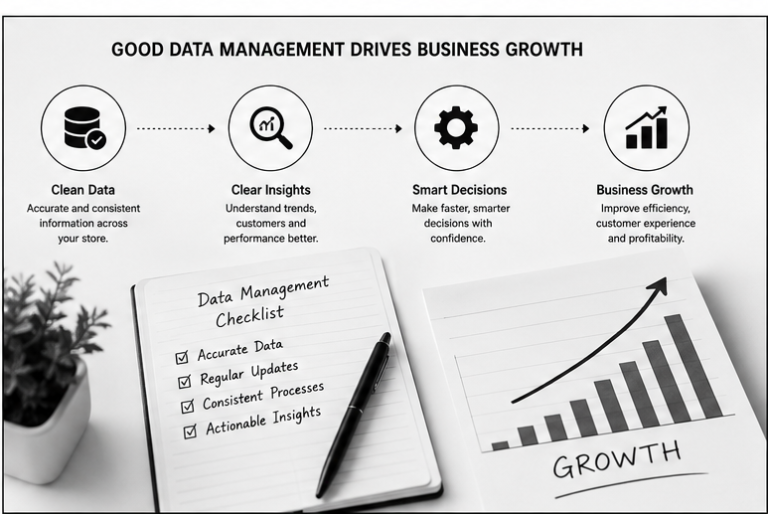
Data is one of the most valuable assets a Shopify business can have—but only when it is managed properly.
Too much information without focus creates confusion, stress, and slower decision-making. This is the reality of data fatigue in modern Shopify e-commerce.
Successful Shopify stores understand an important truth:
The goal is not to track everything. The goal is to understand what truly matters.
The businesses that grow the fastest are not the ones obsessed with endless dashboards and reports.
They are the ones that:
- Focus on meaningful insights
- Simplify decision-making
- Take action quickly
- Use data strategically instead of emotionally
Because in Shopify e-commerce, growth comes not from having more data—but from knowing how to use the right data wisely.