
Automate Shopify Data Export
Modern Shopify businesses generate massive amounts of business data every single day. Every customer interaction, order, product update, inventory movement, refund, and marketing campaign creates valuable information that helps businesses understand performance and improve operations.
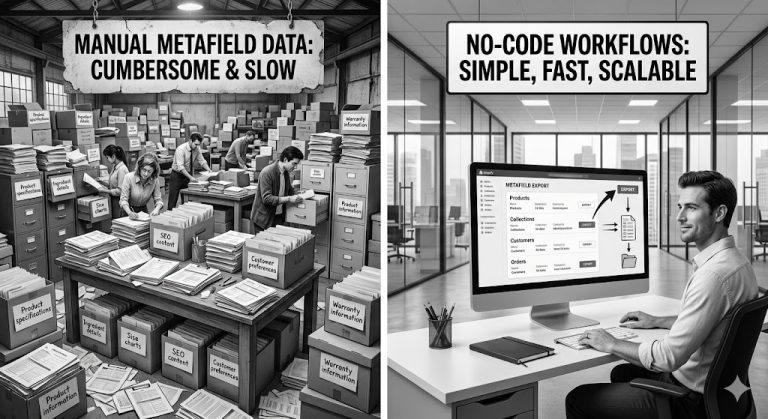
As eCommerce stores grow, managing this information manually becomes increasingly difficult.
Many businesses still rely on repetitive workflows such as:
- Downloading reports manually
- Updating spreadsheets daily
- Organizing sales records
- Tracking inventory changes
- Managing customer data across multiple systems
At first, these tasks may seem manageable.
But as order volume increases and operations become more complex, manual data handling begins creating operational slowdowns, reporting delays, and unnecessary workload pressure.
This is why automated Shopify data export has become one of the most important operational strategies in modern eCommerce.
Automation helps businesses move from repetitive administrative work toward smarter, faster, and more scalable business operations.
Instead of spending hours collecting and organizing data manually, businesses can focus on growth, customer experience, and strategic decision-making.
The Growing Importance of Shopify Data
Every Shopify store continuously produces operational information.
This includes:
- Sales data
- Customer activity
- Product performance
- Inventory updates
- Order history
- Shipping information
- Refund records
- Marketing performance
- Customer retention behavior
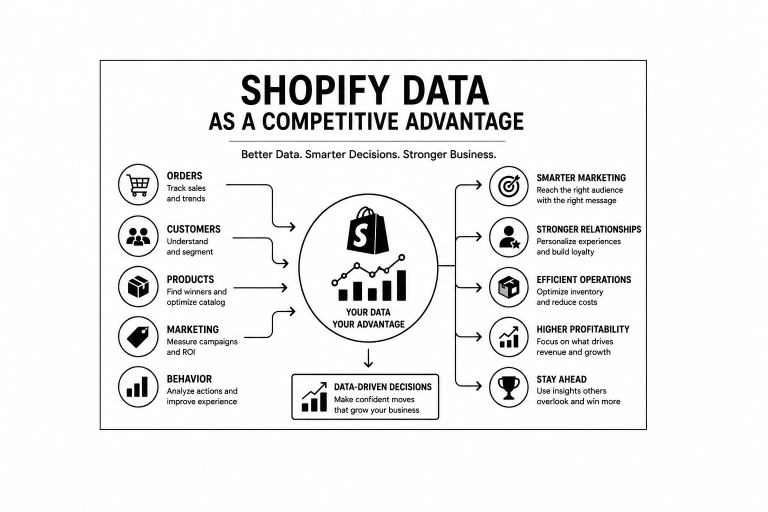
This data helps businesses understand what is happening inside their store.
But data becomes valuable only when businesses can access it efficiently and use it effectively.
Many businesses struggle because important information is scattered across multiple reports and disconnected workflows.
This creates operational inefficiency.
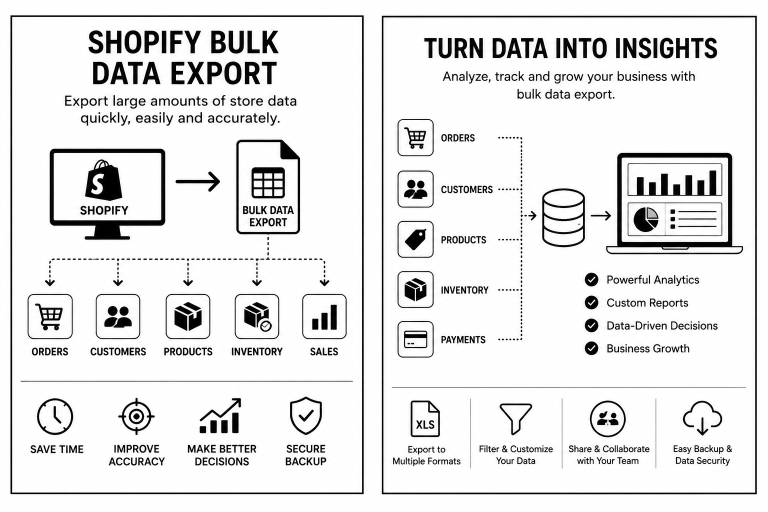
Automated data export helps businesses centralize and organize information more effectively.
Manual Data Management Creates Operational Bottlenecks
One of the biggest challenges in growing Shopify businesses is operational overload.
Store owners and teams often spend excessive time:
- Exporting reports manually
- Copying data between systems
- Updating spreadsheets
- Comparing performance reports
- Organizing customer information
- Tracking inventory changes manually
As operations expand, these repetitive tasks consume valuable business time.
This creates several problems:
- Slower decision-making
- Increased human error
- Reporting inconsistencies
- Delayed business visibility
- Reduced operational efficiency
Manual workflows may work temporarily for small stores, but they become increasingly difficult to manage as businesses scale.
Automation solves this problem by reducing repetitive administrative work.
Faster Access to Data Improves Decision-Making
In modern eCommerce, speed matters.
Businesses need fast visibility into:
- Sales performance
- Inventory status
- Customer behavior
- Marketing results
- Operational trends
When data access is delayed, businesses react more slowly to important changes.
For example:
- Inventory shortages may go unnoticed
- Marketing problems may continue longer
- Sales trends may be identified too late
- Customer behavior changes may be missed
Automated Shopify data export improves operational agility by ensuring businesses always have access to updated information.
Faster visibility supports faster decisions.
And faster decisions create stronger competitive advantages.
Automation Reduces Human Error
Manual reporting processes increase the risk of mistakes.
Businesses often experience issues such as:
- Incorrect spreadsheet updates
- Missing records
- Duplicate information
- Outdated reports
- Data formatting inconsistencies
Even small reporting errors can create operational confusion and poor business decisions.
Automation improves consistency by reducing reliance on repetitive manual tasks.
This creates more reliable reporting systems and stronger operational accuracy.
Reliable data improves leadership confidence and business planning.
Shopify Businesses Need Connected Operations
Modern Shopify businesses often operate across multiple systems and workflows.
Businesses manage:
- Sales channels
- Customer support
- Marketing campaigns
- Inventory systems
- Shipping operations
- Financial reporting
When information remains disconnected, teams struggle to maintain visibility across the business.
Automated data export helps businesses organize and centralize operational information more effectively.
This improves coordination across departments and creates smoother operational workflows.
Connected visibility improves overall business efficiency.

Sales Reporting Becomes Simpler
Sales reporting is one of the most important areas of Shopify operations.
Businesses constantly monitor:
- Revenue growth
- Daily sales performance
- Product demand
- Order trends
- Refund activity
- Average order value
Manual sales tracking becomes increasingly time-consuming as order volume grows.
Automated export systems simplify access to sales information and improve reporting consistency.
This helps businesses quickly identify:
- Growth opportunities
- Sales declines
- High-performing products
- Seasonal patterns
- Customer purchasing behavior
Clearer visibility supports smarter sales strategy decisions.
Customer Insights Become More Accessible
Customer behavior contains some of the most valuable business intelligence in eCommerce.
Understanding customers helps businesses improve:
- Retention
- Loyalty
- Marketing performance
- Product strategy
- Customer experience
Automated data export helps businesses organize customer information more efficiently.
This allows teams to better understand:
- Repeat purchase behavior
- Customer lifetime value
- Geographic trends
- Shopping habits
- Product preferences
Instead of spending time collecting customer data manually, businesses can focus on improving customer relationships.
Inventory Management Improves With Better Visibility
Inventory management is one of the most operationally sensitive areas of eCommerce.
Poor inventory visibility creates serious business risks:
- Overstocking
- Stock shortages
- Missed sales opportunities
- Cash flow problems
- Operational delays
Automated data export helps businesses monitor:
- Inventory levels
- Product movement
- Fast-selling items
- Slow-moving stock
- Restocking needs
This improves operational planning and supports healthier inventory management.
Businesses become more proactive instead of reactive.
Marketing Teams Benefit From Better Data Access
Marketing performance depends heavily on visibility.
Businesses need clear understanding of:
- Campaign effectiveness
- Customer engagement
- Conversion trends
- Traffic performance
- Product response rates
Manual reporting slows down marketing analysis and delays optimization.
Automated Shopify data export gives marketing teams faster access to important business insights.
This improves:
- Campaign adjustments
- Budget allocation
- Audience targeting
- Promotional strategy
Marketing decisions become more data-driven and more efficient.
Operational Scalability Becomes Easier
As Shopify businesses grow, operational complexity increases rapidly.
More customers.
More products.
More orders.
More sales channels.
More reporting requirements.
Manual workflows struggle to scale effectively.
Teams eventually spend too much time managing operations instead of improving business growth.
Automation supports scalability by reducing repetitive operational workload.
Businesses can grow without proportionally increasing administrative complexity.
This creates healthier and more sustainable expansion.
Businesses Gain More Time for Strategic Growth
One of the biggest benefits of automation is time recovery.
Manual data management consumes valuable hours that could instead be invested into:
- Customer engagement
- Product development
- Marketing strategy
- Brand growth
- Business planning
- Customer retention
Automated workflows free businesses from repetitive administrative work.
This allows leadership and teams to focus on higher-value activities that drive long-term growth.
Data Visibility Improves Business Confidence
Many business decisions feel risky when visibility is unclear.
Store owners often hesitate because they lack confidence in their operational understanding.
Should inventory increase?
Should pricing change?
Should marketing budgets expand?
Should new products launch?
Automated data visibility improves confidence because businesses can access clearer and more consistent information.
This reduces uncertainty and supports stronger strategic leadership.
Automation Supports Better Team Collaboration
Modern eCommerce businesses rely on multiple teams working together.
This often includes:
- Marketing
- Operations
- Customer support
- Sales management
- Leadership teams
Disconnected reporting systems create communication gaps.
Automated data workflows improve coordination by ensuring teams have access to consistent and organized information.
This improves:
- Decision-making speed
- Operational alignment
- Internal communication
- Workflow efficiency
Teams work more effectively when information flows smoothly.
The Future of Shopify Operations Is Automation
The future of Shopify operations is moving toward:
- Smarter workflows
- Real-time visibility
- Simplified reporting
- Operational intelligence
- Reduced manual workload
Businesses increasingly recognize that repetitive administrative work slows growth.
Automation allows businesses to operate faster, more efficiently, and with greater clarity.
The goal is not simply collecting data.
The goal is transforming data into useful business intelligence without creating operational overload.
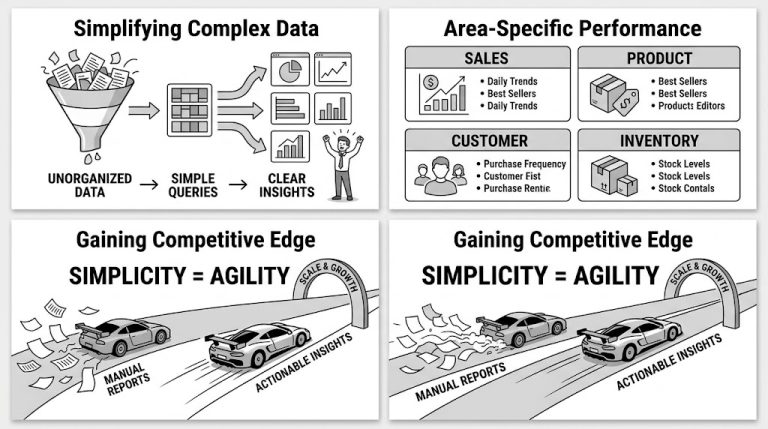
Simplicity Is Becoming a Competitive Advantage
Many businesses assume complicated systems create better operations.
In reality, operational simplicity often creates stronger performance.
Businesses that simplify workflows can:
- Respond faster
- Reduce stress
- Improve efficiency
- Make decisions earlier
- Focus more on customers
Automation supports simplicity by removing repetitive friction from daily operations.
Simpler workflows improve business agility.
And agile businesses adapt more successfully in competitive eCommerce environments.
Automated Visibility Supports Long-Term Growth
Long-term Shopify growth requires strong operational foundations.
Businesses need visibility into:
- Financial performance
- Customer trends
- Product activity
- Inventory movement
- Marketing effectiveness
Without organized data access, businesses often operate reactively instead of strategically.
Automated data export helps businesses maintain operational awareness as they scale.
This supports smarter growth planning and stronger business stability.
Data Should Help Businesses Move Faster
Data should simplify operations, not create more complexity.
Businesses should not spend most of their time managing spreadsheets and repetitive reporting tasks.
They should focus on:
- Customers
- Growth opportunities
- Product innovation
- Business strategy
- Customer experience
Automation supports this shift by helping businesses reduce operational friction and improve visibility.
When information becomes easier to access and organize, businesses make better decisions faster.
Final Thoughts
Modern Shopify stores generate valuable business information every second.
But manually managing large amounts of operational data creates inefficiency, delays, and unnecessary complexity.
Automated Shopify data export helps businesses simplify workflows, improve visibility, and reduce repetitive operational work.
By automating data management processes, Shopify businesses can:
- Improve operational efficiency
- Reduce human error
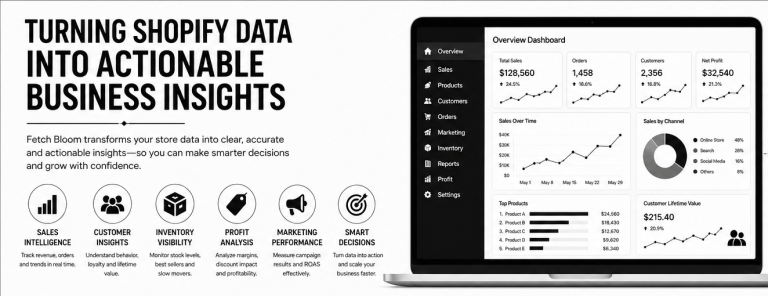
- Access faster insights
- Strengthen decision-making
- Scale more effectively
- Focus more on customers and growth
In today’s fast-moving eCommerce environment, operational speed and clarity are becoming major competitive advantages.
Because the businesses that grow strongest are not the ones buried in spreadsheets and manual reporting.
They are the businesses that can access meaningful insights quickly, operate efficiently, and focus their energy on building better customer experiences and smarter long-term growth strategies.