Exporting Shopify Data to CSV: A Structured Approach to Smarter Data Utilization in eCommerce
In the evolving landscape of eCommerce, data plays a defining role in how businesses operate, compete, and grow. Every transaction, customer interaction, and product update within a Shopify store generates valuable information. While this data is essential, its true potential is realized only when it is organized, accessible, and ready for analysis.
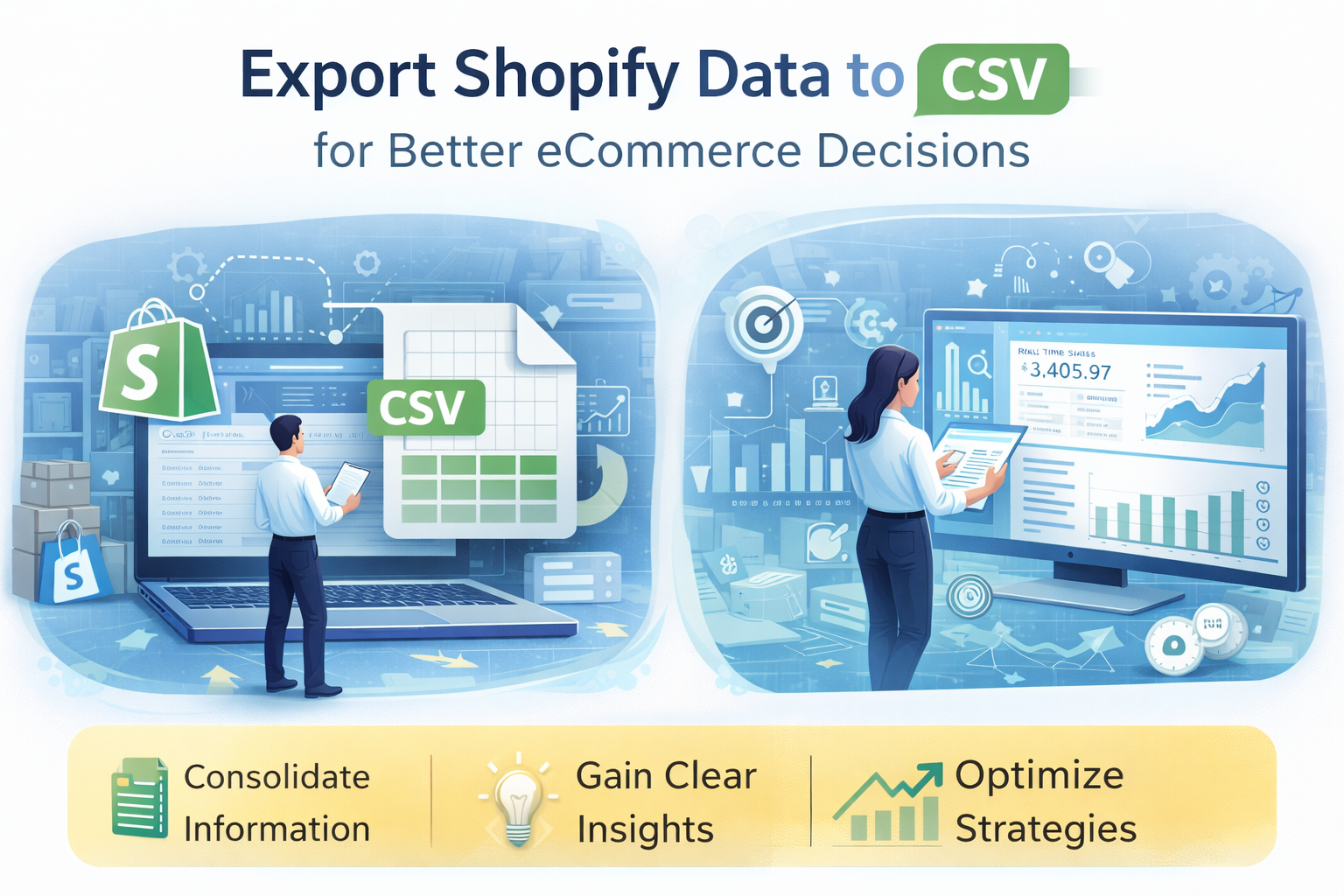
One of the most practical and widely used methods for handling this data is exporting it into CSV (Comma-Separated Values) format. However, exporting Shopify data to CSV is not just a technical activity—it represents a strategic step toward better data control, improved visibility, and more informed decision-making.
This article presents a refined and professional perspective on exporting Shopify data to CSV, focusing not only on the process but on its strategic importance and business impact.
Understanding the Role of CSV in Data Management
CSV is a simple yet powerful file format used to store structured data in a tabular form. Each row represents a record, and each column represents a specific data field. Its simplicity makes it universally compatible with tools like spreadsheets, databases, and analytics platforms.
For Shopify businesses, exporting data into CSV creates a bridge between raw platform data and actionable business insights.
Instead of being confined within the Shopify interface, data becomes portable, flexible, and easier to manipulate.
Why Export Shopify Data to CSV Matters
Exporting data is often seen as a routine task, but its importance extends far beyond basic record-keeping. It provides businesses with greater control over their information and enables deeper analysis.
Key reasons why CSV exports are essential include:
- Data Accessibility: Information becomes easy to view and manage outside the platform
- Custom Analysis: Businesses can filter, sort, and analyze data according to their needs
- Reporting Flexibility: Data can be used to create customized reports and dashboards
- Data Backup: CSV files serve as a reliable backup for critical business information
This process transforms data from a passive resource into an active business tool.
A Shift in Perspective: From Exporting Data to Owning Data
Many businesses treat data export as a one-time activity—something done occasionally for reporting purposes. However, a more strategic approach views data export as a continuous practice of data ownership.
Owning your data means:
- Having independent access to it
- Structuring it according to your business needs
- Using it proactively rather than reactively
CSV exports enable this shift by allowing businesses to step beyond platform limitations and work with data on their own terms.
Types of Shopify Data Commonly Exported
Shopify stores generate various types of data, each serving a different purpose. Exporting this data into CSV allows businesses to analyze specific aspects of their operations.
1. Order Data
Includes transaction details such as order value, date, and status. This data is essential for tracking revenue trends and sales performance.
2. Customer Data
Provides insights into customer behavior, purchase history, and engagement patterns. It helps in understanding the target audience and improving retention strategies.
3. Product Data
Contains information about product listings, pricing, and inventory. It supports product performance analysis and inventory planning.
4. Inventory Data
Helps monitor stock levels and manage supply efficiently, reducing the risk of overstocking or stockouts.
Each dataset contributes to a broader understanding of business performance.
From Raw Export to Meaningful Insight
Exporting data is only the first step. The real value lies in how the data is used after export.
Raw CSV files often contain large volumes of information that may appear complex at first. However, once organized and filtered, they reveal patterns and insights such as:
- Sales trends over time
- High-performing products
- Customer purchasing behavior
The ability to convert raw data into meaningful insights is what defines effective data utilization.
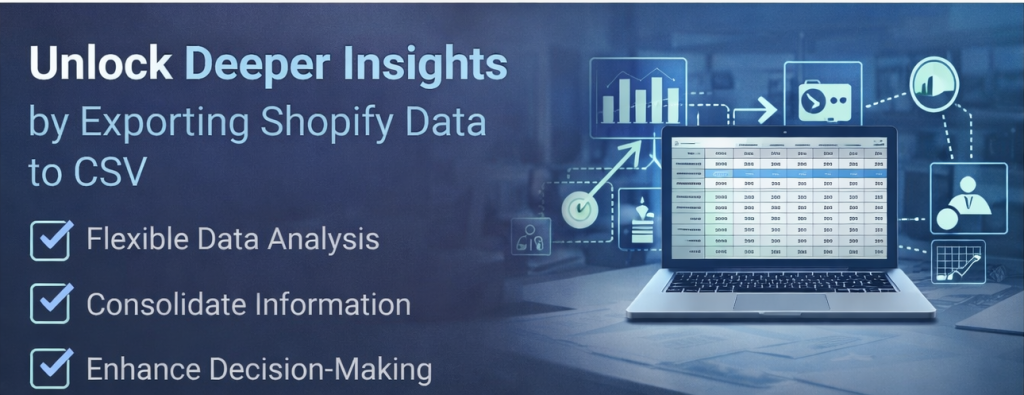
Enhancing Decision-Making Through Structured Data
Decision-making in eCommerce requires clarity and accuracy. CSV exports provide a structured format that supports detailed analysis.
With properly organized data, businesses can:
- Compare performance across different periods
- Identify growth opportunities
- Evaluate the effectiveness of strategies
This structured approach reduces uncertainty and improves the quality of decisions.
Improving Operational Efficiency
Manual data handling within a platform can be limiting and time-consuming. Exporting data into CSV allows businesses to streamline their workflows.
Benefits include:
- Faster data processing
- Easier data manipulation
- Reduced dependency on platform interfaces
This improves overall efficiency and allows teams to focus on strategic tasks rather than operational challenges.
Supporting Custom Reporting and Analysis
Standard platform reports may not always meet specific business requirements. CSV exports provide the flexibility to create customized reports tailored to unique needs.
Businesses can:
- Build detailed financial reports
- Analyze customer segments
- Track marketing performance
This level of customization enhances the depth and relevance of analysis.
Enabling Data Integration Across Systems
Modern businesses often use multiple tools and platforms. CSV files act as a universal format that enables seamless data integration.
Exported data can be:
- Imported into analytics tools
- Combined with external datasets
- Used for advanced modeling and forecasting
This integration expands the scope of data usage and supports more comprehensive insights.
Reducing Dependency on Platform Limitations
While Shopify provides robust features, relying solely on platform-based data access can be restrictive.
CSV exports allow businesses to:
- Work independently of platform constraints
- Customize data structures
- Retain full control over information
This independence is crucial for businesses seeking flexibility and scalability.
Maintaining Data Accuracy and Consistency
Accurate data is essential for reliable analysis. Exporting data into CSV helps maintain consistency by providing a standardized format.
However, businesses must ensure:
- Proper data validation
- Regular updates
- Consistent formatting practices
Maintaining data quality ensures that insights remain trustworthy and actionable.
Adapting to Business Growth
As a Shopify store grows, its data becomes more complex. Managing this data effectively is critical for sustaining growth.
CSV exports support scalability by:
- Handling large datasets
- Maintaining organization
- Enabling detailed analysis
This ensures that data management evolves alongside business expansion.
From Data Handling to Strategic Advantage
Exporting Shopify data to CSV is not merely an operational task—it is a strategic capability.
When used effectively, it allows businesses to:
- Gain deeper insights
- Improve performance
- Identify new opportunities
The ability to work with structured data creates a competitive advantage in the eCommerce market.
A Professional Approach to Data Export
To maximize the benefits of CSV exports, businesses should adopt a systematic approach:
- Define clear objectives for data usage
- Export relevant datasets regularly
- Organize and structure data consistently
- Analyze data with a focus on business goals
This disciplined approach ensures that data exports contribute meaningfully to business success.
Future Perspective: Data Portability as a Business Asset
As eCommerce continues to evolve, data portability will become increasingly important.
Businesses that can:
- Access their data easily
- Move it across systems
- Use it effectively
will be better positioned to adapt to market changes.
CSV exports represent a foundational step toward achieving this level of flexibility and control.
Final Perspective
Exporting Shopify data to CSV is often underestimated, but its impact on business operations is significant. It transforms data from a platform-bound resource into a flexible and powerful asset.
By enabling structured analysis, improving accessibility, and supporting strategic decision-making, CSV exports play a vital role in modern eCommerce management.
In Essence
Data becomes accessible.
Information becomes structured.
Insights become actionable.
When Shopify data is exported and utilized effectively, it moves beyond simple records and becomes a key driver of growth, efficiency, and informed decision-making. 🚀