Shopify Metafields Export No Code
Modern Shopify stores are no longer built only around products, prices, and orders. Today’s eCommerce businesses manage large amounts of custom information that helps create better customer experiences, smarter operations, and more personalized storefronts.
This is where Shopify metafields have become extremely important.
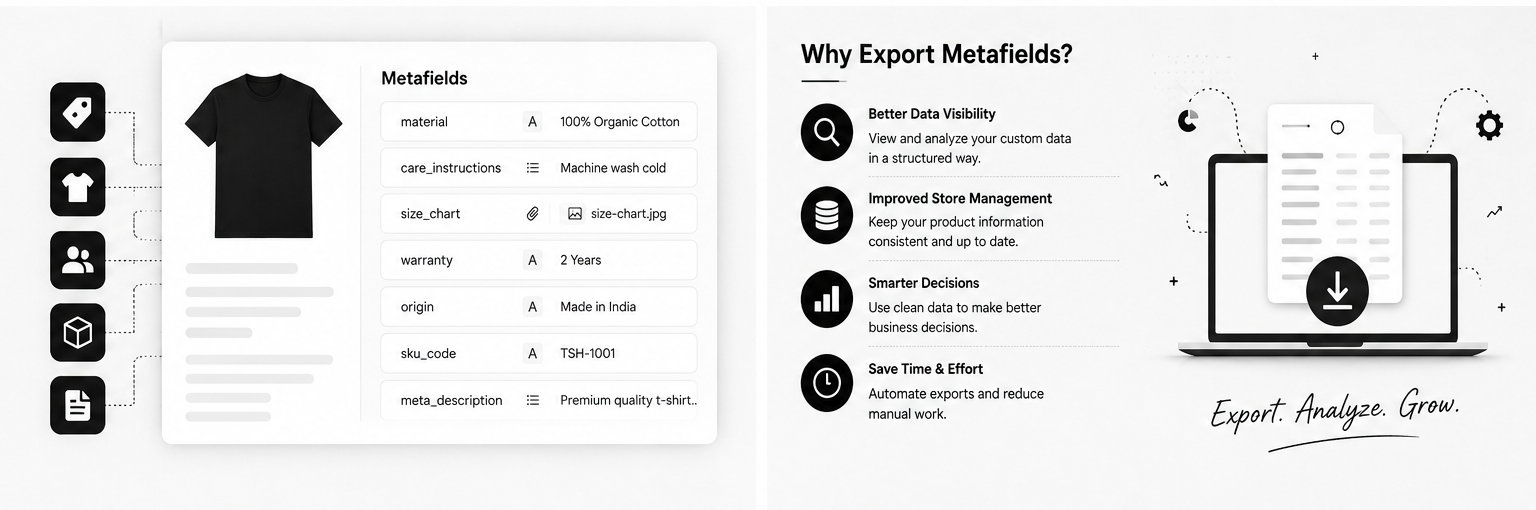
Metafields allow businesses to store additional product, customer, collection, and order information beyond Shopify’s standard fields. They help merchants create richer and more customized stores without changing the core structure of the platform.
Businesses use metafields for:
- Product specifications
- Size charts
- Ingredient details
- Warranty information
- Custom shipping notes
- Internal operational data
- SEO content
- Customer preferences
- Brand storytelling
- Technical product attributes
As Shopify stores grow, managing this custom information becomes increasingly important.
But there is one major challenge many businesses face:
Exporting and organizing metafield data can quickly become complicated.
Many store owners are not developers. They do not want technical workflows, coding complexity, or difficult database management systems. They simply want fast and organized access to their store information.
This is why the demand for Shopify metafields export without coding has grown rapidly.
Businesses now want simpler ways to manage custom store data while maintaining operational speed and flexibility.
Understanding Shopify Metafields
Shopify provides standard information fields such as:
- Product title
- Price
- Description
- Inventory
- Variants
However, modern eCommerce businesses often require additional structured information.
For example:
A skincare brand may need ingredient lists and skin-type recommendations.
A furniture store may require material details and assembly instructions.
A fashion store may need fabric composition, styling tips, and sizing guides.
These additional details are stored using metafields.
Metafields give businesses the flexibility to customize how information is stored and displayed throughout the Shopify store.
They help businesses create more advanced and informative shopping experiences.
Why Metafield Management Is Becoming More Important
As Shopify businesses scale, custom data grows rapidly.
Large stores may manage thousands of products, each containing multiple layers of additional information.
Over time, businesses accumulate massive amounts of metafield data connected to:
- Products
- Collections
- Customers
- Orders
- Pages
- Inventory workflows
Managing this information manually becomes difficult.
Businesses need structured visibility into their custom store data for:
- Product management
- Marketing operations
- SEO optimization
- Inventory planning
- Store migration
- Reporting
- Content organization
This is why exporting metafield data has become an essential operational need.
Manual Data Handling Creates Operational Pressure
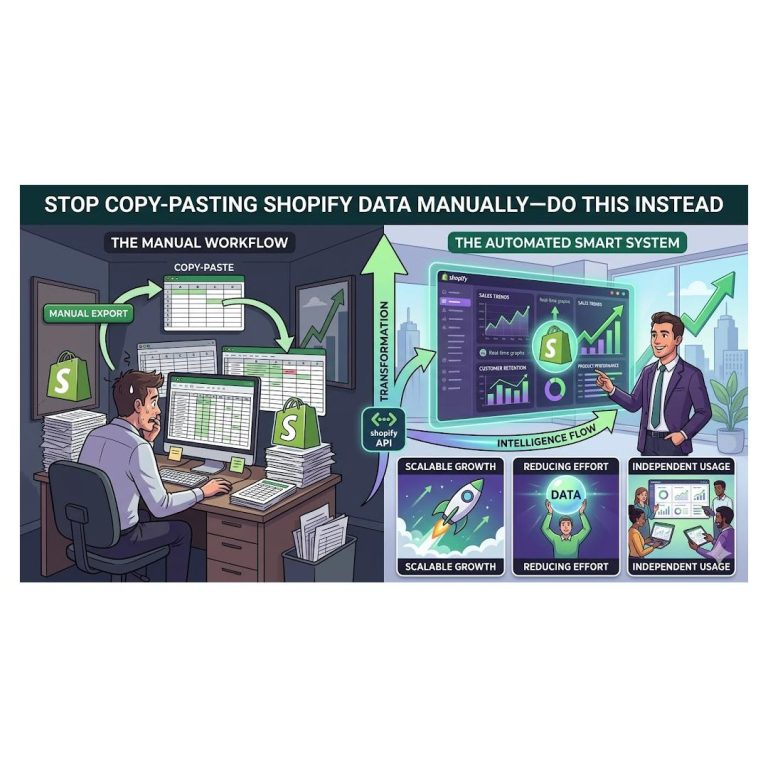
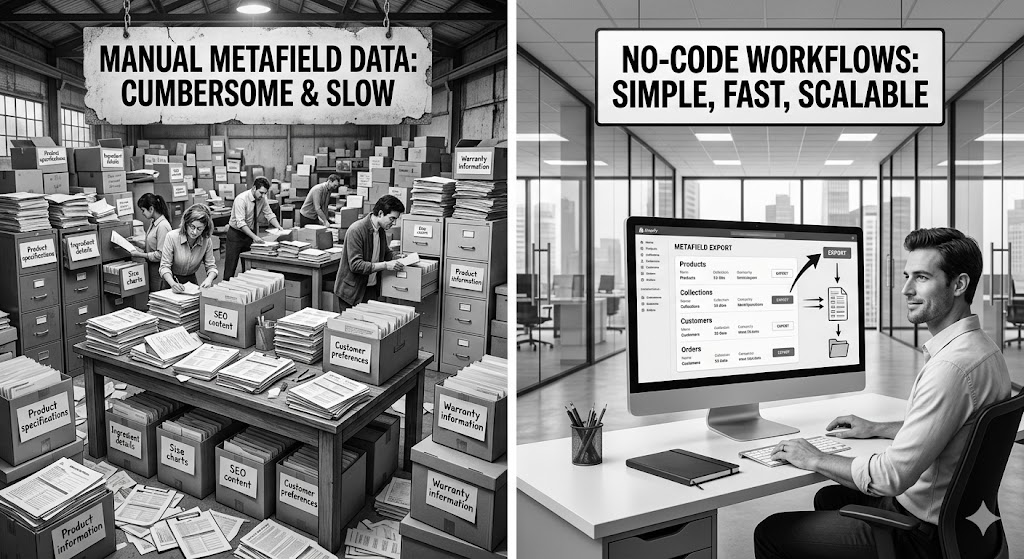
Many Shopify businesses still manage custom data manually.
Teams often spend hours:
- Copying information between systems
- Updating spreadsheets
- Reviewing product attributes
- Organizing custom fields
- Comparing product records
This creates operational inefficiency.
As stores expand, manual workflows become increasingly difficult to maintain.
Businesses begin experiencing:
- Data inconsistencies
- Duplicate information
- Missing product details
- Slow updates
- Reporting delays
Manual workflows also increase the risk of human error.
Even small mistakes in custom data management can affect product pages, customer experience, and operational accuracy.
No-Code Workflows Simplify Store Operations
One of the biggest reasons businesses prefer no-code workflows is accessibility.
Most Shopify store owners are business operators—not developers.
They need systems that allow them to:
- Access data quickly
- Organize information easily
- Export records efficiently
- Improve operational visibility
- Manage stores without technical dependency
No-code workflows remove unnecessary complexity.
Instead of relying on technical teams for every operational task, businesses gain more control over their own store management processes.
This creates faster and more agile operations.
Better Visibility Improves Decision-Making
Many Shopify businesses struggle because important custom information remains difficult to access.
Without organized visibility, businesses cannot easily analyze:
- Product specifications
- Inventory attributes
- Customer preferences
- Operational metadata
- Collection-level custom details
Exporting metafields into organized formats improves business visibility.
This allows teams to review information more efficiently and make smarter operational decisions.
Clear visibility helps businesses identify:
- Missing product data
- Inconsistent product attributes
- SEO improvement opportunities
- Product organization issues
- Content management gaps
Businesses operate more confidently when information is easier to access and review.
Product Management Becomes Easier
Product catalogs are becoming increasingly detailed in modern eCommerce.
Customers now expect richer product experiences that include:
- Technical specifications
- Product comparisons
- Usage instructions
- Brand transparency
- Custom recommendations
Metafields support this advanced product experience.
However, large product catalogs create management complexity.
Exporting metafield information helps businesses organize and maintain product data more effectively.
This improves:
- Product consistency
- Catalog accuracy
- Customer experience
- Product optimization workflows
Well-structured product information creates more professional storefronts.
SEO Benefits of Organized Metafield Data
Search visibility is extremely important for Shopify businesses.
Many stores use metafields to support:
- Structured content
- Product details
- SEO enhancements
- Rich snippets
- Technical product information
When metafield data becomes disorganized, SEO performance may suffer.
Export visibility helps businesses audit and improve custom content across the store.
This helps identify:
- Missing metadata
- Incomplete descriptions
- Inconsistent formatting
- Weak product information
Better organization supports stronger search optimization.
Customer Experience Improves With Better Data Organization
Modern customers expect detailed and trustworthy product information.
Incomplete or inconsistent product details reduce customer confidence.
Metafields help businesses deliver:
- Better product transparency
- Personalized shopping experiences
- Richer product education
- Clearer specifications
Exporting and reviewing custom data helps businesses maintain consistency across the customer experience.
This improves:
- Customer trust
- Product understanding
- Purchase confidence
- Conversion performance
Clear information creates smoother shopping experiences.
Businesses Need Operational Flexibility
One of the biggest advantages of no-code workflows is flexibility.
Businesses constantly update:
- Product catalogs
- Marketing campaigns
- Collection structures
- Customer segmentation
- Inventory systems
Operational agility becomes difficult when businesses depend heavily on technical workflows for simple data management tasks.
No-code metafield export processes allow teams to adapt faster.
This improves responsiveness across the business.
Flexible operations help businesses scale more efficiently.
Reporting Becomes More Valuable
Custom store data contains valuable business insights.
Export visibility allows businesses to analyze:
- Product performance attributes
- Product categorization
- Inventory structure
- Customer segmentation data
- Store organization patterns
This improves operational reporting.
Businesses gain better understanding of how custom information impacts:
- Sales performance
- Customer engagement
- Product discoverability
- Conversion rates
Better reporting supports stronger business planning.
Scaling Shopify Stores Requires Better Data Organization
Small stores may manage metafields manually without major problems.
But scaling changes everything.
Larger Shopify businesses often manage:
- Thousands of products
- Multiple collections
- International storefronts
- Advanced filtering systems
- Complex product specifications
As operational complexity increases, organized data management becomes critical.
Without structured workflows, businesses experience:
- Operational confusion
- Data inconsistency
- Slower updates
- Increased maintenance workload
Export workflows help businesses maintain operational control as they grow.
Reducing Dependency on Technical Teams
Many businesses want greater operational independence.
They do not want every reporting or export task to require technical assistance.
No-code workflows reduce dependency on developers for routine operational activities.
This creates several advantages:
- Faster execution
- Lower operational friction
- Greater team autonomy
- Improved productivity
- Better cross-team collaboration
Non-technical teams can manage important store information more confidently.
Data Portability Matters More Than Ever
Modern eCommerce businesses often operate across multiple systems.
Businesses may need to:
- Migrate product data
- Share information across departments
- Audit operational records
- Analyze custom product attributes
- Build internal reporting systems
Exporting metafields improves data portability.
Businesses gain greater control over how information is organized and used across operations.
This creates more scalable and future-ready workflows.
Simplifying Complex Store Operations
As Shopify stores become more advanced, operational simplicity becomes increasingly valuable.
Businesses no longer want complicated reporting systems that require technical expertise for every task.
They want workflows that are:
- Fast
- Clear
- Flexible
- Accessible
- Scalable
No-code operational systems support this shift.
Simplification improves efficiency while reducing unnecessary operational stress.
The Future of Shopify Data Management
The future of Shopify operations is moving toward:
- Smarter workflows
- Simplified reporting
- Faster visibility
- Better automation
- Reduced technical dependency
Businesses increasingly prefer systems that allow teams to focus on growth instead of operational complexity.
Custom data management will continue becoming more important as Shopify stores deliver increasingly personalized shopping experiences.
Businesses that organize their data effectively will gain stronger operational advantages.
Why Simplicity Creates Competitive Advantage
Many businesses assume advanced operations require complicated systems.
But modern eCommerce leaders are discovering that simplicity often creates stronger performance.
Simplified workflows help businesses:
- Move faster
- Reduce errors
- Improve collaboration
- Increase visibility
- Make better decisions
Operational clarity becomes a competitive advantage.
Businesses that can organize and access information efficiently operate with greater confidence and agility.
Final Thoughts
Shopify metafields have become a critical part of modern eCommerce operations.
They allow businesses to create richer product experiences, improve store organization, and manage highly customized information across their storefronts.
But as custom data grows, operational complexity increases.
Manual workflows quickly become inefficient, difficult to manage, and vulnerable to errors.
This is why no-code Shopify metafields export workflows are becoming increasingly valuable.
They help businesses:
- Simplify store operations
- Improve data visibility
- Organize custom information
- Reduce manual workload
- Scale more efficiently
- Improve operational flexibility
In today’s competitive eCommerce environment, success depends not only on collecting information but on managing it clearly and efficiently.
Because the strongest Shopify businesses are not the ones buried in complicated operational systems.
They are the businesses that can organize custom data intelligently, maintain operational simplicity, and turn structured information into smarter business growth.