Bonus: High-Volume & Long-Tail Variations – The Hidden Engine Behind Sustainable Traffic
In the world of digital growth, visibility is everything. Whether you run an e-commerce store, a blog, or a service-based website, your success depends on how easily people can find you. But here’s the reality—most businesses chase the same popular keywords, fight for the same traffic, and end up lost in the crowd.
This is where high-volume keywords and long-tail variations come into play.
Fast-growing businesses don’t rely on just one type of keyword strategy. They combine both high-volume and long-tail variations to create a powerful, layered approach that brings consistent traffic, better conversions, and long-term growth.
Let’s break down what this means and how you can use it effectively.
Understanding High-Volume Keywords
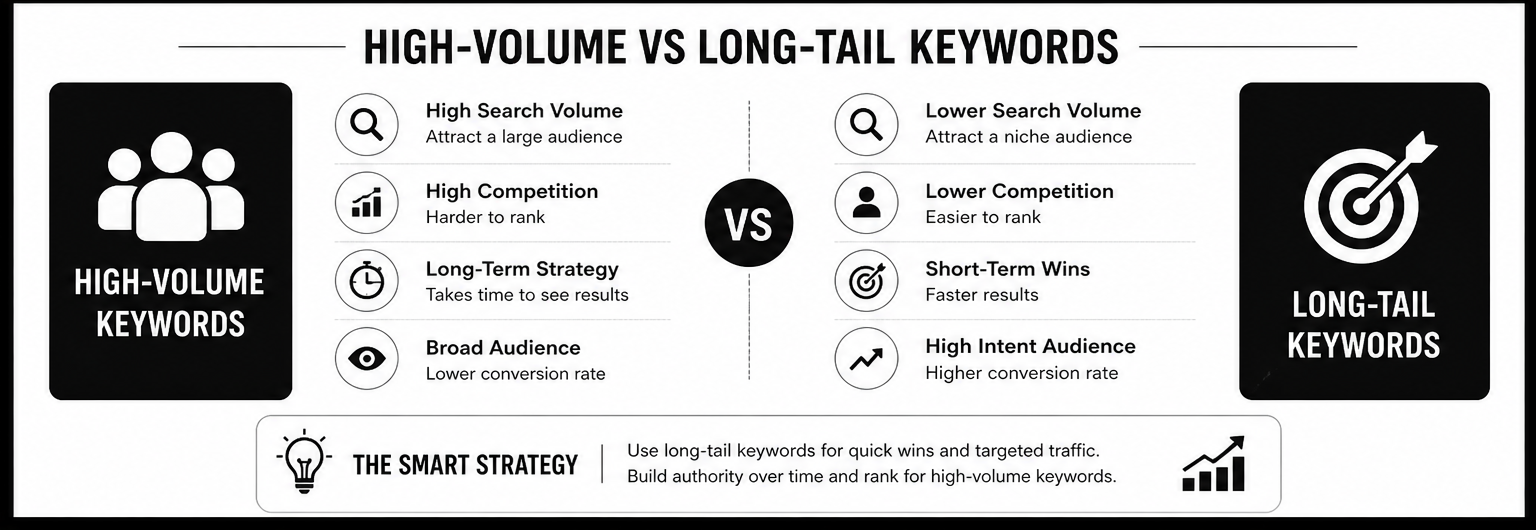
High-volume keywords are search terms that a large number of people type into search engines every day.
Examples:
- “Shopify store”
- “buy clothes online”
- “best shoes”
These keywords attract massive traffic. At first glance, they seem like the perfect opportunity—more searches mean more potential visitors.
But there’s a catch.
The Challenge of High-Volume Keywords
Because these keywords are so popular:
- Competition is extremely high
- Big brands dominate search results
- Ranking takes time and authority
For a new or growing business, relying only on high-volume keywords is like trying to compete with giants from day one.
Still, they are important.
Why High-Volume Keywords Matter
High-volume keywords help you:
- Build brand visibility
- Attract a broad audience
- Establish authority in your niche
Think of them as your long-term investment. They may not bring immediate results, but they build your presence over time.
What Are Long-Tail Variations?
Long-tail keywords are more specific search phrases that usually contain three or more words.
Examples:
- “best running shoes for beginners under 5000”
- “how to start a Shopify clothing store in India”
- “affordable summer dresses for women online”
These keywords may have lower search volume individually, but they come with a huge advantage.
Why Long-Tail Keywords Are Powerful
Long-tail variations:
- Have lower competition
- Are easier to rank for
- Attract highly targeted users
- Lead to higher conversion rates
Someone searching for “shoes” is just browsing.
But someone searching for “black formal shoes for office under 3000” is ready to buy.
That intent makes all the difference.
The Real Strategy: Combining Both
The fastest-growing websites don’t choose between high-volume and long-tail keywords—they use both strategically.
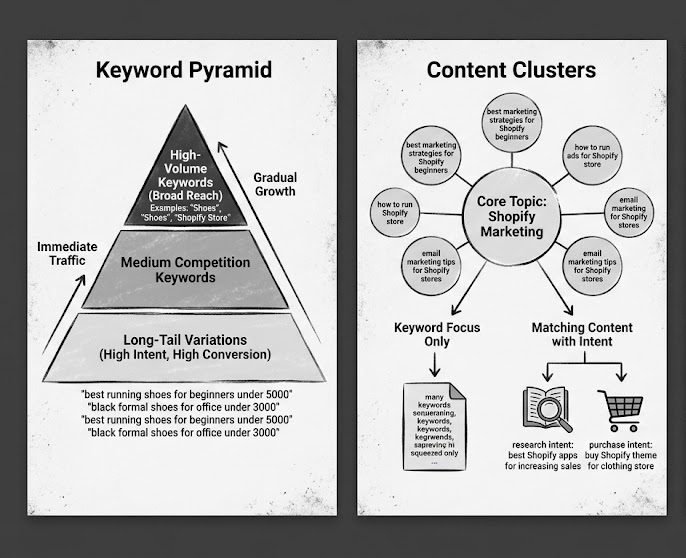
Think of It Like a Pyramid:
- Top Layer: High-volume keywords (broad reach)
- Middle Layer: Medium competition keywords
- Bottom Layer: Long-tail variations (high intent, high conversion)
This layered approach ensures:
- Immediate traffic from long-tail keywords
- Gradual growth from high-volume keywords
- Balanced and sustainable SEO performance
How High-Growth Businesses Use This Strategy
Let’s understand how successful businesses actually apply this concept.
1. They Start with Long-Tail Keywords for Quick Wins
Instead of chasing competitive keywords, they target long-tail variations first.
Why?
Because it helps them:
- Rank faster
- Generate early traffic
- Build confidence and momentum
For example, instead of targeting:
- “Shopify store”
They target:
- “how to create a Shopify store for beginners step by step”
This brings targeted visitors who are more likely to engage and convert.
2. They Expand Content Around a Core Topic
Once they identify a main keyword, they don’t stop there.
They create multiple content pieces around related long-tail variations.
For example, if the main topic is:
- “Shopify marketing”
They might create content like:
- “best marketing strategies for Shopify beginners”
- “how to run ads for Shopify store”
- “email marketing tips for Shopify stores”
This creates a content cluster, which strengthens authority in that topic.
3. They Focus on Search Intent, Not Just Keywords
One of the biggest mistakes beginners make is focusing only on keywords.
High-growth businesses focus on intent.
They ask:
- Is the user looking for information?
- Are they ready to buy?
- Are they comparing options?
Long-tail keywords often reveal clear intent.
For example:
- “best Shopify apps for increasing sales” → research intent
- “buy Shopify theme for clothing store” → purchase intent
By matching content with intent, they increase engagement and conversions.
4. They Capture Voice Search and Natural Language Queries
With the rise of voice search, people are using more natural, conversational queries.
Instead of typing:
- “Shopify tips”
They say:
- “What are the best tips to grow a Shopify store fast?”
These are long-tail variations.
Businesses that optimize for such phrases:
- Capture modern search behavior
- Stay ahead of competitors
- Reach users on mobile and voice devices
5. They Use Data to Discover New Variations
High-growth strategies are never static.
They constantly look for:
- New keyword ideas
- Trending search terms
- Customer questions
For example:
- Customer queries
- Product reviews
- Frequently asked questions
These sources naturally reveal long-tail opportunities.
6. They Optimize Every Page for Variations
Instead of targeting just one keyword per page, they include multiple variations naturally.
For example, a single page might include:
- “Shopify store setup guide”
- “how to start Shopify store step by step”
- “beginner guide to Shopify store creation”
This improves visibility for multiple searches without keyword stuffing.
7. They Build Authority Over Time
As their content grows, something powerful happens.
- Long-tail keywords start ranking first
- Traffic begins increasing
- Domain authority improves
Eventually, they start ranking for high-volume keywords as well.
This is why long-tail strategies are often the foundation of long-term success.
Common Mistakes to Avoid
Even though the strategy sounds simple, many businesses get it wrong.
1. Ignoring Long-Tail Keywords
Focusing only on popular keywords delays growth.
2. Keyword Stuffing
Adding too many keywords unnaturally harms readability and ranking.
3. Not Updating Content
Search trends change. Old content needs updates.
4. Targeting Irrelevant Keywords
Traffic is useless if it doesn’t convert.
Real Impact on Business Growth
When used correctly, this strategy delivers real results:
1. Consistent Traffic
Instead of relying on one keyword, you get traffic from hundreds of variations.
2. Higher Conversion Rates
Long-tail visitors are more likely to take action.
3. Better User Experience
Content matches exactly what users are searching for.
4. Stronger Brand Authority
Covering a topic deeply builds trust and credibility.
The Future of Search: Precision Over Popularity
Search engines are becoming smarter.
They no longer focus only on keywords—they focus on:
- Context
- Intent
- Relevance
This makes long-tail variations even more important.
Businesses that adapt to this shift will:
- Rank faster
- Reach the right audience
- Build sustainable growth
Final Thoughts
High-volume keywords may bring visibility, but long-tail variations bring precision, intent, and conversions.
The smartest strategy is not choosing one over the other—it is combining both in a structured way.
Start small, target specific queries, build authority, and scale gradually.
Because in today’s digital landscape, success doesn’t come from being seen by everyone—it comes from being found by the right people at the right time.