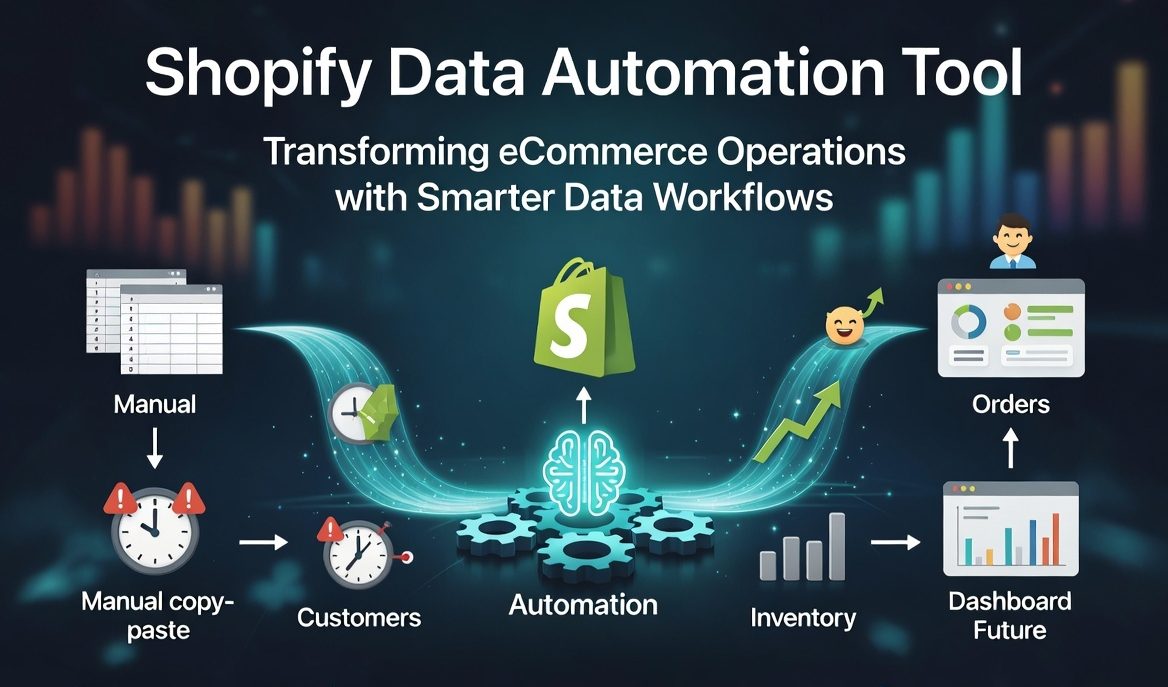
Shopify Data Automation Tool: Transforming eCommerce Operations with Smarter Data Workflows
In the modern eCommerce ecosystem, data is not just an operational byproduct—it is a strategic asset. Every interaction within a Shopify store, from customer visits to completed transactions, generates valuable information. This data has the potential to guide decision-making, optimize performance, and drive business growth. However, the real challenge lies not in collecting data, but in managing and utilizing it efficiently.
For many businesses, handling Shopify data still involves repetitive manual processes—exporting reports, copying information, cleaning datasets, and updating records. While these methods may work initially, they quickly become inefficient as the business grows. This is where a Shopify data automation tool becomes essential.
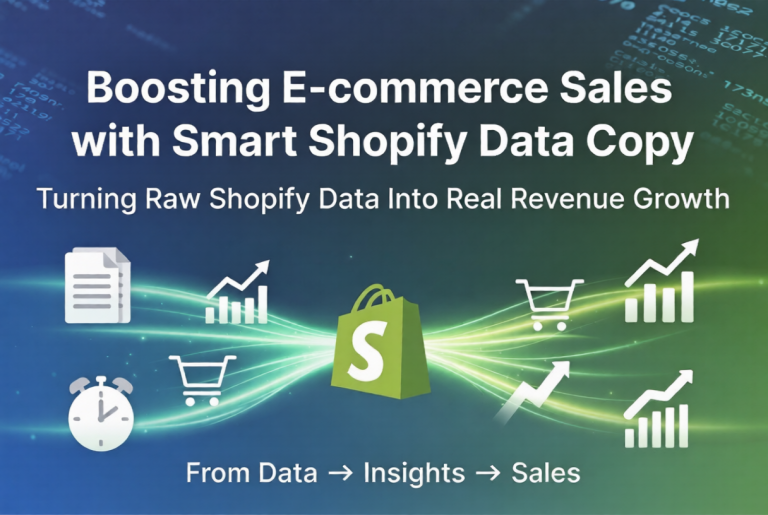
A well-structured data automation approach eliminates manual effort, reduces errors, and transforms raw information into actionable insights. It shifts the focus from managing data to leveraging it strategically.
The Growing Importance of Data Automation in eCommerce
As Shopify stores scale, the volume and complexity of data increase significantly. Businesses must manage:
- Order details
- Customer information
- Product catalogs
- Inventory updates
- Sales performance metrics
Handling this data manually not only consumes time but also introduces inconsistencies and delays. In a competitive market, delayed insights can result in missed opportunities.
Data automation addresses this challenge by creating a system where information flows continuously and is always ready for use. Instead of working with static datasets, businesses operate with dynamic, real-time information.
Understanding a Shopify Data Automation Tool
A Shopify data automation tool is designed to simplify how businesses interact with their store data. It removes the need for repetitive tasks and ensures that data is:
- Automatically collected
- Properly structured
- Continuously updated
The purpose is not just to move data, but to make it usable and meaningful.
With automation, data becomes an integrated part of daily operations rather than a separate task that requires manual effort.
From Manual Processes to Automated Workflows
Traditional data handling follows a repetitive cycle:
Export → Copy → Clean → Format → Analyze
This approach is time-consuming and inefficient.
A data automation tool transforms this workflow into:
Capture → Organize → Update → Use
This shift eliminates unnecessary steps and ensures that data is always ready for analysis.
The result is a more streamlined and efficient process where businesses can focus on insights rather than operations.
Enhancing Operational Efficiency
One of the most immediate benefits of data automation is improved efficiency.
Manual data processes often involve:
- Repetitive tasks
- Multiple tools or files
- Frequent updates
Automation simplifies these processes by:
- Reducing manual intervention
- Maintaining consistent data formats
- Delivering ready-to-use information
This allows teams to allocate their time and resources toward strategic activities such as marketing, product development, and customer engagement.
Real-Time Data for Faster Decision-Making
In eCommerce, timing plays a critical role.
Traditional methods often result in delayed data analysis. By the time reports are prepared, the insights may no longer reflect current conditions.
A data automation tool provides real-time or near real-time data access. This enables businesses to:
- Monitor sales trends instantly
- Track customer behavior as it happens
- Respond quickly to market changes
Faster access to information leads to faster and more informed decisions.
Improving Data Accuracy and Reliability
Manual data handling is prone to errors. Even minor mistakes in copying or formatting can lead to inaccurate insights.
Automation minimizes these risks by:
- Ensuring consistent data processing
- Eliminating manual entry errors
- Maintaining data integrity
Accurate data builds trust in analysis and supports better decision-making.
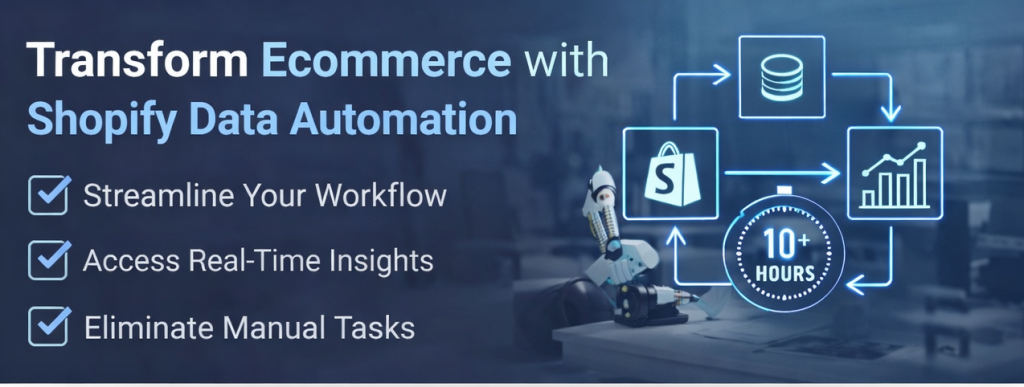
Simplifying Data for Non-Technical Users
One of the key advantages of a Shopify data automation tool is accessibility.
Traditionally, working with data required technical knowledge or support from developers. This created a dependency that slowed down workflows.
Automation removes this barrier by:
- Providing user-friendly interfaces
- Structuring data in an understandable format
- Allowing users to access insights independently
This empowers business owners, marketers, and operations teams to work with data confidently.
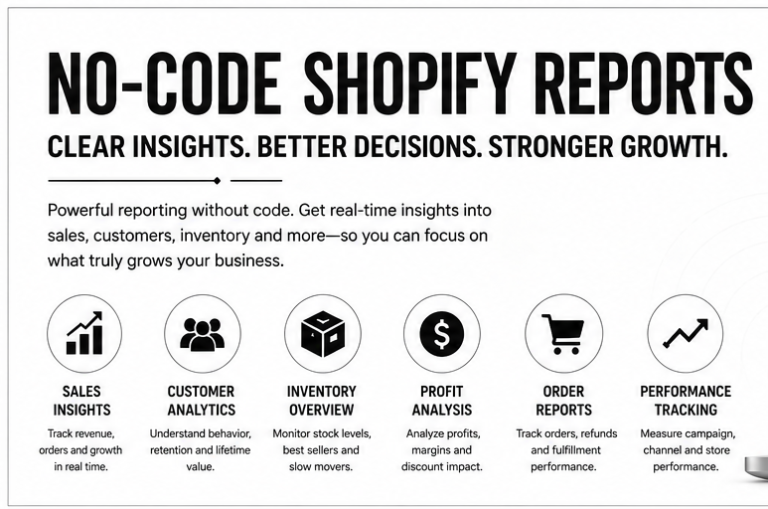
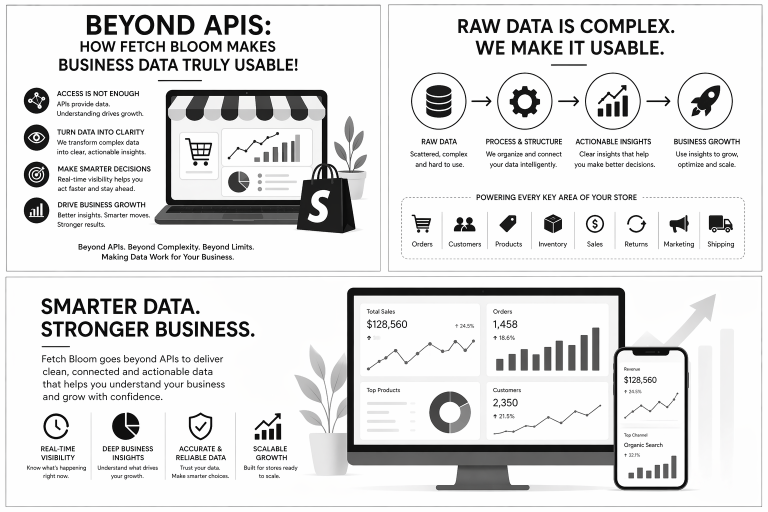
Transforming Data into Actionable Insights
Raw data, in its original form, is often difficult to interpret.
A data automation tool enhances usability by:
- Organizing information into clear categories
- Highlighting relevant metrics
- Making patterns and trends visible
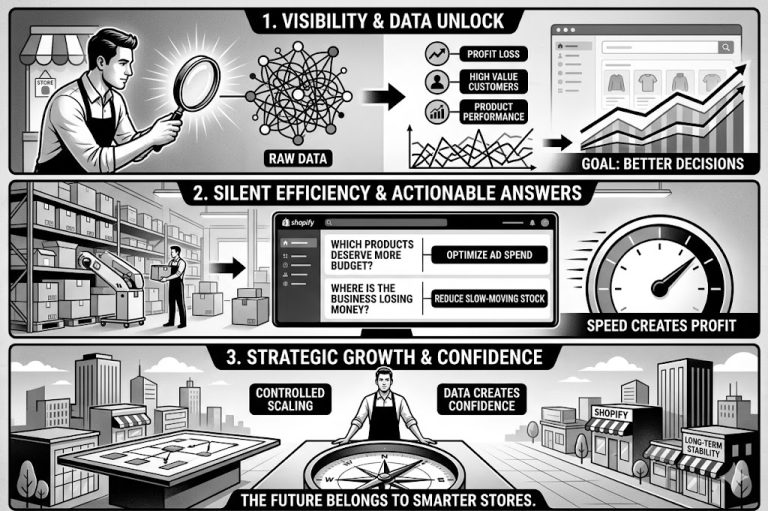
This transformation allows businesses to move from data collection to data-driven action.
For example:
- Identifying top-performing products
- Understanding customer purchasing behavior
- Recognizing seasonal trends
These insights enable businesses to optimize their strategies effectively.
Supporting Business Growth and Scalability
As a Shopify store grows, its data requirements become more complex.
Manual systems often struggle to keep up with increased data volume, leading to inefficiencies and confusion.
A data automation tool supports scalability by:
- Handling large datasets efficiently
- Maintaining organization and clarity
- Ensuring consistent performance
This allows businesses to grow without being constrained by their data management processes.
Reducing Operational Costs
Time and resources spent on manual data handling translate into operational costs.
By automating data processes, businesses can:
- Reduce the need for repetitive labor
- Minimize errors that lead to financial losses
- Improve overall productivity
This cost efficiency contributes directly to profitability.
Enhancing Collaboration Across Teams
Data is often used by multiple teams within a business.
Without automation, sharing and updating data can be challenging, leading to inconsistencies.
A centralized and automated data system ensures that:
- All teams access the same information
- Data remains up to date
- Collaboration becomes smoother
This improves communication and alignment across the organization.
Aligning Data with Strategic Goals
Not all data is equally valuable.
A data automation tool helps businesses focus on key metrics that align with their objectives, such as:
- Revenue growth
- Customer retention
- Product performance
By prioritizing relevant data, businesses can avoid information overload and make more focused decisions.
Eliminating Repetitive Workflows
Repetition is one of the biggest inefficiencies in manual data handling.
Tasks like exporting, cleaning, and updating data consume valuable time and energy.
Automation eliminates these repetitive workflows by:
- Performing tasks automatically
- Maintaining consistency
- Reducing manual intervention
This leads to a more efficient and productive work environment.
Integrating Data into Daily Operations
Data should not be treated as a separate function.
A Shopify data automation tool integrates data into everyday workflows, ensuring that:
- Insights are always accessible
- Decisions are based on current information
- Strategies are continuously refined
This integration creates a more agile and responsive business.
Future of Data Automation in eCommerce
The role of data automation is expected to grow as eCommerce continues to evolve.
Businesses are increasingly moving toward:
- Simplified workflows
- Real-time insights
- User-friendly data systems
Automation will become a standard requirement rather than an optional feature.
Organizations that adopt automation early will have a significant advantage in efficiency and decision-making.
Final Perspective
A Shopify data automation tool is not just a convenience—it is a necessity for modern eCommerce businesses.
By replacing manual processes with automated workflows, businesses can:
- Save time
- Improve accuracy
- Enhance decision-making
- Support scalable growth
The transition from manual data handling to automation represents a shift toward smarter, more efficient operations.
In Essence
Manual effort limits growth.
Automation unlocks efficiency.
Data becomes a continuous, reliable resource.
When Shopify data is automated, businesses gain clarity, speed, and control—turning information into a powerful driver of success. 🚀