Shopify Data Export Without Coding: A Smarter Way to Manage eCommerce Information
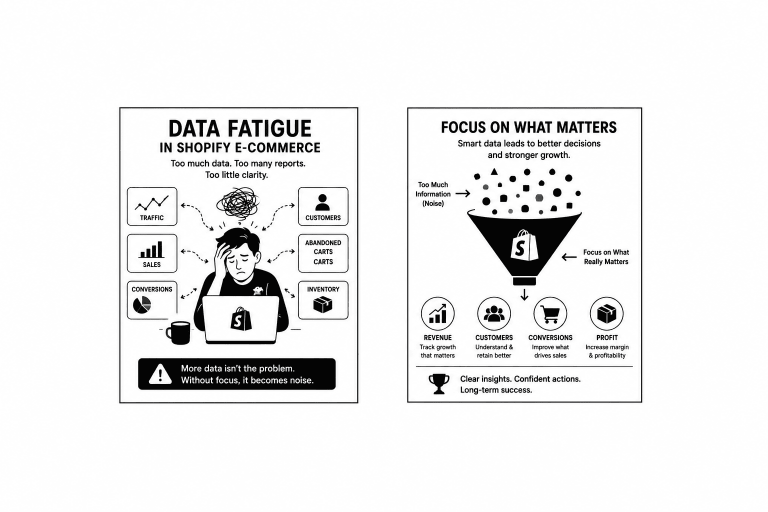
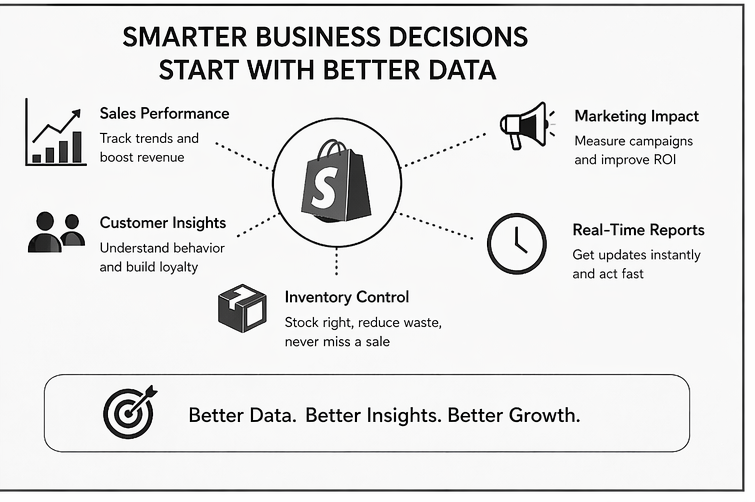
In the world of eCommerce, data is one of the most valuable assets a business can use for growth. Every action inside a Shopify store—product views, customer visits, orders, refunds, abandoned carts, and repeat purchases—creates useful information. This data helps businesses understand performance, improve customer experience, and make better strategic decisions.
However, the challenge is not collecting data—it is accessing and using it efficiently.
For many store owners, exporting Shopify data still feels like a complicated and time-consuming task. Traditional methods often involve technical steps, manual reports, spreadsheet management, and repeated formatting work. This creates unnecessary delays and makes decision-making slower.
The idea of no-code data export solves this problem.
Instead of relying on technical knowledge or complicated processes, businesses can access and organize store data through simple workflows that are fast, structured, and easy to manage. This approach removes barriers and allows users to focus on business growth rather than operational frustration.
Shopify data export without coding is not just about convenience—it is about creating a smarter and more scalable business system.
Why Shopify Data Export Matters
Every successful business depends on visibility.
Without access to reliable information, decision-making becomes based on assumptions instead of facts.
Store owners need answers to important questions such as:
Which products are performing best?
Which customers are returning most often?
What inventory needs immediate attention?
Which marketing efforts are producing results?
Where are sales opportunities being lost?
These answers exist inside store data.
Exporting that data allows businesses to analyze performance, identify trends, and make stronger decisions.
Without proper export systems, valuable information remains trapped inside the platform and difficult to use effectively.
This is why structured data access becomes essential.
The Traditional Challenges of Data Export
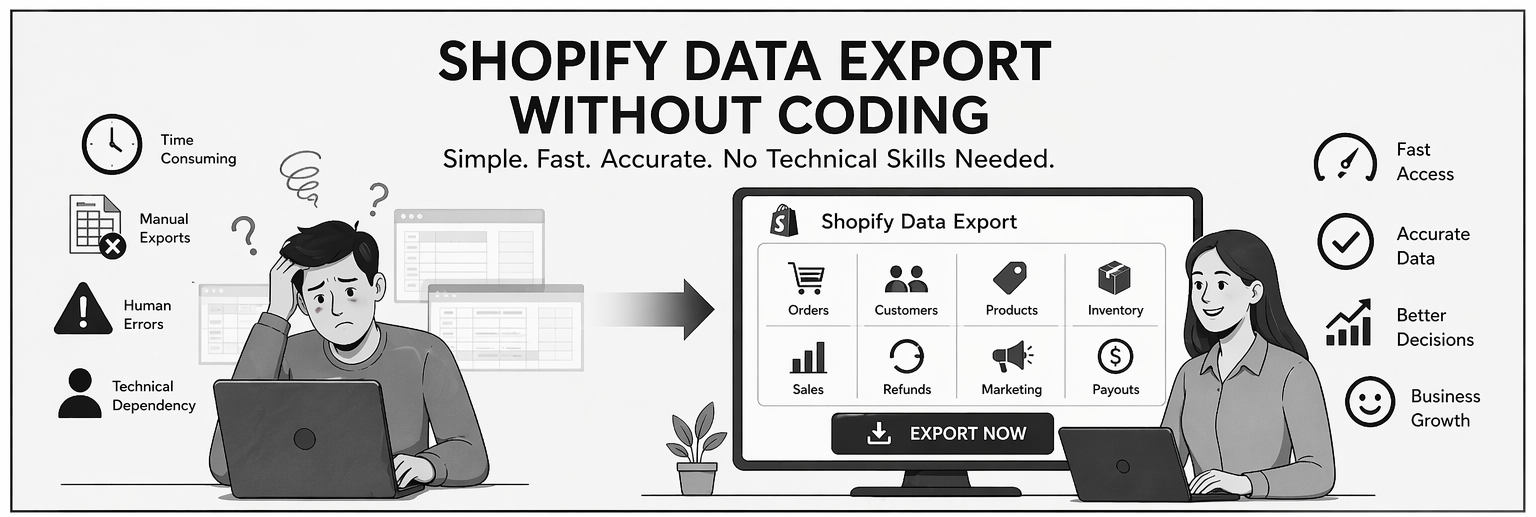
Many businesses still use manual methods for Shopify data handling.
The process often looks like this:
Export reports manually
Download CSV files
Open spreadsheets
Clean formatting issues
Compare multiple reports
Update records repeatedly
This creates several major problems.
Time Consumption
Manual exporting and organizing can take hours every week.
Repetitive Work
The same tasks must be repeated again and again.
Human Error
Small mistakes in formatting or copying can create inaccurate reports.
Delayed Insights
By the time reports are ready, opportunities may already be missed.
Technical Dependency
Some users depend on technical teams just to access basic business information.
These problems reduce efficiency and create operational stress.
As the business grows, these issues become even bigger.
The Power of No-Code Data Export
No-code data export changes the way businesses interact with information.
Instead of requiring technical knowledge, it creates a simple process where users can access store data quickly and confidently.
This means:
No complicated setup
No developer dependency
No manual cleanup frustration
No delays in reporting
Data becomes available when it is needed—not after hours of preparation.
This creates a major shift in how teams work.
The goal changes from:
“How do we export data?”
to
“How do we use this data to improve results?”
That mindset creates better business decisions.
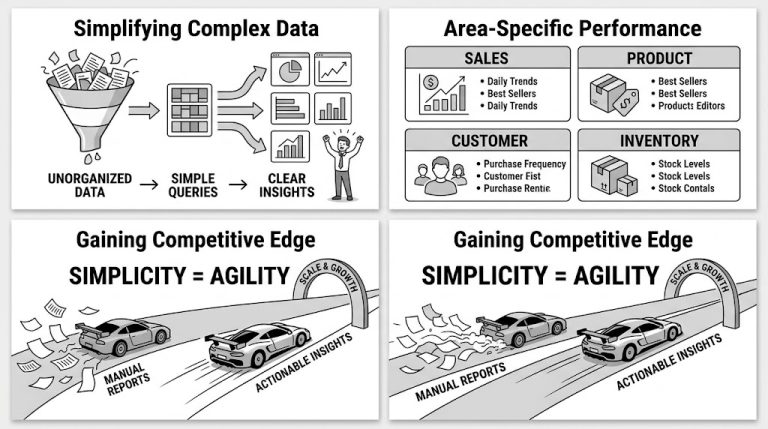
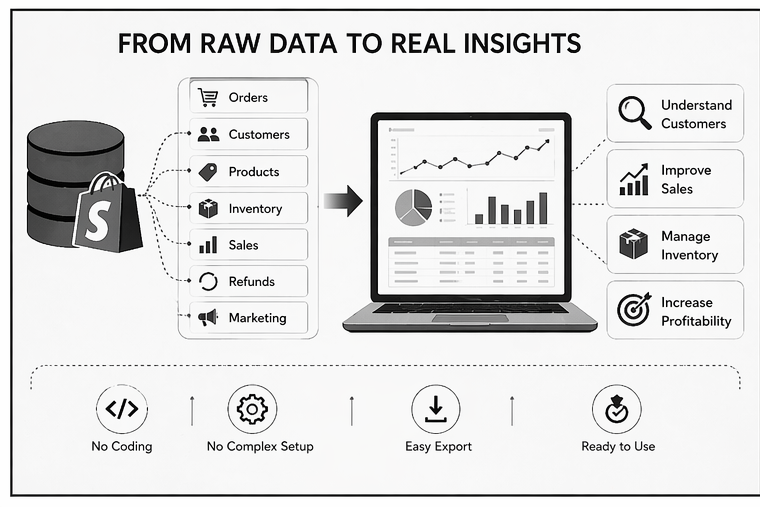
Turning Raw Data into Useful Information
Raw data is often difficult to understand.
It may contain:
Large datasets
Technical structures
Disconnected reports
Unorganized fields
Incomplete comparisons
This makes analysis difficult for everyday business users.
A better system transforms raw data into:
Clear reports
Structured categories
Organized performance tracking
Ready-to-use business insights
Instead of spending time preparing information, teams can spend time acting on it.
This is where no-code export creates real value.
Data becomes practical, not overwhelming.
Real-Time Access Improves Business Speed
In eCommerce, speed matters.
If a product starts underperforming, quick action is needed.
If customer buying behavior changes, businesses must respond fast.
If inventory levels drop suddenly, delays can lead to lost sales.
Traditional reporting often creates slow responses.
No-code export supports faster visibility by making data easier to access and analyze regularly.
This allows businesses to:
Track sales trends quickly
Identify product issues early
Respond to customer changes faster
Improve campaign decisions immediately
Reduce operational delays
Fast access to information creates a real competitive advantage.
Businesses become proactive instead of reactive.
Helping Non-Technical Users Work Independently
One of the biggest barriers in data management is technical dependency.
Store owners, marketers, and sales managers often wait for technical teams to generate reports or explain information.
This slows progress.
No-code export removes that dependency.
It allows non-technical users to:
Access reports directly
Understand store performance clearly
Make confident decisions faster
Work independently without delays
This improves productivity across the entire business.
When everyone can work with data, operations become stronger and more efficient.
Data should not belong only to technical departments.
It should be accessible to the people making daily business decisions.
Improving Sales Performance Through Better Reporting
Sales data is one of the most important business resources.
But raw sales numbers alone are not enough.
Businesses need structured insights such as:
Best-selling products
Revenue trends
Repeat customer patterns
Weak-performing inventory
Seasonal demand shifts
This helps teams make stronger decisions about:
Pricing strategies
Promotional planning
Product prioritization
Revenue forecasting
Sales growth opportunities
Without proper export systems, these opportunities remain hidden.
Better reporting creates smarter selling.
Sales performance improves when decisions are supported by accurate information.
Better Customer Understanding Creates Stronger Growth
Customer behavior is one of the most valuable forms of business intelligence.
Understanding what customers do helps businesses improve retention and conversion.
Important customer insights include:
Purchase frequency
Product preferences
Cart abandonment patterns
Repeat buying behavior
Customer lifetime value
No-code data export makes these patterns easier to identify.
This supports:
Better marketing personalization
Improved customer retention
Stronger product recommendations
Higher conversion rates
More effective customer service
When businesses understand customers better, growth becomes more predictable and sustainable.
Smarter Inventory Management
Inventory problems create direct financial loss.
Too much stock creates waste.
Too little stock creates missed revenue.
Without clear data visibility, businesses struggle to manage inventory effectively.
No-code export helps businesses monitor:
Stock movement
Product demand
Restocking priorities
Slow-moving inventory
Profitability by product
This improves:
Financial planning
Inventory control
Supplier decisions
Sales forecasting
Inventory becomes a strategic asset instead of an operational challenge.
Better visibility reduces unnecessary risk.
Scaling Operations Without Complexity
Growth should create opportunity—not confusion.
But many growing Shopify businesses face a common problem:
Their manual systems stop working as volume increases.
More products mean more reports.
More customers mean more complexity.
More sales mean more pressure.
Without better workflows, growth becomes stressful.
No-code export supports scalability by keeping data clear and manageable at every stage.
It ensures:
Consistent reporting
Stable operations
Faster decision-making
Reduced manual workload
Businesses can grow without losing control.
This makes scaling smoother and more sustainable.
Building a Data-Driven Business Culture
Technology improves systems, but mindset improves results.
When teams can access clear and useful information regularly, business culture changes.
People begin to:
Trust data more
Measure performance consistently
Make decisions faster
Focus on evidence instead of assumptions
This creates a data-driven business culture.
Instead of guessing, businesses operate with clarity.
This shift improves accountability, confidence, and long-term planning.
Often, this cultural transformation is more valuable than the export process itself.
Because strong decisions create strong businesses.
The Future of eCommerce Operations
Modern eCommerce rewards businesses that move faster and think smarter.
Success no longer depends only on having better products.
It depends on:
Better operational systems
Faster reporting
Stronger customer understanding
Smarter inventory planning
Continuous performance visibility
Manual processes cannot support long-term growth.
Businesses need workflows that remove friction and create efficiency.
No-code data export represents this future.
It makes store information easier to access, easier to understand, and easier to use.
This creates stronger operations and better business performance.
Final Perspective
Shopify stores generate valuable information every day.
But information alone does not create growth.
Growth happens when businesses can export that data easily, organize it clearly, and act on it quickly.
No-code data export transforms the entire workflow.
It reduces effort.
Improves speed.
Increases accuracy.
Supports scalability.
Strengthens decision-making.
Most importantly, it helps businesses focus on strategy instead of repetitive operational work.
That is where real growth begins.
In Essence
Data should not feel complicated.
It should feel useful.
When businesses can export Shopify data without coding, they gain clarity, speed, and confidence.
Operations become smoother.
Decisions become smarter.
Growth becomes stronger.
The future of eCommerce belongs to businesses that use information effectively—and that begins with simple, structured, no-code data access.