
Data Without Coding: How Smart Data Access Changes Shopify Operations
In today’s digital commerce environment, data is one of the most powerful assets a business can have. Every action inside a Shopify store creates valuable information—customer visits, product views, abandoned carts, completed purchases, refunds, inventory changes, and repeat orders. This information has the potential to improve decisions, increase profits, and create stronger customer experiences.
However, the real challenge is not collecting data. The challenge is using it effectively.
For many store owners, accessing and understanding Shopify data still feels complicated. Traditional methods often involve technical barriers, manual exports, spreadsheets, and repetitive tasks that consume time and reduce productivity. Business owners may have access to important information, but they often struggle to turn it into meaningful action.
This is where the idea of data without coding becomes truly powerful.
Instead of depending on technical skills, businesses can work with their store data through simple, structured, and accessible systems. The goal is not just to gather information, but to make that information useful for everyday business decisions.
This shift is changing how Shopify operations work—from manual effort to intelligent workflows.
The Traditional Problem with Shopify Data
Most Shopify businesses generate large volumes of data every day, but much of that data remains underused.
The common workflow usually looks like this:
Export reports manually
Download CSV files
Clean and organize spreadsheets
Compare multiple reports
Update records repeatedly
Try to find useful insights
At first, this may seem manageable.
But as the business grows, these tasks become repetitive, time-consuming, and difficult to maintain. Teams spend more time managing information than actually using it.
This creates several major problems:
Time Loss
Manual data handling takes hours every week that could be used for growth strategies.
Human Errors
Copy-paste mistakes, missing values, and formatting issues can create inaccurate reporting.
Delayed Decisions
By the time reports are prepared, the business situation may have already changed.
Dependency on Technical Support
Many users rely on developers or technical teams just to access simple business insights.
These challenges slow operations and reduce business efficiency.

The Shift Toward No-Code Data Access
Modern eCommerce businesses need speed, clarity, and flexibility.
This is where no-code data access creates a major transformation.
Instead of using technical integrations or complex processes, businesses can access store information through simple systems that require no programming knowledge.
This means:
Data becomes easier to reach
Reports become faster to generate
Insights become easier to understand
Decisions become quicker to make
The focus shifts from technical work to strategic thinking.
This approach is especially valuable for store owners, marketing teams, sales managers, and operations teams who need results—not technical complexity.
Data Becomes a Daily Business Tool
Many businesses treat data as something separate from daily operations.
It is often seen as a report that is checked occasionally rather than a tool used continuously.
This mindset limits growth.
When data becomes accessible without coding, it becomes part of everyday decision-making.
Teams begin using it for:
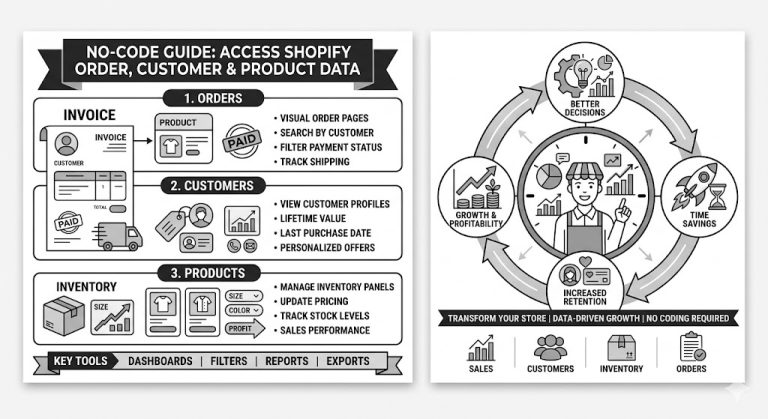
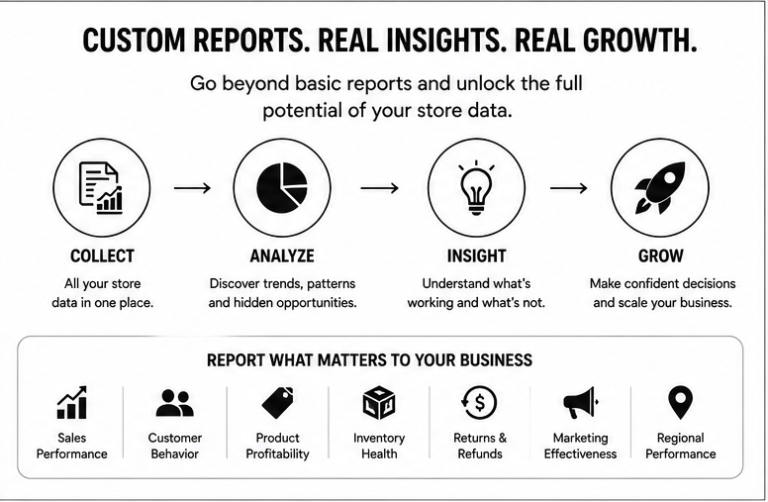
Checking sales performance
Tracking customer behavior
Managing product inventory
Improving marketing campaigns
Planning pricing strategies
Monitoring business growth
Instead of reacting late, businesses begin responding in real time.
This creates stronger and faster operations.
Creating Clarity from Data Chaos
Raw Shopify data often feels disconnected.
Orders exist in one report.
Customer activity appears somewhere else.
Inventory updates are separate.
Marketing performance is tracked differently.
This fragmentation creates confusion.
A better system organizes this information into one clear structure.
Instead of isolated reports, businesses get:
Connected data flow
Consistent formatting
Clear reporting visibility
Easy-to-understand performance tracking
This clarity removes operational friction.
When information is structured properly, decision-making becomes much easier.
Businesses stop asking:
“Where is the problem?”
And start asking:
“How do we solve it?”
Real-Time Visibility Creates Competitive Advantage
Speed matters in eCommerce.
If a product is underperforming, businesses need to know quickly.
If customer behavior changes, action should happen immediately.
If inventory runs low, delays can mean lost sales.
Traditional reporting often creates slow reactions.
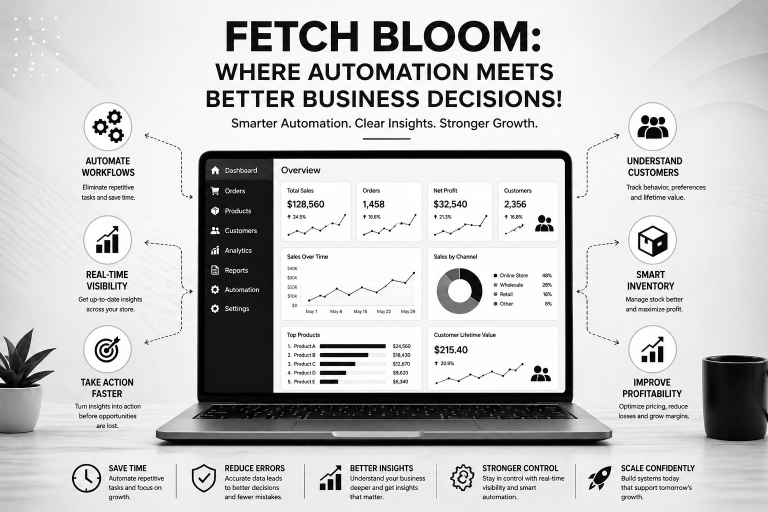
No-code data access improves this by supporting real-time visibility.
This allows businesses to:
Track sales instantly
Monitor customer activity live
Identify product trends faster
Adjust marketing campaigns quickly
Prevent operational problems early
Real-time understanding creates stronger business performance.
It turns information into immediate action.
Reducing Repetitive Manual Work
Repetition is one of the biggest hidden costs in business operations.
Tasks like:
Exporting reports
Cleaning spreadsheets
Updating records
Checking inventory manually
Preparing weekly reports
These activities repeat constantly and consume valuable time.
No-code systems reduce this burden by automating structure and access.
Instead of repeating the same work, teams can focus on:
Business strategy
Customer growth
Product improvement
Revenue optimization
This creates better productivity without increasing workload.
Efficiency becomes part of daily operations.
Empowering Non-Technical Teams
One of the biggest advantages of data without coding is accessibility.
Traditionally, only technical users could work deeply with store data.
This created dependency.
Business owners had to wait for reports.
Marketing teams waited for analysts.
Managers waited for technical explanations.
This slowed decision-making.
When data becomes easy to access, teams gain independence.
They can:
Analyze performance directly
Make faster decisions
Respond confidently to problems
Collaborate more effectively
This independence improves both speed and accountability.
Data becomes a shared business asset—not a technical department responsibility.

Better Customer Understanding
Customer behavior is one of the most valuable business insights available.
But understanding customers requires more than basic reports.
Businesses need to know:
What customers buy most
When they purchase
Why they return
Where they leave the buying process
What influences repeat purchases
With structured data access, customer behavior becomes much clearer.
This helps businesses improve:
Customer retention
Personalized marketing
Product recommendations
Sales conversion rates
Customer satisfaction
Better customer understanding leads directly to stronger revenue growth.
Smarter Inventory and Product Decisions
Inventory management becomes more difficult as stores grow.
Without clear data, businesses may face:
Overstocking
Understocking
Slow-moving products
Missed sales opportunities
No-code data access improves inventory control by making performance easier to track.
Businesses can quickly identify:
Best-selling products
Weak-performing inventory
Restocking priorities
Seasonal sales trends
Product profitability
This creates stronger planning and better financial control.
Inventory becomes strategic instead of reactive.
Scaling Without Operational Stress
Growth should create opportunity—not confusion.
But many Shopify stores struggle when scaling because their manual systems cannot keep up.
More products mean more reports.
More customers mean more complexity.
More sales mean more decisions.
Without better systems, growth becomes stressful.
No-code operations support scalable business management.
The same clarity that works for small stores continues working for larger operations.
This means:
Consistent reporting
Stable workflows
Faster decisions
Reduced operational pressure
Businesses can scale confidently without losing control.
Building a Data-Driven Culture
Technology alone does not improve business performance.
Mindset does.
When teams have easy access to useful insights, a cultural shift happens.
People begin to:
Trust data more
Make decisions faster
Measure performance regularly
Focus on results instead of assumptions
This creates a data-driven business culture.
And this cultural shift is often more valuable than automation itself.
Because sustainable growth comes from better thinking—not just better systems.
The Future of Shopify Operations
The future of eCommerce belongs to businesses that operate smarter.
Success will not depend only on having more products or bigger budgets.
It will depend on:
Faster decision-making
Cleaner operations
Stronger customer understanding
Better use of information
Scalable systems
Manual processes are no longer enough.
Modern businesses need systems that remove friction and support continuous improvement.
Data without coding represents that future.
It makes business intelligence accessible, practical, and powerful.
Final Perspective
Shopify stores generate enormous amounts of valuable information every day.
But data alone does not create growth.
Growth happens when businesses can access that data easily, understand it clearly, and act on it quickly.
The shift from manual handling to no-code operations transforms how businesses work.
It reduces effort.
Improves accuracy.
Speeds up decisions.
Supports scalability.
Creates stronger customer experiences.
Most importantly, it allows businesses to focus on strategy instead of repetitive operational tasks.
In Essence
Data should not feel complicated.
It should feel useful.
When coding is removed from the process, insights become faster, clearer, and more accessible.
Shopify operations become smoother, smarter, and more profitable.
The real power of modern eCommerce is not just having data—
It is knowing how to use it without barriers.